Department of Chemistry, Hacettepe University, Ankara 06800, Turkey.
Department of Infectious Disease and Clinical Microbiology, Hacettepe University, Ankara 06230, Turkey.
Sensors (Basel). 2019 Mar 13;19(6):1279. doi: 10.3390/s19061279.
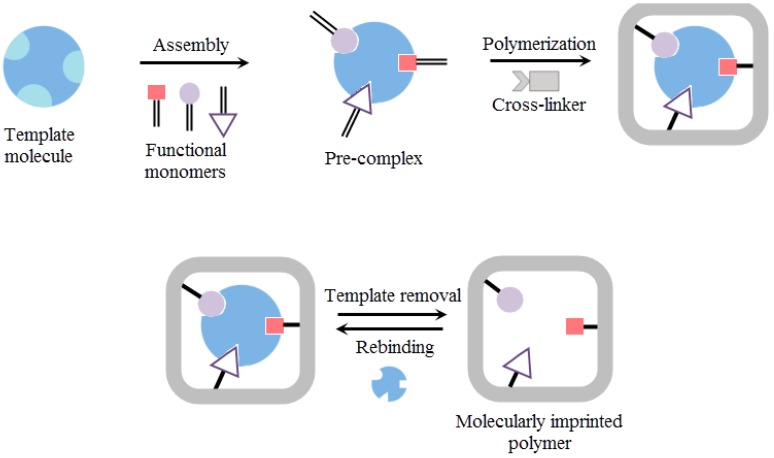
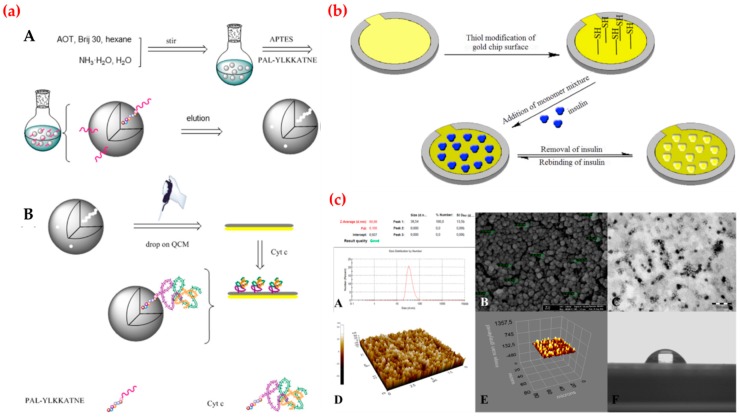
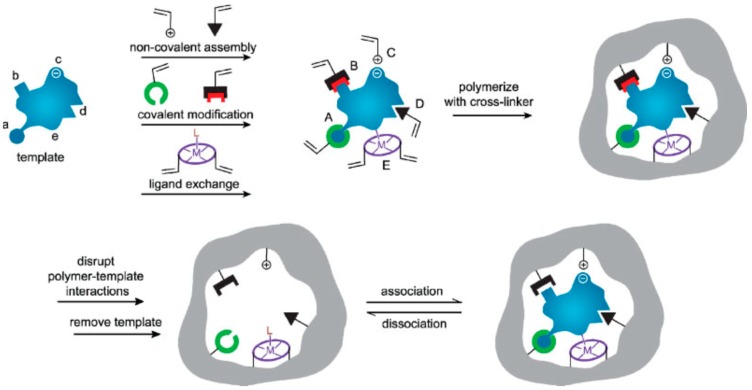
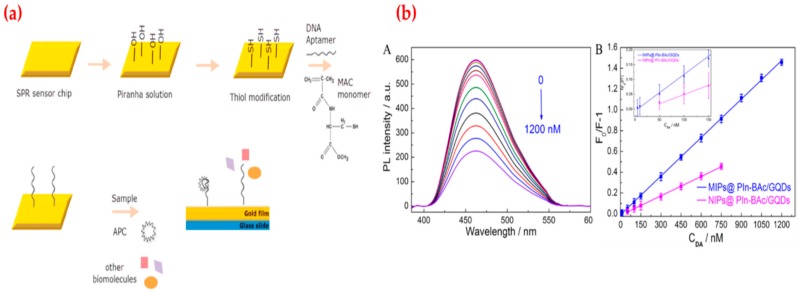
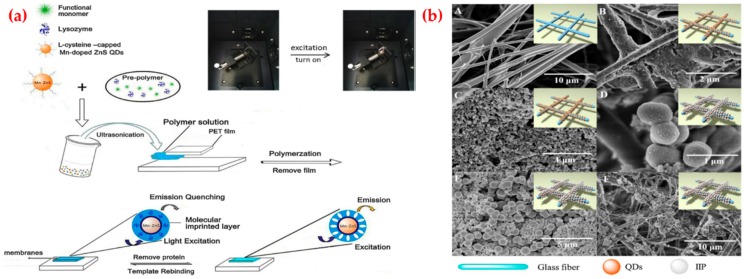
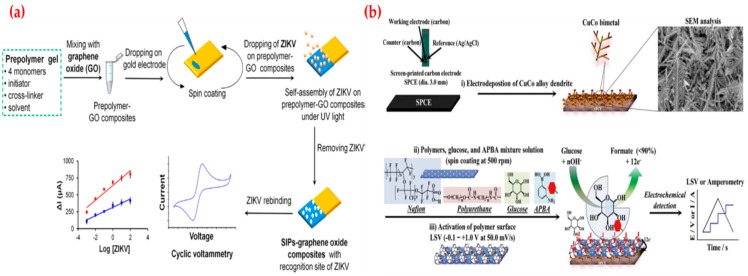
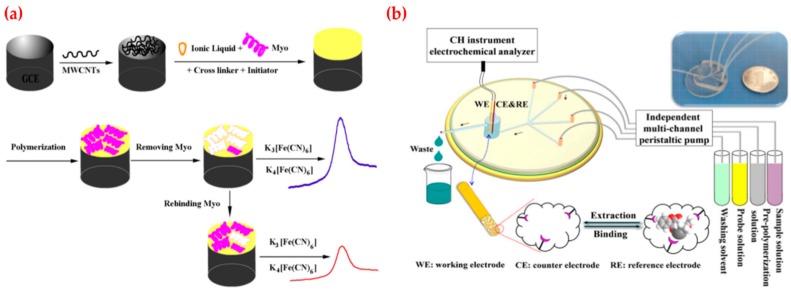
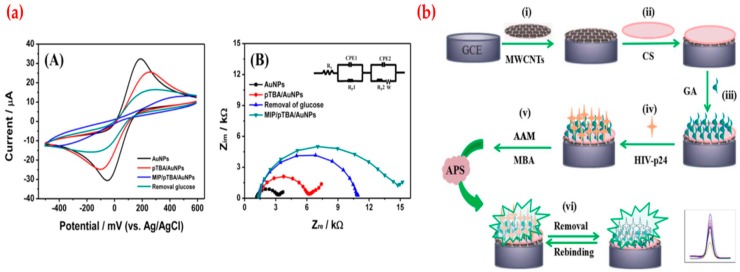
Sensors have been extensively used owing to multiple advantages, including exceptional sensing performance, user-friendly operation, fast response, high sensitivity and specificity, portability, and real-time analysis. In recent years, efforts in sensor realm have expanded promptly, and it has already presented a broad range of applications in the fields of medical, pharmaceutical and environmental applications, food safety, and homeland security. In particular, molecularly imprinted polymer based sensors have created a fascinating horizon for surface modification techniques by forming specific recognition cavities for template molecules in the polymeric matrix. This method ensures a broad range of versatility to imprint a variety of biomolecules with different size, three dimensional structure, physical and chemical features. In contrast to complex and time-consuming laboratory surface modification methods, molecular imprinting offers a rapid, sensitive, inexpensive, easy-to-use, and highly selective approaches for sensing, and especially for the applications of diagnosis, screening, and theranostics. Due to its physical and chemical robustness, high stability, low-cost, and reusability features, molecularly imprinted polymer based sensors have become very attractive modalities for such applications with a sensitivity of minute structural changes in the structure of biomolecules. This review aims at discussing the principle of molecular imprinting method, the integration of molecularly imprinted polymers with sensing tools, the recent advances and strategies in molecular imprinting methodologies, their applications in medical, and future outlook on this concept.
传感器具有出色的传感性能、用户友好的操作、快速响应、高灵敏度和特异性、便携性和实时分析等多种优势,因此得到了广泛应用。近年来,传感器领域的研究迅速扩展,已经在医疗、制药和环境应用、食品安全和国土安全等领域呈现出广泛的应用前景。特别是基于分子印迹聚合物的传感器通过在聚合物基质中形成对模板分子的特异性识别空腔,为表面修饰技术创造了迷人的前景。这种方法确保了广泛的通用性,可以对具有不同大小、三维结构、物理和化学特征的各种生物分子进行印迹。与复杂且耗时的实验室表面修饰方法相比,分子印迹提供了一种快速、灵敏、廉价、易用且高度选择性的传感方法,特别适用于诊断、筛选和治疗应用。由于其物理和化学稳定性、低成本和可重复使用的特点,基于分子印迹聚合物的传感器已经成为非常有吸引力的模式,能够检测生物分子结构中微小的结构变化。本文旨在讨论分子印迹方法的原理、分子印迹聚合物与传感工具的集成、分子印迹方法学的最新进展和策略,以及它们在医学中的应用,并对这一概念的未来前景进行展望。