Department of Environment and Health, National Institute of Health, 00161 Rome, Italy.
WHO Collaborating Centre for Environmental Health in Contaminated Sites, National Institute of Health, 00161 Rome, Italy.
Int J Environ Res Public Health. 2019 Mar 19;16(6):998. doi: 10.3390/ijerph16060998.
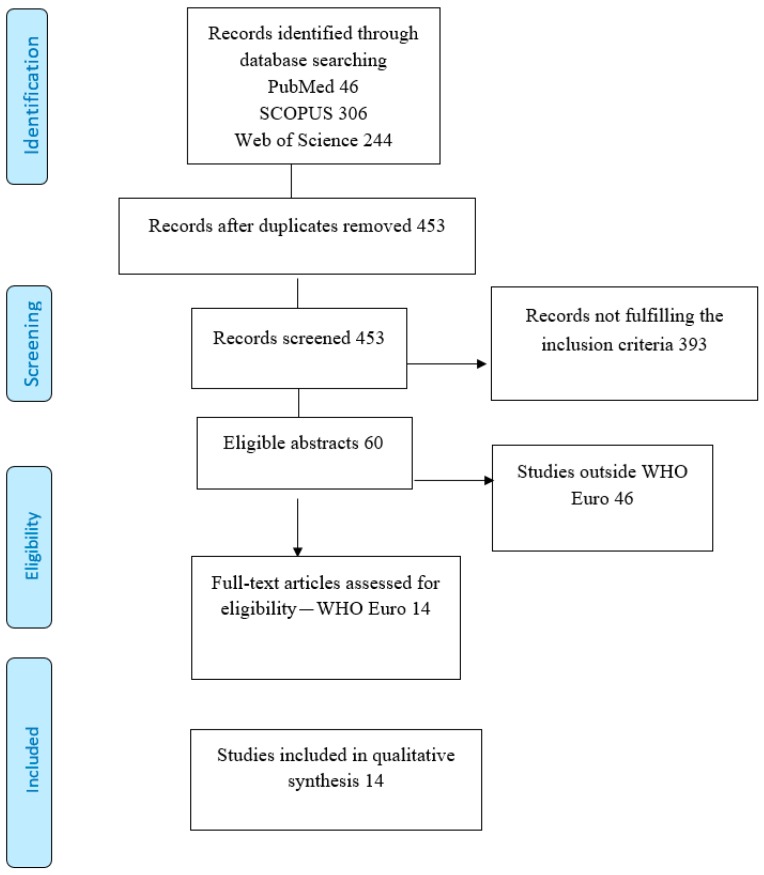
In the WHO European Region the topic of contaminated sites is considered a priority among environment and health themes. Communities living in or close to contaminated sites tend to be characterized by a high prevalence of ethnic minorities and by an unfavorable socioeconomic status so rising issues of environmental justice. A structured review was undertaken to describe the contents of original scientific studies analyzing distributive and procedural justice in industrially contaminated sites carried out in the WHO European Region in the period 2010⁻2017. A systematic search of the literature was performed. In total, 14 articles were identified. Wherever assessments on environmental inequalities were carried out, an overburden of socioeconomic deprivation or vulnerability, with very few exemptions, was observed. The combined effects of environmental and socioeconomic pressures on health were rarely addressed. Results show that the studies on environmental and health inequalities and mechanisms of their generation in areas affected by industrially contaminated sites in the WHO European Region are in their early stages, with exemption of UK. Future efforts should be directed to improve study strategies with national and local assessments in order to provide evidence for equity-oriented interventions to reduce environmental exposure and related health risks caused by industrial contamination.
在世界卫生组织欧洲区域,污染场地问题被视为环境与健康主题中的优先事项。居住在污染场地或其附近的社区往往以少数民族人口比例高和不利的社会经济地位为特征,引发了环境正义问题。本研究对 2010 年至 2017 年期间在世界卫生组织欧洲区域开展的、分析工业污染场地中分配公正和程序公正的原始科学研究进行了系统综述,以描述其内容。对文献进行了系统检索,共确定了 14 篇文章。无论是否对环境不平等进行了评估,都观察到社会经济剥夺或脆弱性负担过重的情况,极少数例外。很少有研究涉及环境和社会经济压力对健康的综合影响。结果表明,在世界卫生组织欧洲区域受工业污染场地影响的地区,关于环境和健康不平等及其产生机制的研究尚处于早期阶段,英国除外。未来的工作应致力于改进研究策略,进行国家和地方评估,为以公平为导向的干预措施提供证据,以减少工业污染造成的环境暴露和相关健康风险。