Discipline of Biomedical Sciences, Faculty of Medicine and Health, University of Sydney, Sydney, Australia.
Department of Physiotherapy, Kathmandu University School of Medical Sciences, Dhulikhel, Nepal.
Health Qual Life Outcomes. 2019 Mar 21;17(1):51. doi: 10.1186/s12955-019-1105-1.
Patient-reported outcome measures (PROMs) are important tools in both clinical practice and research. However, no upper extremity PROM to assess physical disability is available in Nepali. The most commonly used and recommended questionnaire for the shoulder is the Disability of Arm, Shoulder and Hand (DASH). Therefore, the aim of the study was to translate and cross-culturally adapt the DASH into Nepali and determine its measurement properties.
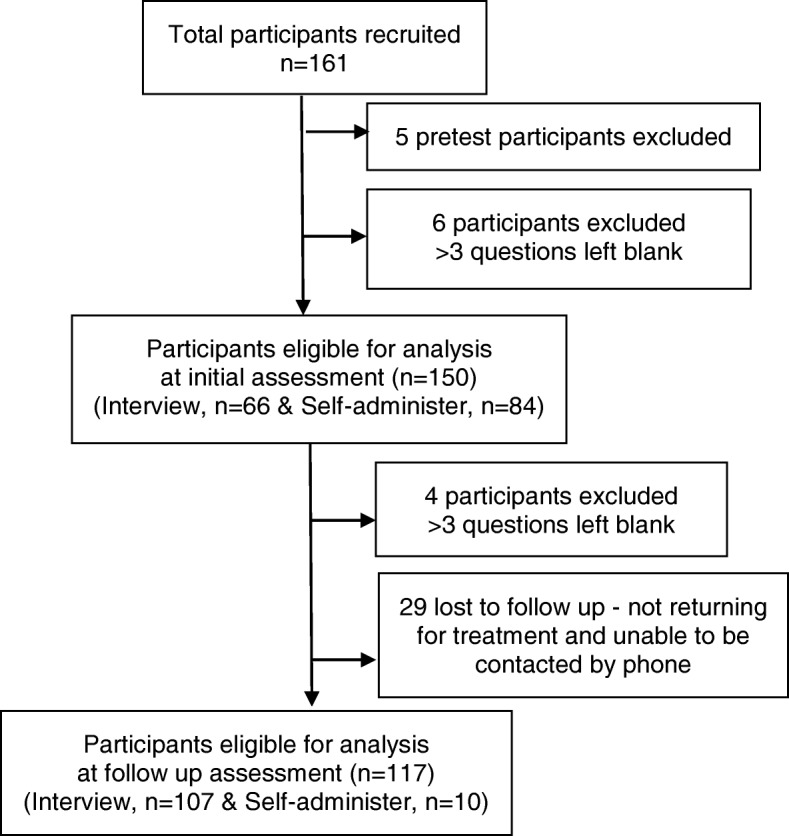
The translation and cultural adaptation process followed international standard procedures. The translated Nepali version of the questionnaire (DASH-NP) was completed by 156 patients with shoulder pain from three Nepali hospitals at an initial assessment and by 121 at follow-up. A Nepali version of Global Rating of Change (GROC-NP) was completed at follow-up to dichotomise improved and stable participants. Measurement properties testing included: internal consistency (Cronbach's alpha), test-retest reliability (Intraclass Correlation Coefficient, ICC), Minimal Detectable Change (MDC), construct validity - factor analysis, hypothesis testing with the Shoulder Pain and Disability Index (SPADI) (Pearson Correlation = r) and responsiveness - Area Under the Curve with minimal important change.
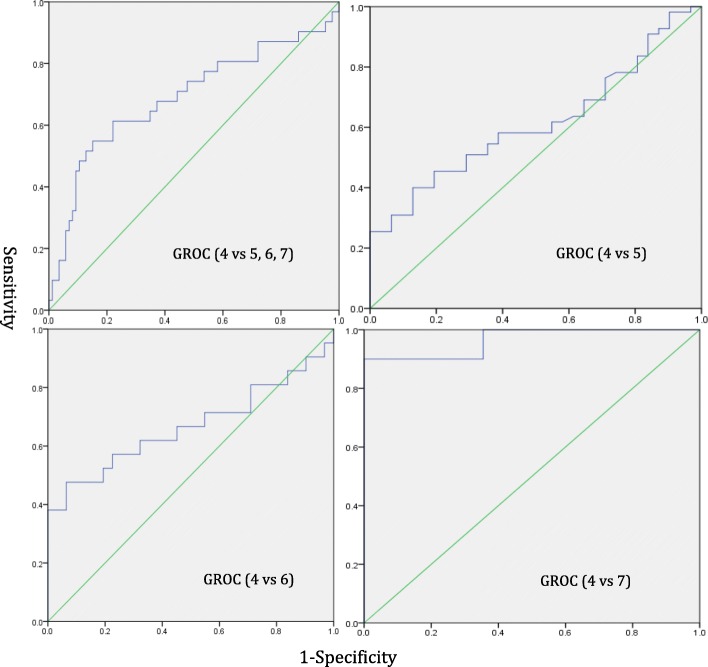
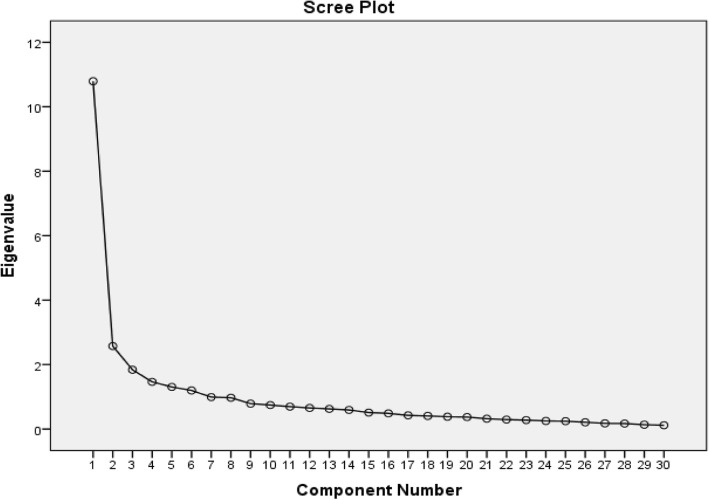
Significant adaptations such as changing measurement units, activities and terminology were incorporated to improve cultural relevance. Internal consistency (α = 0.92) and test-retest reliability (ICC = 0.97, 95% CI: 0.94-0.98, p < 0.001) were excellent. The MDC was 11 out of 100 points. There were moderate-high positive correlations with the SPADI pain and disability items (rs = 0.63 and 0.81, P < 0.001). Four factor solution was retrieved for the DASH-NP. The Area Under the Curve was 0.69 (95% CI: 0.57 - 0.81, p < 0.001) with minimal important change of 11.2/100 points.
The Nepali translation of the DASH is comprehensible, easy to administer via self-report or interview. It is found to be a reliable, valid, and responsive measure in patients with shoulder pain in Nepal. The DASH-NP can be used to assess shoulder pain related disability in Nepal for clinical practice or research.
患者报告的结局测量(PROMs)在临床实践和研究中都是重要的工具。然而,尼泊尔还没有用于评估上肢功能障碍的专用 PROM。目前最常用和推荐的评估肩部的问卷是上肢功能障碍问卷(DASH)。因此,本研究的目的是将 DASH 翻译成尼泊尔语并进行文化调适,并确定其测量特性。
翻译和文化调适过程遵循国际标准程序。问卷的尼泊尔语翻译版本(DASH-NP)在初始评估时由来自尼泊尔的 3 家医院的 156 名肩部疼痛患者填写,在随访时由 121 名患者填写。在随访时使用尼泊尔语版全球变化评级(GROC-NP)将参与者分为改善和稳定两组。测量特性测试包括:内部一致性(克朗巴赫 α 系数)、重测信度(组内相关系数,ICC)、最小可检测变化(MDC)、结构效度-因子分析、与肩痛和残疾指数(SPADI)的假设检验(Pearson 相关系数 r)和反应度-最小重要变化的曲线下面积。
进行了显著的调适,例如改变测量单位、活动和术语,以提高文化相关性。内部一致性(α=0.92)和重测信度(ICC=0.97,95%CI:0.94-0.98,p<0.001)非常好。MDC 为 10 分中的 11 分。与 SPADI 疼痛和残疾条目呈中度高度正相关(rs=0.63 和 0.81,P<0.001)。DASH-NP 可提取 4 个因子解决方案。曲线下面积为 0.69(95%CI:0.57-0.81,p<0.001),最小重要变化为 11.2/100 分。
DASH 的尼泊尔语翻译版本易于理解,可通过自我报告或访谈进行管理。它在尼泊尔患有肩部疼痛的患者中是一种可靠、有效且有反应性的测量工具。DASH-NP 可用于评估尼泊尔的肩部疼痛相关残疾,适用于临床实践或研究。