Institute for Biological Research "Sinisa Stankovic", University of Belgrade, Serbia.
Department of Physiology and Pharmacology "Vittorio Erspamer", Faculty of Pharmacy and Medicine, Sapienza University of Rome, Italy.
Oxid Med Cell Longev. 2019 Feb 14;2019:2471312. doi: 10.1155/2019/2471312. eCollection 2019.
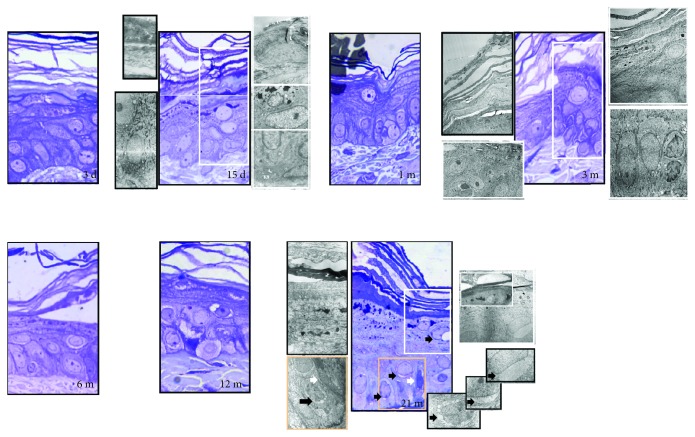
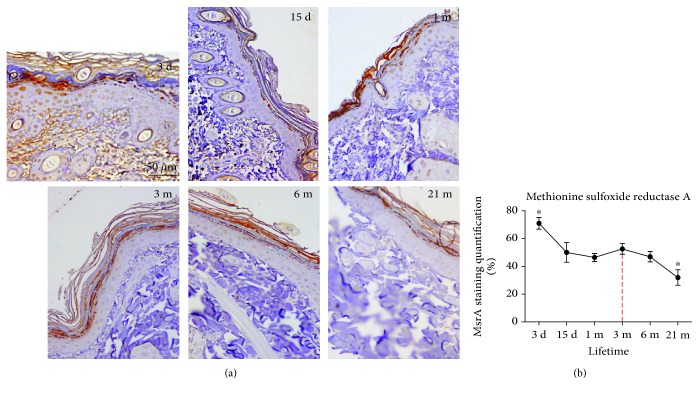
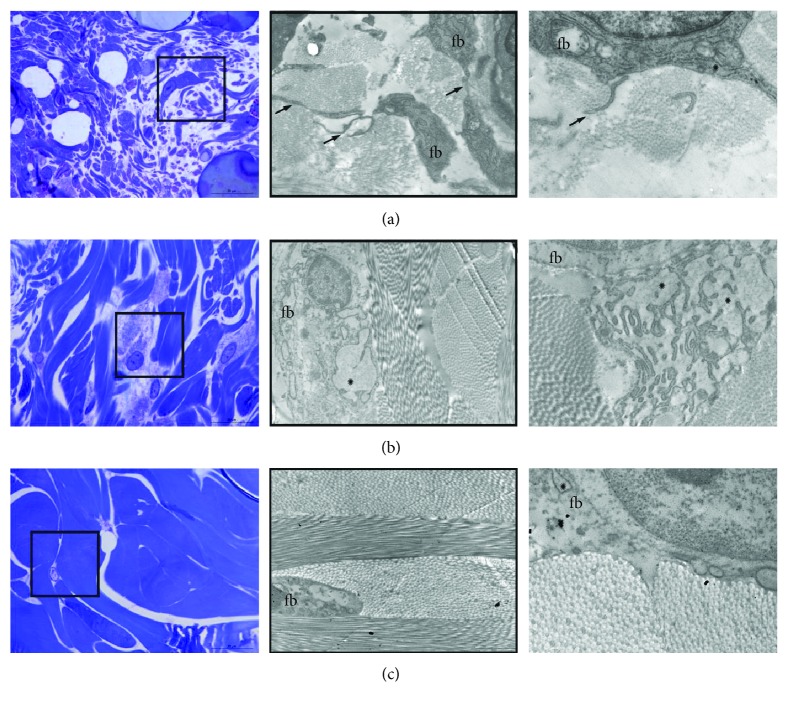
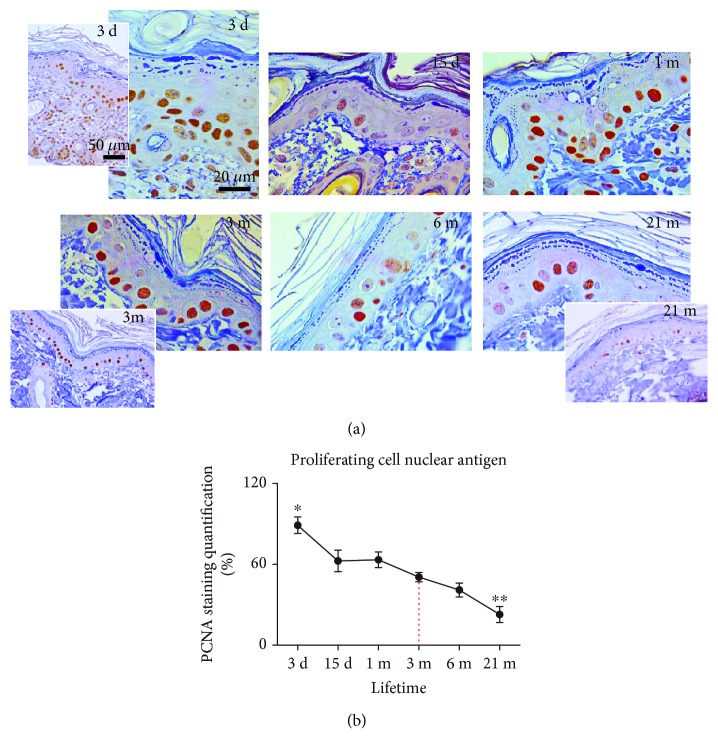
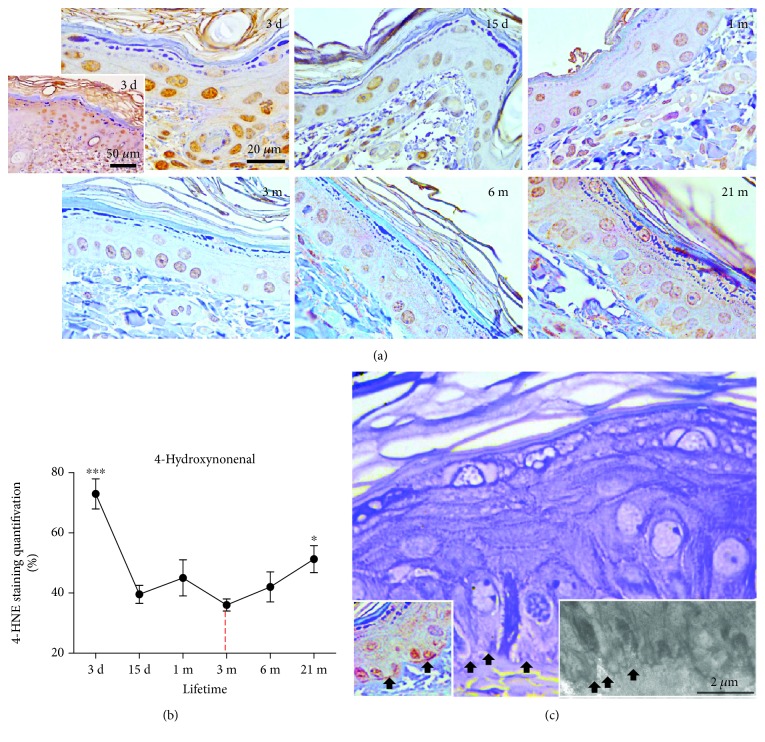
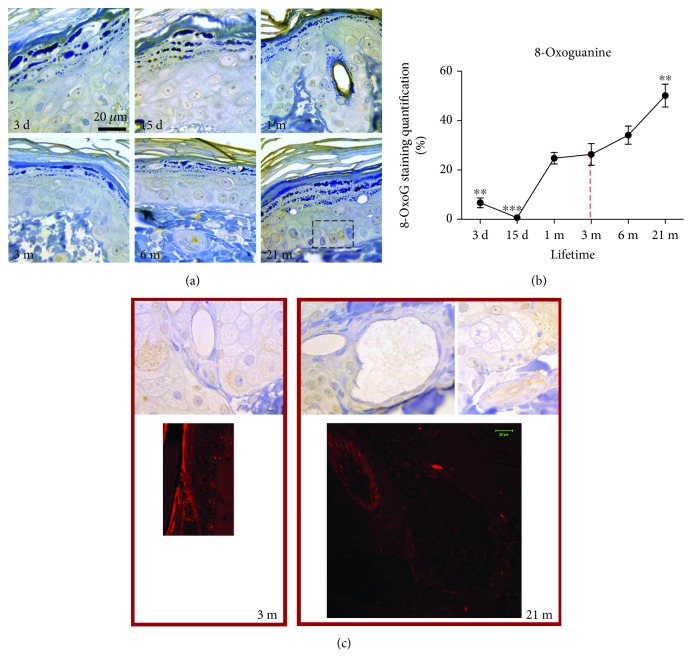
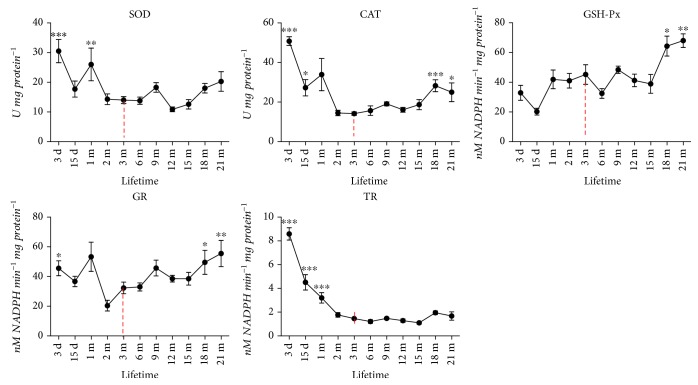
Accumulation of oxidative insults on molecular and supramolecular levels could compromise renewal potency and architecture in the aging skin. To examine and compare morphological and ultrastructural changes with redox alterations during chronological skin aging, activities of antioxidant defense (AD) enzymes, superoxide dismutase (SOD), catalase (CAT), glutathione peroxidase (GSH-Px), glutathione reductase (GR), thioredoxin reductase (TR), and methionine sulfoxide reductase A (MsrA), and the markers of oxidative damage of biomolecules-4-hydroxynonenal (HNE) and 8-oxoguanine (8-oxoG)-were examined in the rat skin during life (from 3 days to 21 months). As compared to adult 3-month-old skin, higher activities of CAT, GSH-Px, and GR and a decline in expression of MsrA are found in 21-month-old skin. These changes correspond to degenerative changes at structural and ultrastructural levels in epidermal and dermal compartments, low proliferation capacity, and higher levels of HNE-modified protein aldehydes (particularly in basal lamina) and 8-oxoG positivity in nuclei and mitochondria in the sebaceous glands and root sheath. In 3-day-old skin, higher activities of AD enzymes (SOD, CAT, GR, and TR) and MsrA expression correspond to intensive postnatal development and proliferation. In contrast to 21-month-old skin, a high level of HNE in young skin is not accompanied by 8-oxoG positivity or any morphological disturbances. Observed results indicate that increased activity of AD enzymes in elderly rat skin represents the compensatory response to accumulated oxidative damage of DNA and proteins, accompanied by attenuated repair and proliferative capacity, but in young rats the redox changes are necessary and inherent with processes which occur during postnatal skin development. Мorphological and ultrastructurаl changes are in line with the redox profile in the skin of young and old rats.
在分子和超分子水平上积累的氧化损伤可能会损害衰老皮肤的更新能力和结构。为了研究和比较在生理老化过程中形态和超微结构变化与氧化还原变化,本研究检测了抗氧化防御(AD)酶、超氧化物歧化酶(SOD)、过氧化氢酶(CAT)、谷胱甘肽过氧化物酶(GSH-Px)、谷胱甘肽还原酶(GR)、硫氧还蛋白还原酶(TR)和甲硫氨酸亚砜还原酶 A(MsrA)的活性,以及生物分子氧化损伤标志物 4-羟基壬烯醛(HNE)和 8-氧鸟嘌呤(8-oxoG)在大鼠皮肤中的变化。结果发现,与 3 月龄成年皮肤相比,21 月龄皮肤中的 CAT、GSH-Px 和 GR 活性较高,而 MsrA 的表达水平下降。这些变化与表皮和真皮结构和超微结构水平的退行性变化、低增殖能力以及皮脂腺和毛根鞘中 HNE 修饰蛋白醛(尤其是基底膜)和 8-oxoG 阳性率升高相对应。在 3 日龄皮肤中,AD 酶(SOD、CAT、GR 和 TR)和 MsrA 表达的高活性与产后发育和增殖密切相关。与 21 月龄皮肤不同的是,年轻皮肤中 HNE 水平升高并不伴有 8-oxoG 阳性或任何形态学紊乱。观察结果表明,老年大鼠皮肤中 AD 酶活性的增加代表了对 DNA 和蛋白质累积氧化损伤的代偿性反应,伴随着修复和增殖能力的减弱,但在年轻大鼠中,氧化还原变化是必要的,并且是与出生后皮肤发育过程中发生的过程内在相关的。形态和超微结构变化与年轻和老年大鼠皮肤的氧化还原谱一致。