Frisch Janina, Angenendt Adrian, Hoth Markus, Prates Roma Leticia, Lis Annette
Department of Biophysics, Center for Integrative Physiology and Molecular Medicine, Medical Faculty, Saarland University, 66421 Homburg, Germany.
Center for Human and Molecular Biology, Saarland University, 66421 Homburg, Germany.
Cancers (Basel). 2019 Mar 30;11(4):457. doi: 10.3390/cancers11040457.
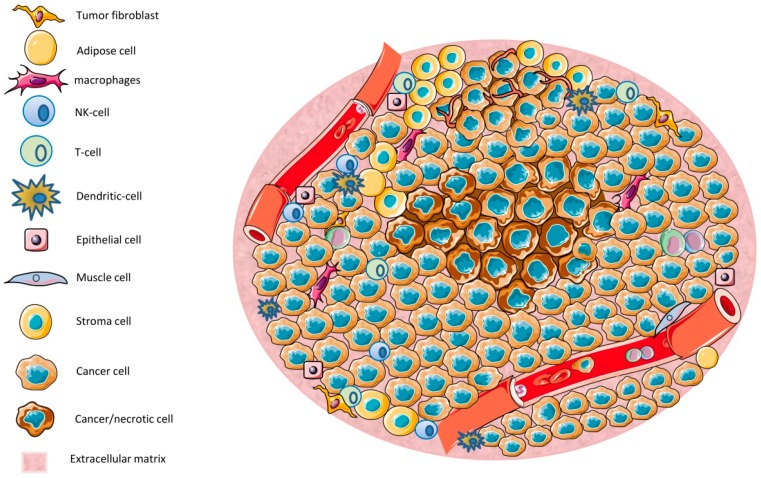
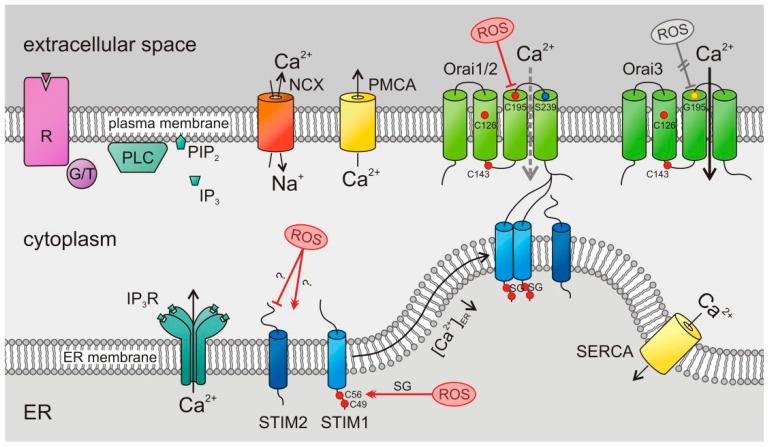
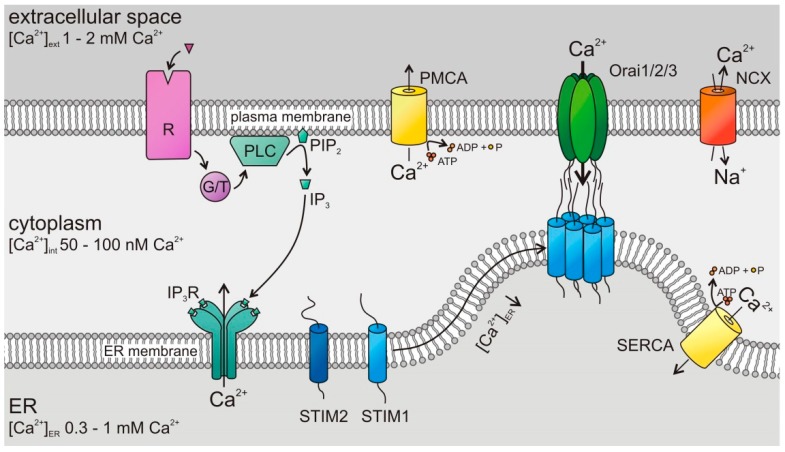
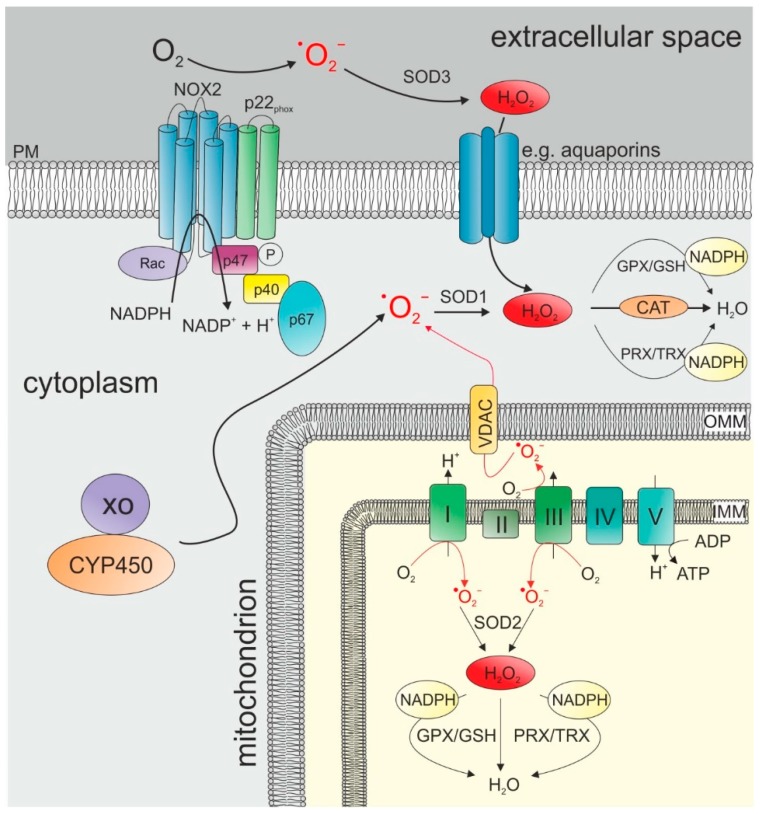
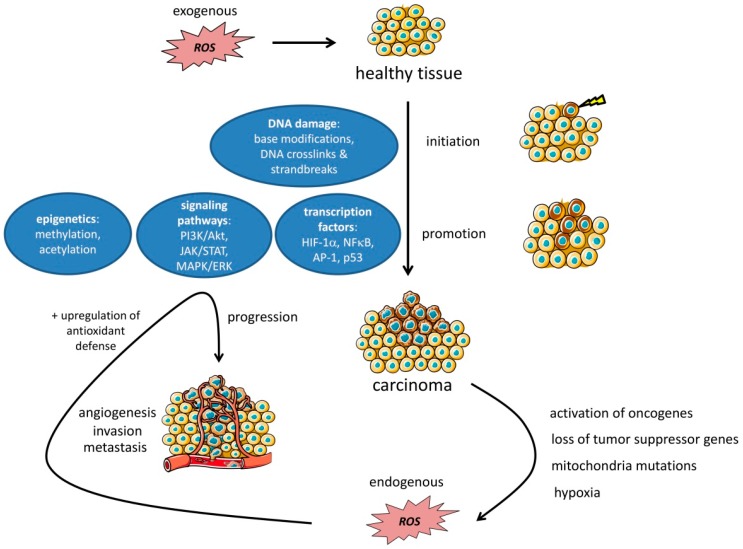
The tumor microenvironment (TME) is shaped by cancer and noncancerous cells, the extracellular matrix, soluble factors, and blood vessels. Interactions between the cells, matrix, soluble factors, and blood vessels generate this complex heterogeneous microenvironment. The TME may be metabolically beneficial or unbeneficial for tumor growth, it may favor or not favor a productive immune response against tumor cells, or it may even favor conditions suited to hijacking the immune system for benefitting tumor growth. Soluble factors relevant for TME include oxygen, reactive oxygen species (ROS), ATP, Ca, H⁺, growth factors, or cytokines. Ca plays a prominent role in the TME because its concentration is directly linked to cancer cell proliferation, apoptosis, or migration but also to immune cell function. Stromal-interaction molecules (STIM)-activated Orai channels are major Ca entry channels in cancer cells and immune cells, they are upregulated in many tumors, and they are strongly regulated by ROS. Thus, STIM and Orai are interesting candidates to regulate cancer cell fate in the TME. In this review, we summarize the current knowledge about the function of ROS and STIM/Orai in cancer cells; discuss their interdependencies; and propose new hypotheses how TME, ROS, and Orai channels influence each other.
肿瘤微环境(TME)由癌细胞和非癌细胞、细胞外基质、可溶性因子及血管构成。细胞、基质、可溶性因子和血管之间的相互作用产生了这种复杂的异质性微环境。TME对肿瘤生长在代谢上可能有益或无益,可能有利于或不利于针对肿瘤细胞产生有效的免疫反应,甚至可能有利于创造适合劫持免疫系统以促进肿瘤生长的条件。与TME相关的可溶性因子包括氧气、活性氧(ROS)、三磷酸腺苷(ATP)、钙、氢离子、生长因子或细胞因子。钙在TME中起着重要作用,因为其浓度不仅与癌细胞的增殖、凋亡或迁移直接相关,还与免疫细胞功能相关。基质相互作用分子(STIM)激活的Orai通道是癌细胞和免疫细胞中主要的钙内流通道,它们在许多肿瘤中上调,并且受到ROS的强烈调节。因此,STIM和Orai是调节TME中癌细胞命运的有趣候选者。在本综述中,我们总结了目前关于ROS以及STIM/Orai在癌细胞中的功能的知识;讨论它们之间的相互依赖性;并提出关于TME、ROS和Orai通道如何相互影响的新假设。