Clemenson Gregory D, Henningfield Caden M, Stark Craig E L
Department of Neurobiology and Behavior, University of California, Irvine, Irvine, CA, United States.
Front Behav Neurosci. 2019 Mar 21;13:57. doi: 10.3389/fnbeh.2019.00057. eCollection 2019.
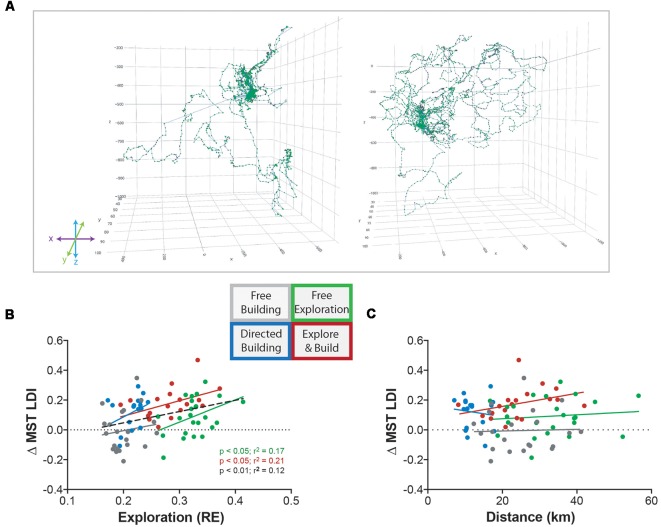
It is well known that the brain changes in response to the surrounding environment. The hippocampus has been shown to be particularly susceptible to environmental enrichment, with effects ranging from the generation of new hippocampal neurons and synapses to an increased expression of neurotrophic factors. While many of these changes in the hippocampus are well documented in animals, our understanding of how environmental enrichment can apply to humans is more ambiguous. In animals, spatial exploration has been shown to be a clear way to elicit the effects of environmental enrichment and considering the role of the hippocampus in spatial navigation, which has been shown in both animal models and humans, it suggests a viable avenue for translation of environmental enrichment to humans. Here, we test the hypothesis that the spatial exploration of a virtual video game environment, can impact the hippocampus and lead to an improvement in hippocampal-dependent memory. Using the video game Minecraft, we tested four groups of participants, each playing on custom servers and focusing on different aspects of Minecraft to test the effects of both building and exploration over the course of 2 weeks. We found an improvement in hippocampus-associated memory from pre-test to post-test and that the degree of improvement was tied to both the amount of exploration of the Minecraft world and the complexity of the structures built within Minecraft. Thus, the number of enrichment participants engaged in while playing Minecraft was directly correlated with improvements in hippocampal-dependent memory outside of the game.
众所周知,大脑会根据周围环境发生变化。海马体已被证明对环境丰富化尤为敏感,其影响范围从新的海马体神经元和突触的产生到神经营养因子表达的增加。虽然海马体中的许多这些变化在动物身上已有充分记录,但我们对环境丰富化如何应用于人类的理解却更为模糊。在动物中,空间探索已被证明是引发环境丰富化效应的一种明确方式,考虑到海马体在空间导航中的作用,这在动物模型和人类中均已得到证实,这表明将环境丰富化转化应用于人类是一条可行的途径。在此,我们检验这样一个假设:虚拟视频游戏环境中的空间探索能够影响海马体,并导致海马体依赖型记忆得到改善。我们使用《我的世界》这款视频游戏,测试了四组参与者,每组在定制服务器上玩游戏,并专注于《我的世界》的不同方面,以测试在两周时间内建造和探索的效果。我们发现从测试前到测试后,与海马体相关的记忆有所改善,并且改善程度与对《我的世界》世界的探索量以及在《我的世界》中建造的结构的复杂性都有关联。因此,参与者在玩《我的世界》时所参与的丰富化活动数量与游戏之外海马体依赖型记忆的改善直接相关。