Del Rio Beatriz, Sánchez-Llana Esther, Redruello Begoña, Magadan Alfonso H, Fernández María, Martin Maria Cruz, Ladero Victor, Alvarez Miguel A
Department of Biotechnology of Dairy Products, Institute of Dairy Products of Asturias - Spanish National Research Council (IPLA-CSIC), Villaviciosa, Spain.
Laboratoire Universitaire de Biodiversité et Ecologie Microbienne, Université de Bretagne Occidentale, Plouzané, France.
Front Microbiol. 2019 Mar 20;10:566. doi: 10.3389/fmicb.2019.00566. eCollection 2019.
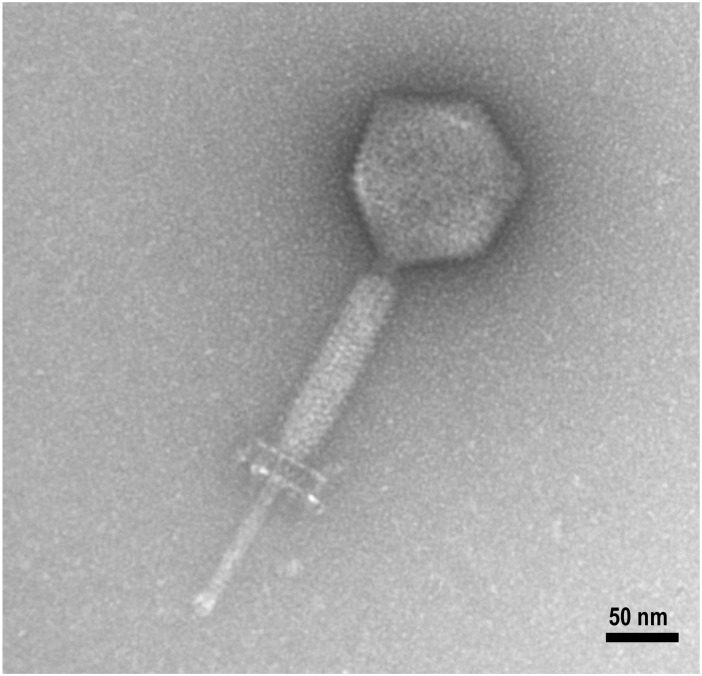
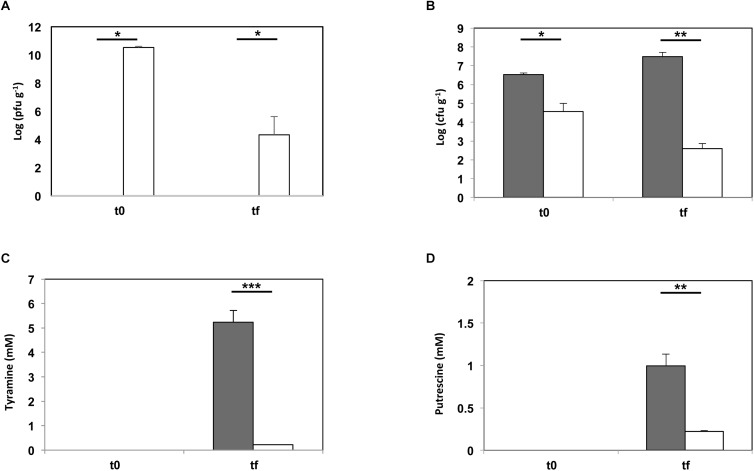
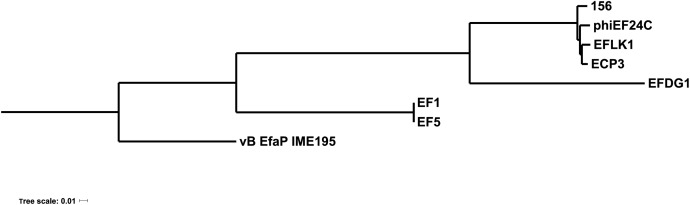
Biogenic amines (BA) - nitrogenous compounds of low molecular weight - are the result of metabolism of certain amino acids. They are biologically present in all living organisms and play essential physiological roles. However, their accumulation in foodstuffs due to the metabolic activity of certain microorganisms represents a toxicological risk. Containing such microorganisms, and with an abundance of precursor substrate amino acids, fermented foods in general, and cheeses in particular, provide an ideal matrix for the accumulation of these toxic compounds. Unfortunately, the main microorganisms responsible for BA accumulation are members of the lactic acid bacteria (LAB) group, which are also essential for the development of the organoleptic characteristics of the final product. The methods used to reduce the BA content of cheese, such as milk pasteurization, commonly fail to do so, and affect desirable non-BA-producing LAB as well. Bacteriophages have been proposed as biotechnological tools for diminishing the presence of undesirable microorganisms in dairy products. Given their specificity, they could be used to target the population of BA-producing bacteria. In this work, we aimed to explore the use of infecting phages as a tool to reduce the content of BA in dairy products. For this, we proceeded to the isolation and characterization of bacteriophage 156, a member of the family . Its genome was sequenced and compared with that of family phages available in public databases. Its capacity to decrease the accumulation of the BA tyramine and putrescine in an experimental laboratory-scale cheese model was proven.
生物胺(BA)——低分子量含氮化合物——是某些氨基酸代谢的产物。它们在所有生物中都有生物学存在,并发挥着重要的生理作用。然而,由于某些微生物的代谢活动,它们在食品中的积累代表了一种毒理学风险。一般来说,发酵食品,尤其是奶酪,含有此类微生物且富含前体底物氨基酸,为这些有毒化合物的积累提供了理想的基质。不幸的是,导致BA积累的主要微生物是乳酸菌(LAB)群体的成员,而这些微生物对于最终产品感官特性的形成也是必不可少的。用于降低奶酪中BA含量的方法,如牛奶巴氏杀菌,通常无法做到这一点,而且还会影响理想的不产生BA的LAB。噬菌体已被提议作为减少乳制品中不良微生物存在的生物技术工具。鉴于它们的特异性,可用于靶向产生BA的细菌群体。在这项工作中,我们旨在探索使用感染性噬菌体作为降低乳制品中BA含量的工具。为此,我们着手分离和鉴定噬菌体156,它是该科的一个成员。对其基因组进行了测序,并与公共数据库中该科噬菌体的基因组进行了比较。已证明它在实验性实验室规模的奶酪模型中具有减少BA酪胺和腐胺积累的能力。