Department of Software and Information Systems, University of North Carolina at Charlotte, Charlotte, NC, 28223, USA.
Department of Radiation Oncology, Duke University Medical Center, Durham, NC, 27710, USA.
Med Phys. 2019 Jun;46(6):2760-2775. doi: 10.1002/mp.13526. Epub 2019 Apr 24.
Intensity-Modulated Radiation Therapy (IMRT), including its variations (including IMRT, Volumetric Arc Therapy (VMAT), and Tomotherapy), is a widely used and critically important technology for cancer treatment. It is a knowledge-intensive technology due not only to its own technical complexity, but also to the inherently conflicting nature of maximizing tumor control while minimizing normal organ damage. As IMRT experience and especially the carefully designed clinical plan data are accumulated during the past two decades, a new set of methods commonly termed knowledge-based planning (KBP) have been developed that aim to improve the quality and efficiency of IMRT planning by learning from the database of past clinical plans. Some of this development has led to commercial products recently that allowed the investigation of KBP in numerous clinical applications. In this literature review, we will attempt to present a summary of published methods of knowledge-based approaches in IMRT and recent clinical validation results.
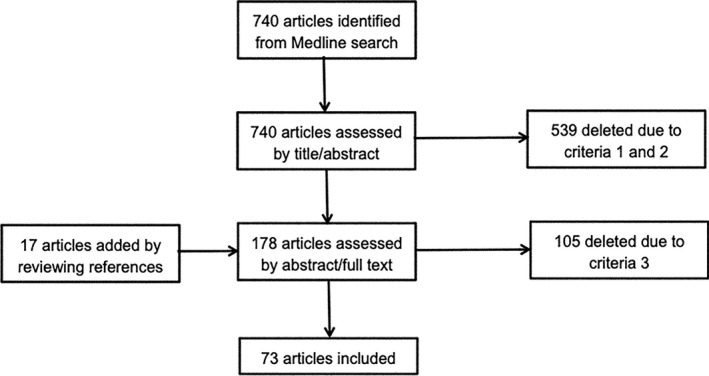
In March 2018, a literature search was conducted in the NIH Medline database using the PubMed interface to identify publications that describe methods and validations related to KBP in IMRT including variations such as VMAT and Tomotherapy. The search criteria were designed to have a broad scope to capture relevant results with high sensitivity. The authors filtered down the search results according to a predefined selection criteria by reviewing the titles and abstracts first and then by reviewing the full text. A few papers were added to the list based on the references of the reviewed papers. The final set of papers was reviewed and summarized here.
The initial search yielded a total of 740 articles. A careful review of the titles, abstracts, and eventually the full text and then adding relevant articles from reviewing the references resulted in a final list of 73 articles published between 2011 and early 2018. These articles described methods for developing knowledge models for predicting such parameters as dosimetric and dose-volume points, voxel-level doses, and objective function weights that improve or automate IMRT planning for various cancer sites, addressing different clinical and quality assurance needs, and using a variety of machine learning approaches. A number of articles reported carefully designed clinical studies that assessed the performance of KBP models in realistic clinical applications. Overwhelming majority of the studies demonstrated the benefits of KBP in achieving comparable and often improved quality of IMRT planning while reducing planning time and plan quality variation.
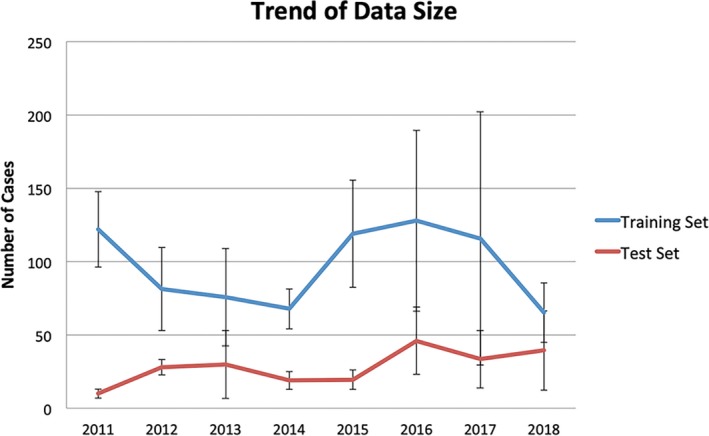
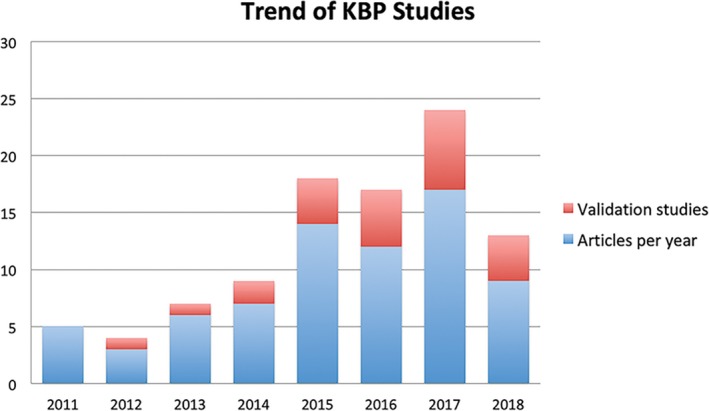
The number of KBP-related studies has been steadily increasing since 2011 indicating a growing interest in applying this approach to clinical applications. Validation studies have generally shown KBP to produce plans with quality comparable to expert planners while reducing the time and efforts to generate plans. However, current studies are mostly retrospective and leverage relatively small datasets. Larger datasets collected through multi-institutional collaboration will enable the development of more advanced models to further improve the performance of KBP in complex clinical cases. Prospective studies will be an important next step toward widespread adoption of this exciting technology.
调强放射治疗(IMRT)及其各种变体(包括调强放射治疗、容积弧形治疗(VMAT)和螺旋断层放疗)是癌症治疗中广泛使用且至关重要的技术。它是一种知识密集型技术,不仅因为其自身的技术复杂性,还因为最大限度地控制肿瘤和最小化正常器官损伤之间固有的冲突性质。随着过去二十年中 IMRT 经验的积累,特别是精心设计的临床计划数据的积累,已经开发出了一套新的方法,通常称为基于知识的规划(KBP),旨在通过从过去的临床计划数据库中学习来提高 IMRT 计划的质量和效率。其中一些发展最近已经导致了商业产品的出现,允许在许多临床应用中对 KBP 进行研究。在这篇文献综述中,我们将尝试总结发表的 IMRT 中基于知识的方法和最近的临床验证结果。
2018 年 3 月,我们在 NIH Medline 数据库中使用 PubMed 界面进行了文献检索,以确定描述与 IMRT 中 KBP 相关的方法和验证的出版物,包括 VMAT 和螺旋断层放疗等变体。搜索标准旨在具有广泛的范围,以高灵敏度捕获相关结果。作者首先通过查看标题和摘要,然后通过查看全文,根据预先定义的选择标准对搜索结果进行了筛选。根据已审查论文的参考文献,又添加了一些论文。最后对这组论文进行了综述和总结。
最初的搜索共产生了 740 篇文章。仔细审查标题、摘要,最后是全文,并从审查参考文献中添加相关文章,最终得到了 2011 年至 2018 年初发表的 73 篇文章的最终列表。这些文章描述了用于开发知识模型的方法,这些模型可预测诸如剂量学和剂量体积点、体素级剂量和目标函数权重等参数,从而改善或自动化各种癌症部位的 IMRT 计划,以满足不同的临床和质量保证需求,并使用各种机器学习方法。许多文章报告了精心设计的临床研究,评估了 KBP 模型在现实临床应用中的性能。绝大多数研究表明,KBP 在实现可比且通常改善的 IMRT 计划质量的同时,还可以减少规划时间和计划质量的变化。
自 2011 年以来,与 KBP 相关的研究数量稳步增加,这表明人们越来越有兴趣将这种方法应用于临床应用。验证研究普遍表明,KBP 可以生成质量与专家规划师相当的计划,同时减少生成计划的时间和精力。然而,目前的研究大多是回顾性的,利用的是相对较小的数据集。通过多机构合作收集更大的数据集将使开发更先进的模型成为可能,从而进一步提高 KBP 在复杂临床病例中的性能。前瞻性研究将是朝着广泛采用这一令人兴奋的技术迈出的重要下一步。