Research Center in Epidemiology, Biostatistics and Clinical Research, School of Public Health, Université libre de Bruxelles (ULB), 1040 Brussels, Belgium.
Department of Public Health and Primary Care, Ghent University (UGent), 9000 Ghent, Belgium.
Nutrients. 2019 Apr 10;11(4):812. doi: 10.3390/nu11040812.
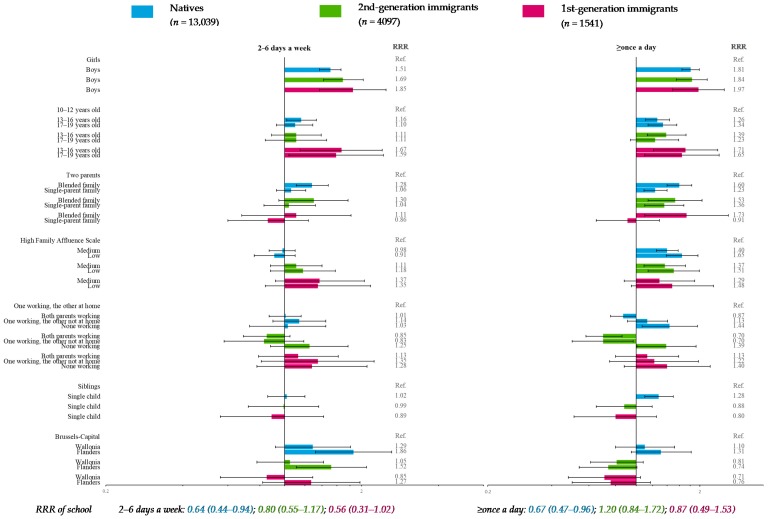
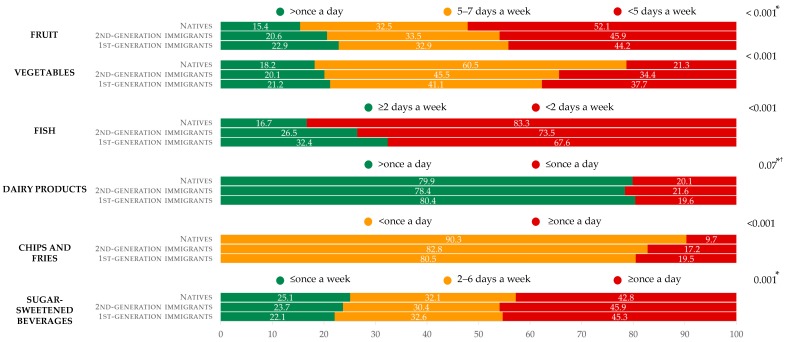
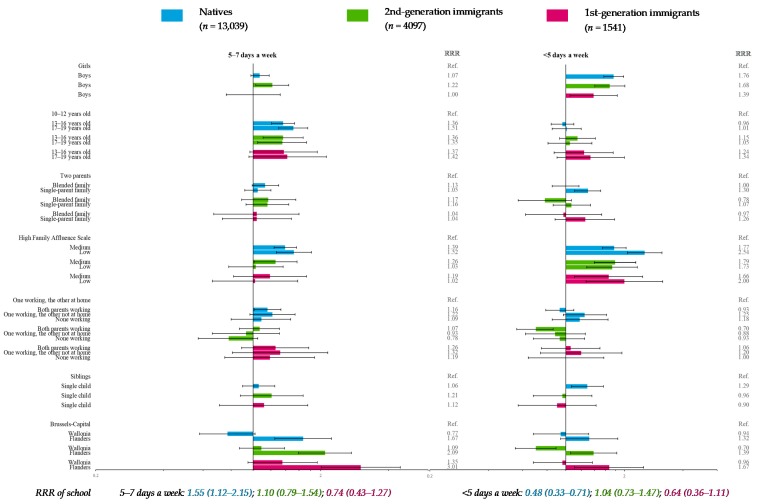
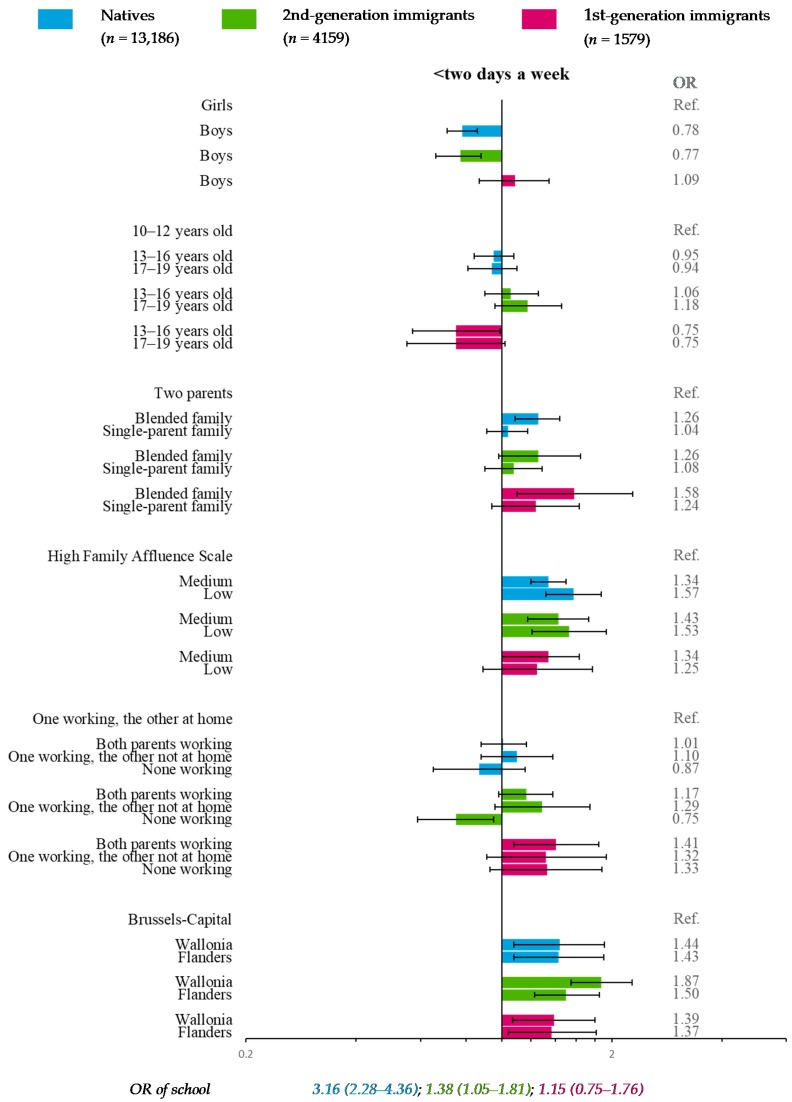
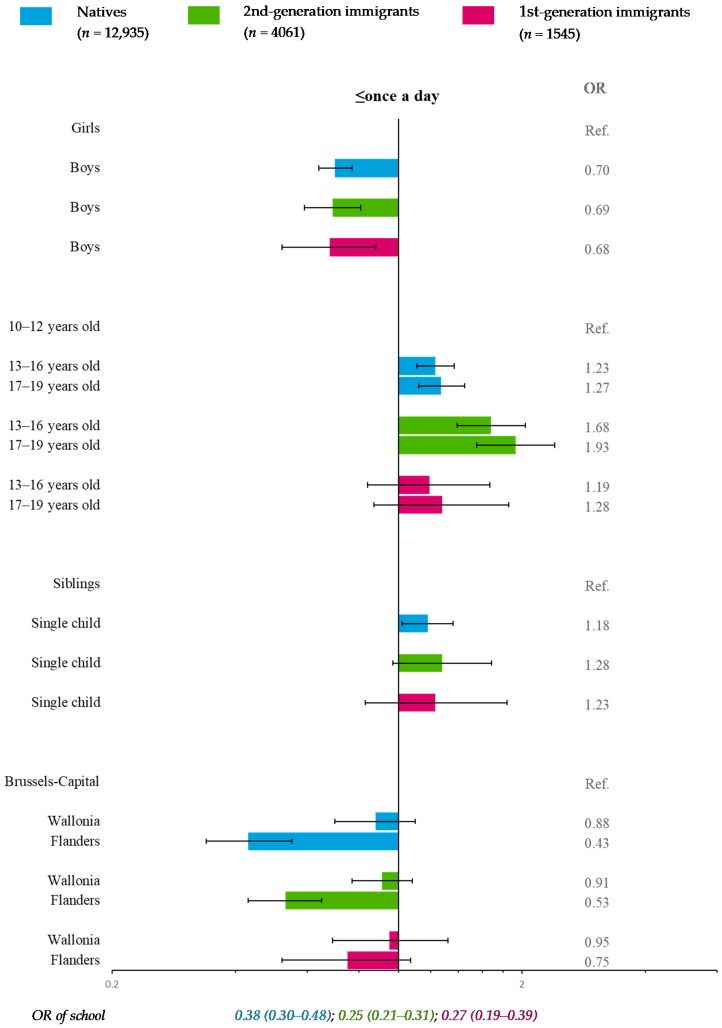
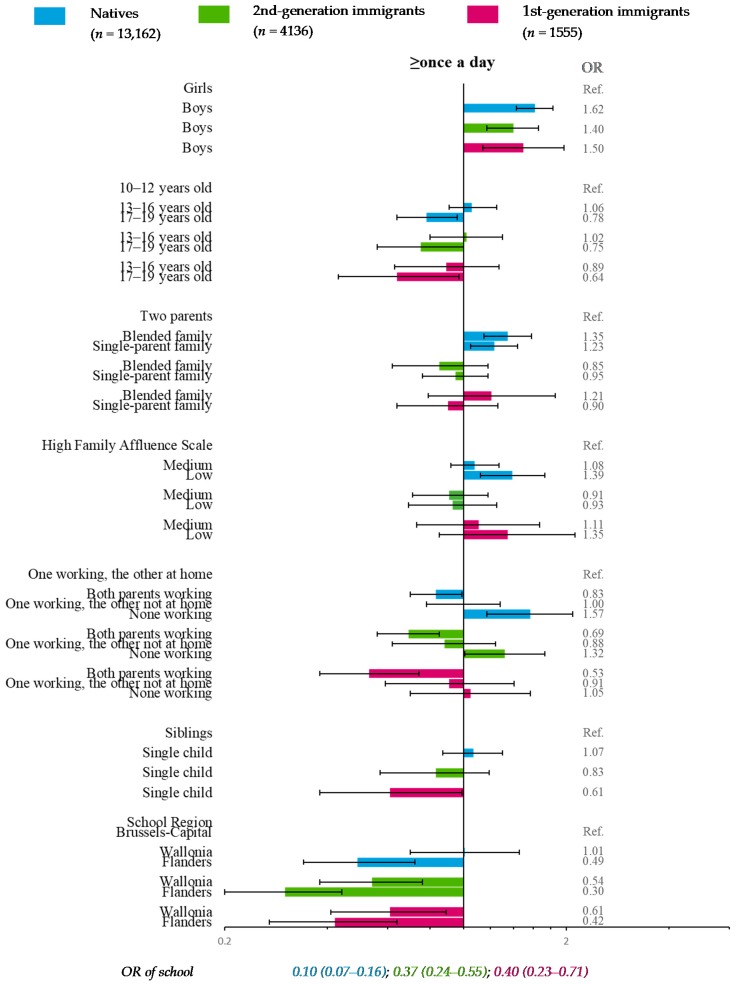
Little information concerning social disparities in adolescent dietary habits is currently available, especially regarding migration status. The aim of the present study was to estimate socioeconomic disparities in dietary habits of school adolescents from different migration backgrounds. In the 2014 cross-sectional "Health Behavior in School-Aged Children" survey in Belgium, food consumption was estimated using a self-administrated short food frequency questionnaire. In total, 19,172 school adolescents aged 10-19 years were included in analyses. Multilevel multiple binary and multinomial logistic regressions were performed, stratified by migration status (natives, 2nd- and 1st-generation immigrants). Overall, immigrants more frequently consumed both healthy and unhealthy foods. Indeed, 32.4% of 1st-generation immigrants, 26.5% of 2nd-generation immigrants, and 16.7% of natives consumed fish ≥two days a week. Compared to those having a high family affluence scale (FAS), adolescents with a low FAS were more likely to consume chips and fries ≥once a day (vs. <once a day: Natives aRRR = 1.39 (95%CI: 1.12-1.73); NS in immigrants). Immigrants at schools in Flanders were less likely than those in Brussels to consume sugar-sweetened beverages 2-6 days a week (vs. ≤once a week: Natives aRRR = 1.86 (95%CI: 1.32-2.62); 2nd-generation immigrants aRRR = 1.52 (1.11-2.09); NS in 1st-generation immigrants). The migration gradient observed here underlines a process of acculturation. Narrower socioeconomic disparities in immigrant dietary habits compared with natives suggest that such habits are primarily defined by culture of origin. Nutrition interventions should thus include cultural components of dietary habits.
目前有关青少年饮食习惯的社会差异的信息很少,特别是关于移民身份的信息。本研究的目的是评估具有不同移民背景的学校青少年的饮食习惯中的社会经济差异。在比利时 2014 年的横断面“儿童健康行为”调查中,使用自我管理的简短食物频率问卷来估计食物消耗。共纳入了 19172 名 10-19 岁的在校青少年进行分析。根据移民身份(本地人、第二和第一代移民)进行分层,采用多水平多元二项和多项逻辑回归进行分析。总体而言,移民更频繁地食用健康和不健康的食物。实际上,第一代移民中有 32.4%,第二代移民中有 26.5%,本地人中有 16.7%每周至少食用两次鱼。与那些具有高家庭富裕程度(FAS)的青少年相比,FAS 较低的青少年更有可能每天至少食用一次薯片和薯条(与每天不到一次相比:本地人 aRRR=1.39(95%CI:1.12-1.73);移民中无统计学意义)。与布鲁塞尔的学校相比,在佛兰德斯的学校的移民每周食用 2-6 天含糖饮料的可能性较小(与每周不超过一次相比:本地人 aRRR=1.86(95%CI:1.32-2.62);第二代移民 aRRR=1.52(1.11-2.09);第一代移民中无统计学意义)。这里观察到的移民梯度强调了一种文化适应过程。与本地人相比,移民饮食习惯中的社会经济差异较小,这表明这些习惯主要由原籍国的文化定义。因此,营养干预措施应包括饮食习惯的文化成分。