Caponetti Valeria, Trzcinski Jakub W, Cantelli Andrea, Tavano Regina, Papini Emanuele, Mancin Fabrizio, Montalti Marco
Dipartimento di Chimica "Giacomo Ciamician", Università di Bologna, Bologna, Italy.
Dipartimento di Scienze Chimiche, Università di Padova, Padova, Italy.
Front Chem. 2019 Mar 28;7:168. doi: 10.3389/fchem.2019.00168. eCollection 2019.
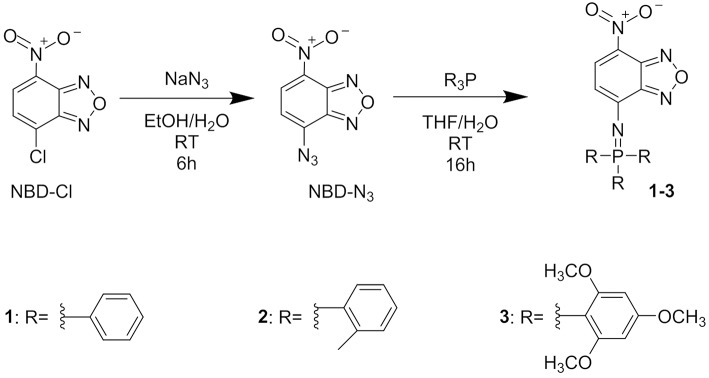
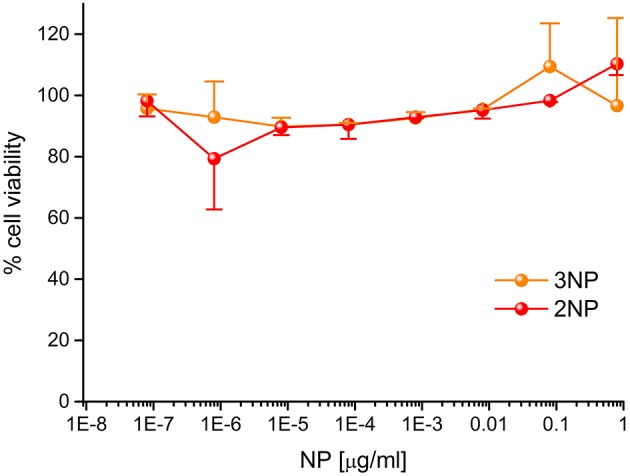
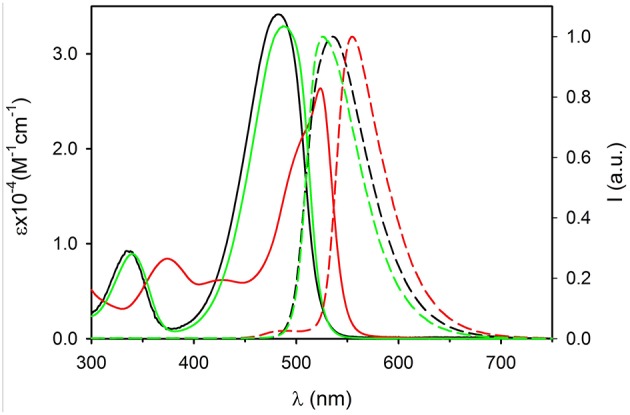
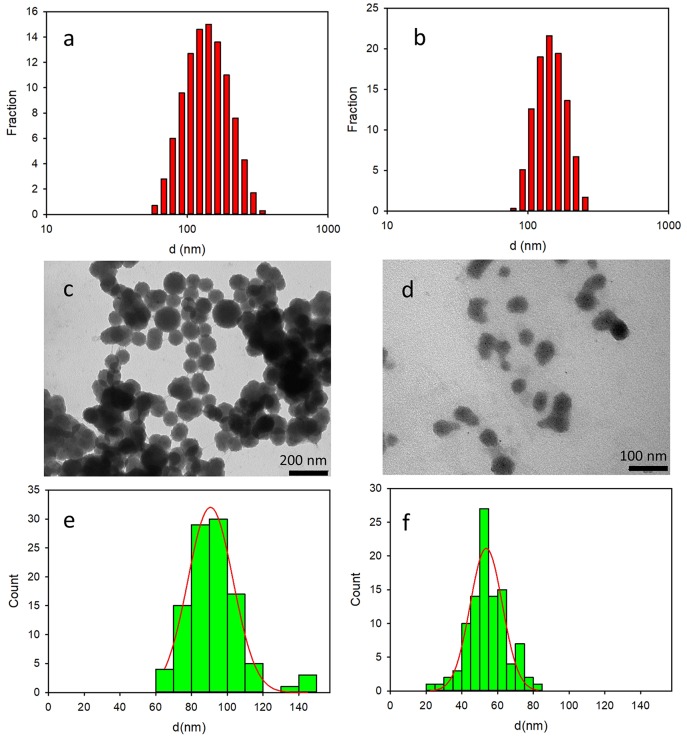
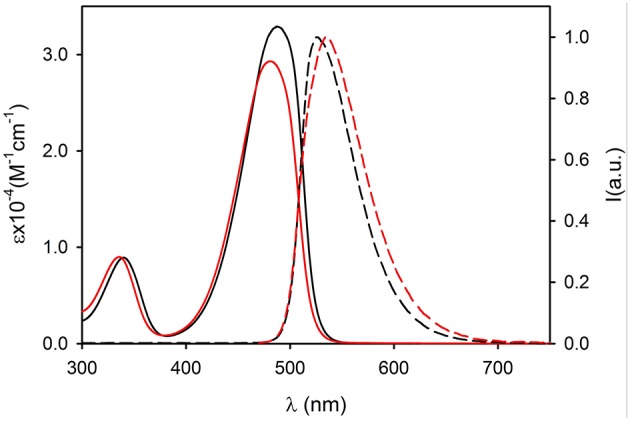
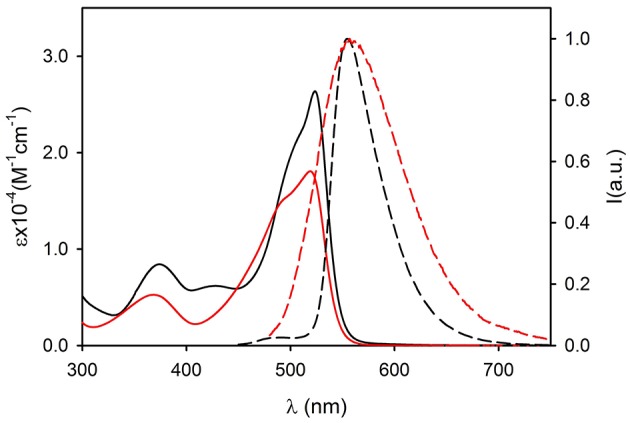
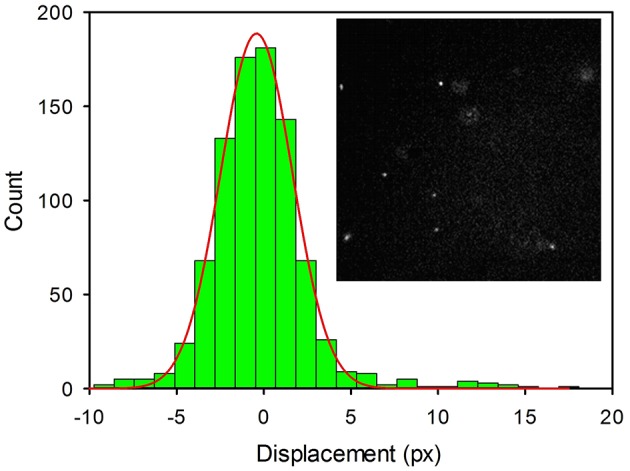
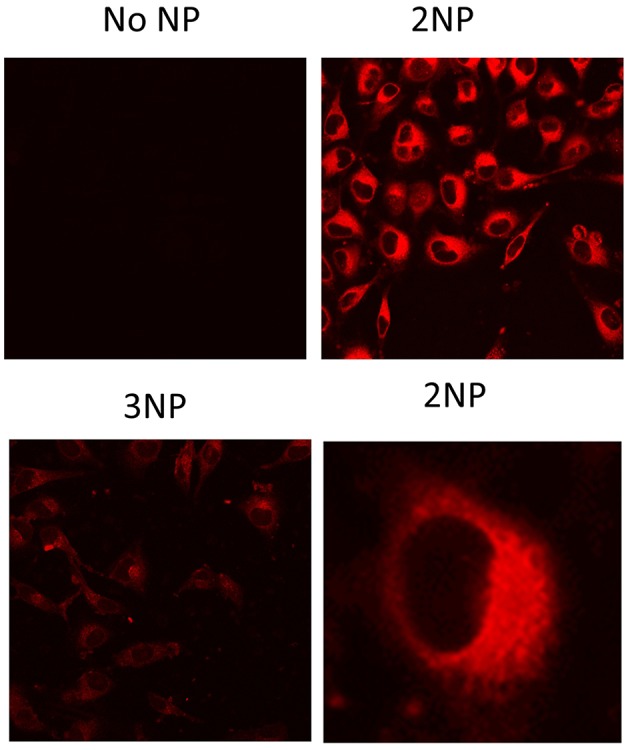
Fluorescence is a powerful tool for mapping biological events in real-time with high spatial resolution. Ultra-bright probes are needed in order to achieve high sensitivity: these probes are typically obtained by gathering a huge number of fluorophores in a single nanoparticle (NP). Unfortunately this assembly produces quenching of the fluorescence because of short-range intermolecular interactions. Here we demonstrate that rational structural modification of a well-known molecular fluorophore N-(7-nitrobenz-2-oxa-1,3-diazol-4-yl) (NBD) produces fluorophores that self-assemble in nanoparticles in the biocompatible environment without any dramatic decrease of the fluorescence quantum yield. Most importantly, the resulting NP show, in an aqueous environment, a brightness which is more than six orders of magnitude higher than the molecular component in the organic solvent. Moreover, the NP are prepared by nanoprecipitation and they are stabilized only via non-covalent interaction, they are surprisingly stable and can be observed as individual bright spots freely diffusing in solution at a concentration as low as 1 nM. The suitability of the NP as biocompatible fluorescent probes was demonstrated in the case of HeLa cells by fluorescence confocal microscopy and MTS assays.
荧光是一种用于以高空间分辨率实时绘制生物事件的强大工具。为了实现高灵敏度,需要超亮探针:这些探针通常通过在单个纳米颗粒(NP)中聚集大量荧光团来获得。不幸的是,由于短程分子间相互作用,这种组装会导致荧光猝灭。在这里,我们证明了对著名的分子荧光团N-(7-硝基苯并-2-恶唑-1,3-二唑-4-基)(NBD)进行合理的结构修饰,可产生在生物相容性环境中自组装成纳米颗粒的荧光团,而荧光量子产率不会有任何显著降低。最重要的是,所得的NP在水性环境中显示出的亮度比有机溶剂中的分子成分高出六个数量级以上。此外,NP通过纳米沉淀法制备,仅通过非共价相互作用稳定,它们出奇地稳定,并且在低至1 nM的浓度下可作为在溶液中自由扩散的单个亮点观察到。通过荧光共聚焦显微镜和MTS分析,在HeLa细胞的情况下证明了NP作为生物相容性荧光探针的适用性。