Palmer Robert J, Cotton Sean L, Kokaras Alexis S, Gardner Pamela, Grisius Margaret, Pelayo Eileen, Warner Blake, Paster Bruce J, Alevizos Ilias
Oral Immunity and Inflammation Unit, National Institute of Dental and Craniofacial Research, National Institutes of Health, Bethesda, MD, USA.
Department of Microbiology, The Forsyth Institute, Cambridge, MA, USA.
J Oral Microbiol. 2019 Apr 1;11(1):1586413. doi: 10.1080/20002297.2019.1586413. eCollection 2019.
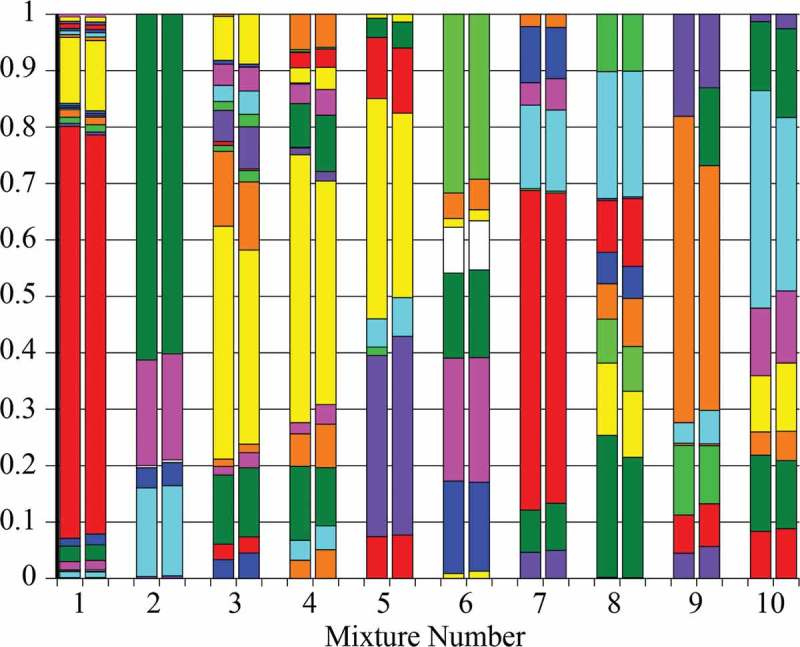
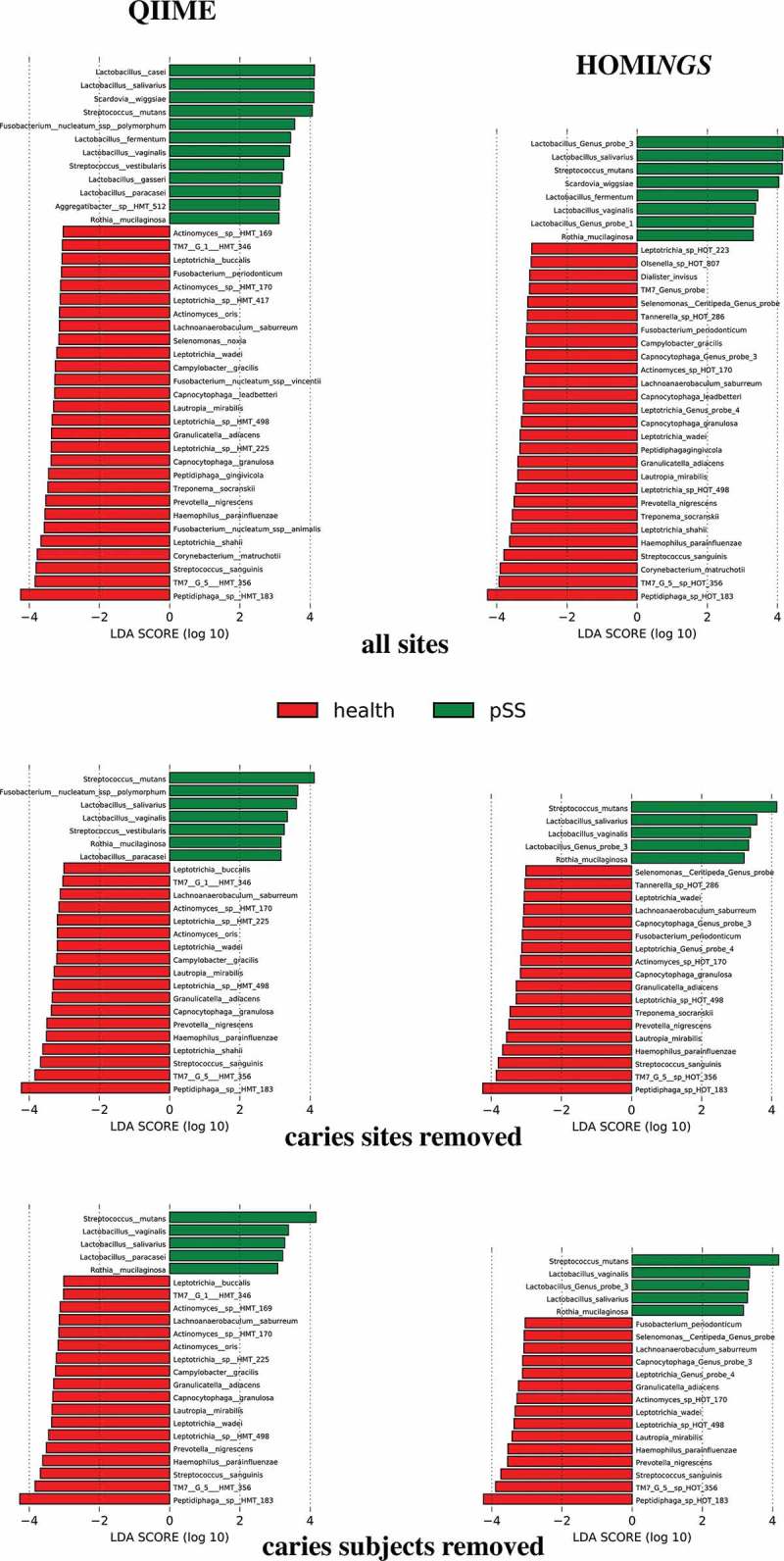
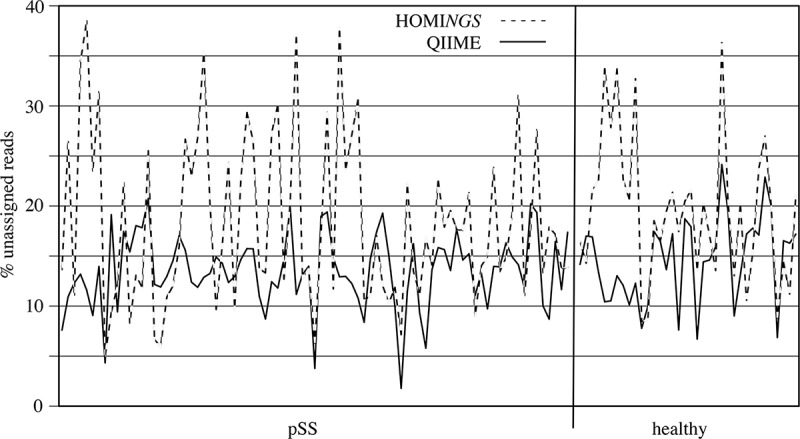
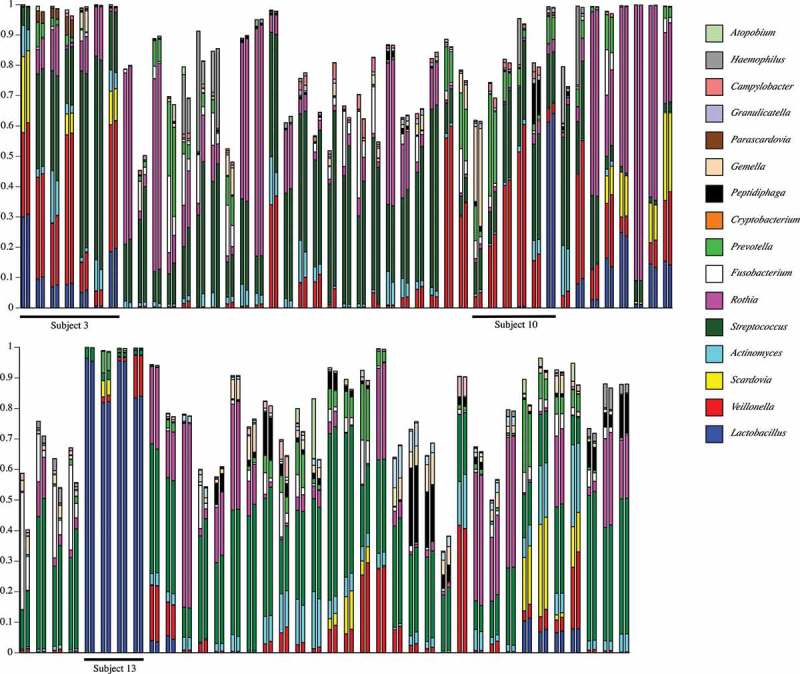
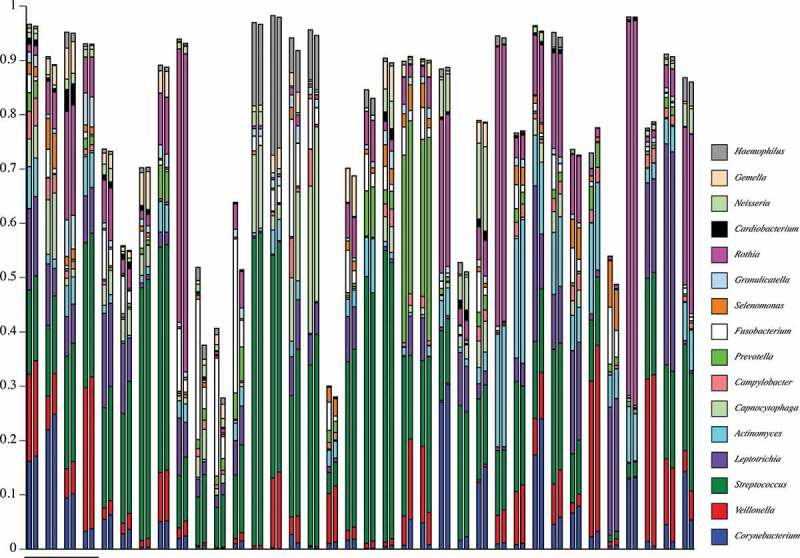
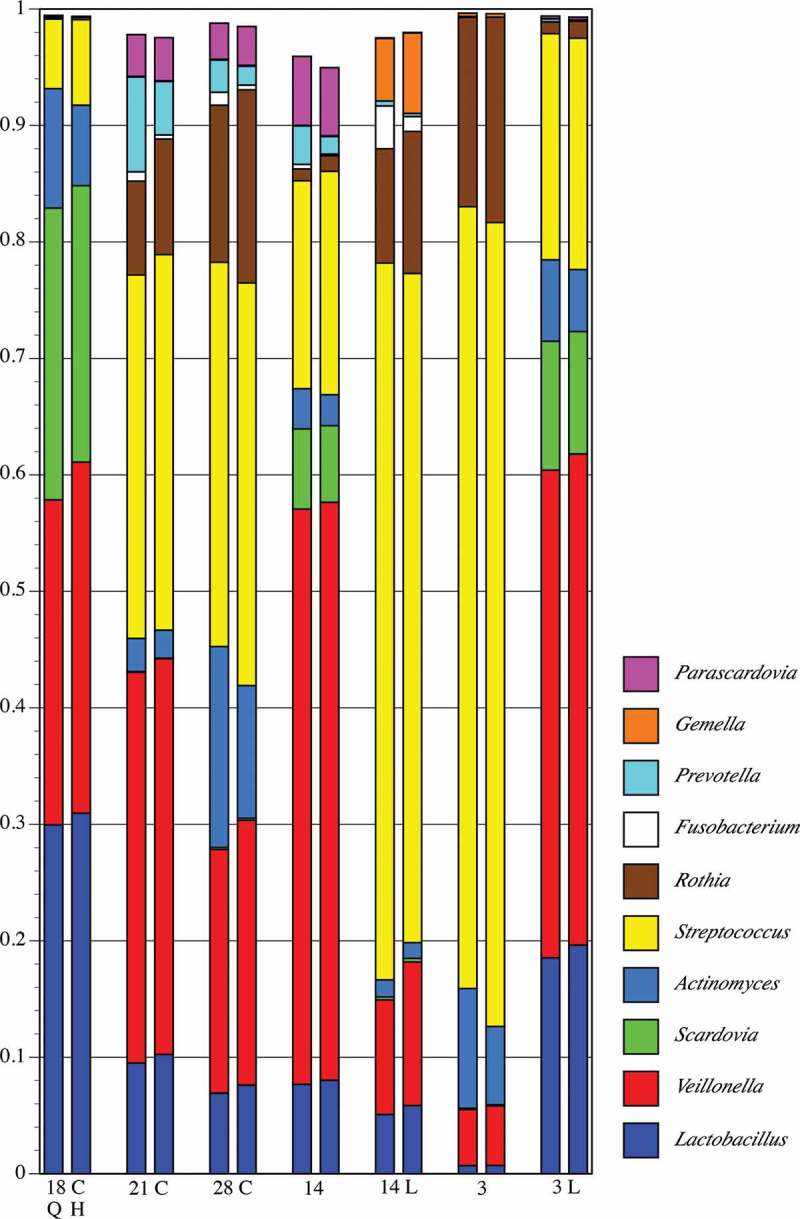
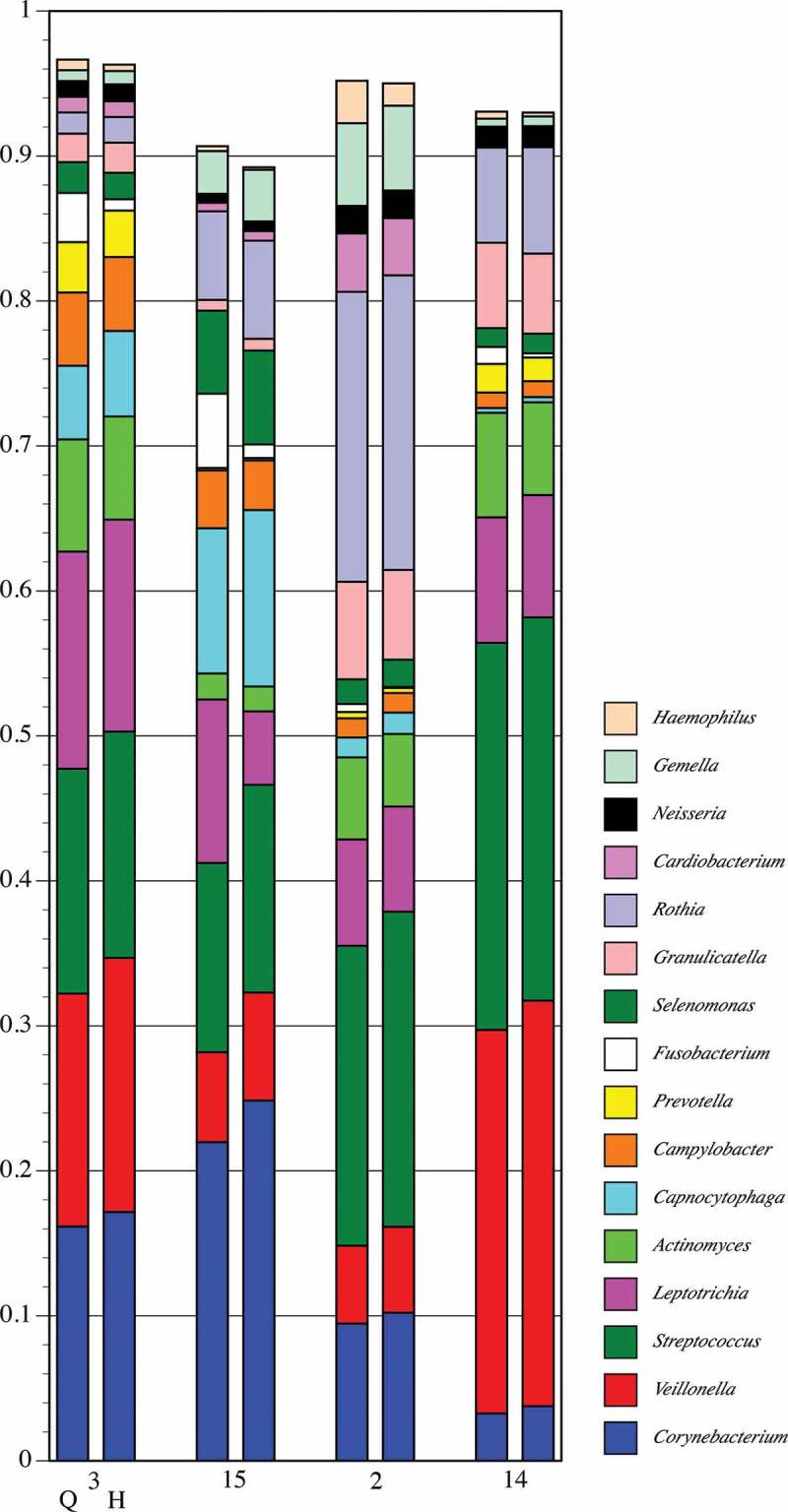
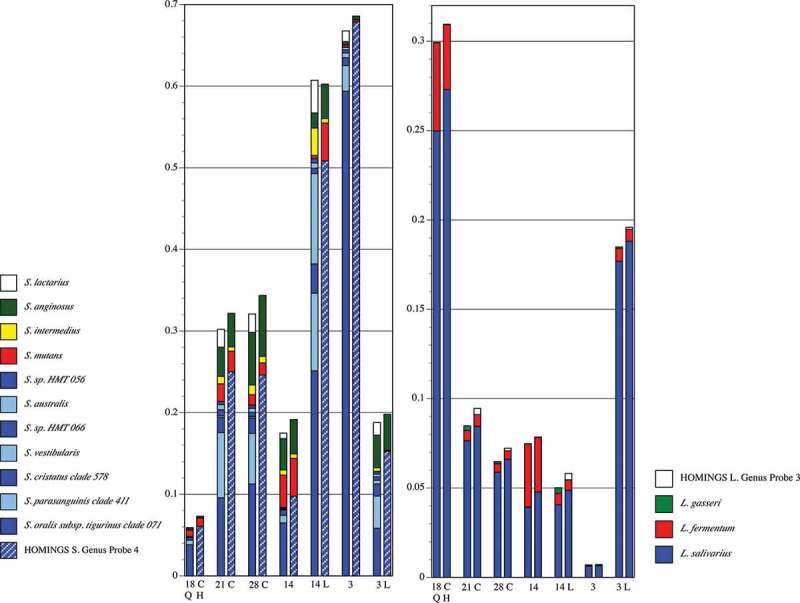
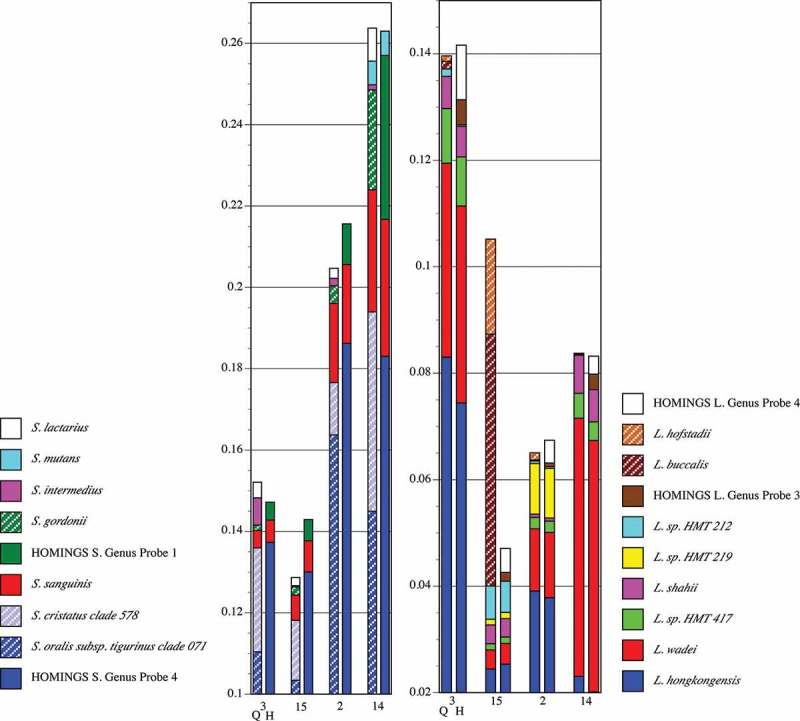
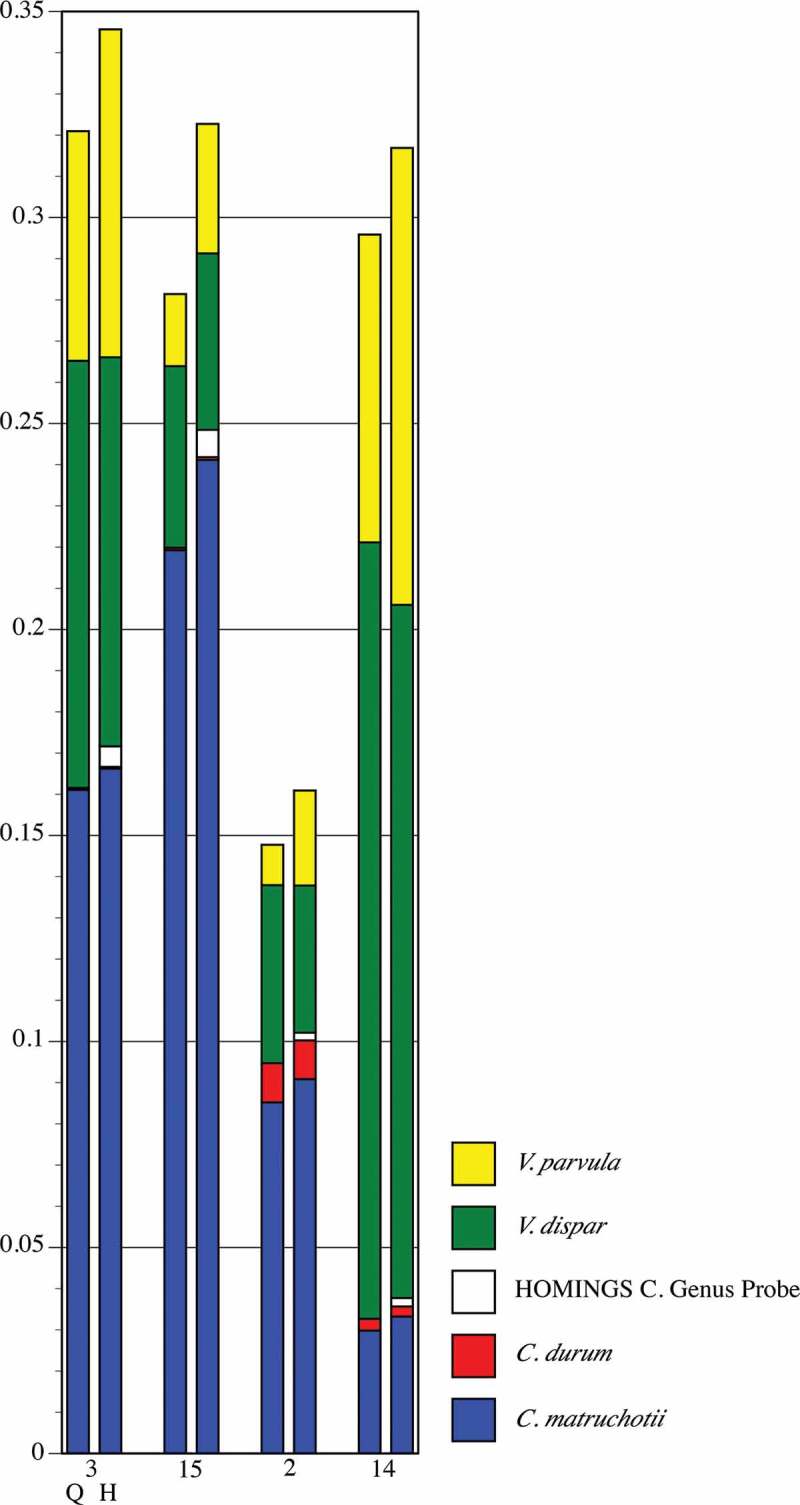
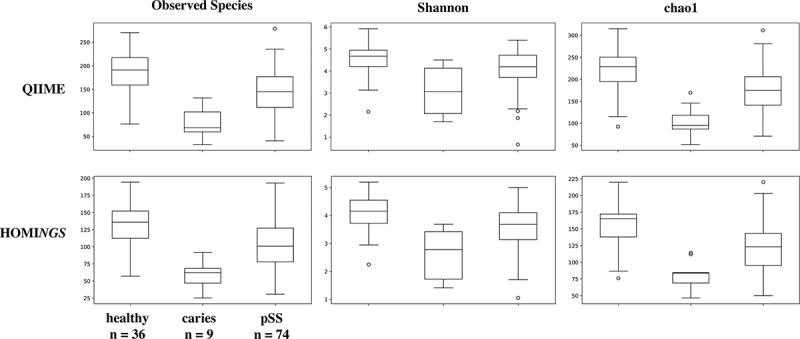
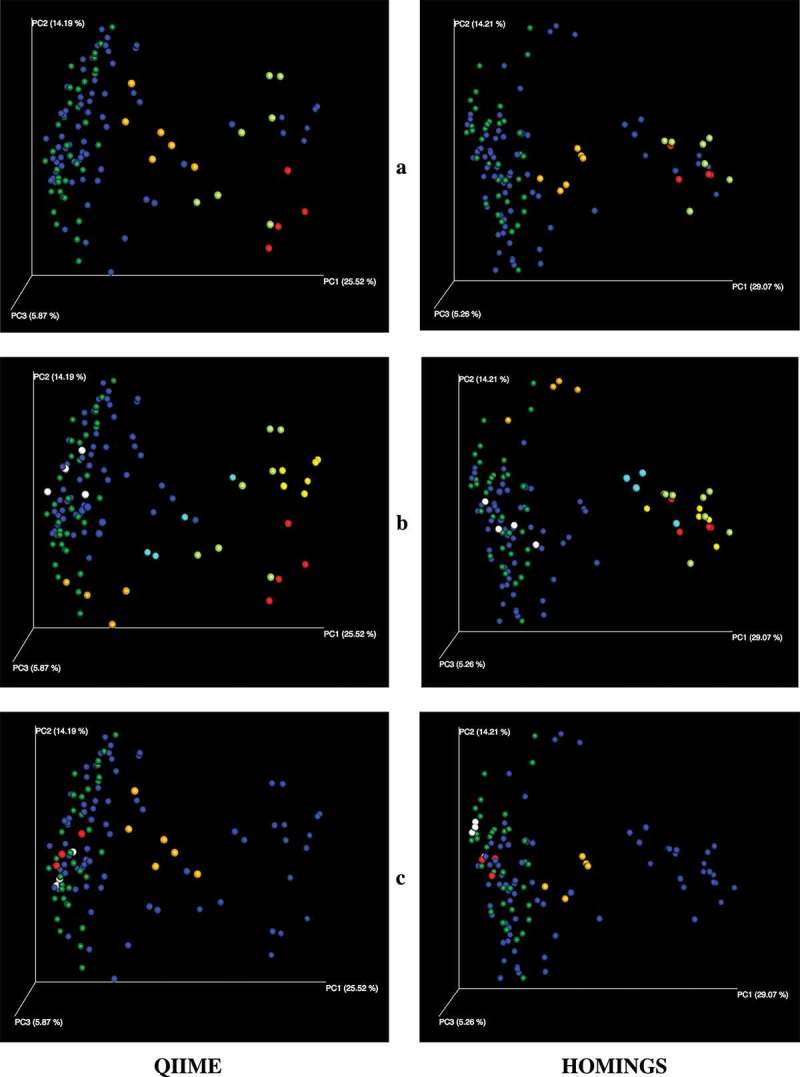
Molecular taxonomic assignments in oral microbial communities have been made using probe-matching approaches, but never compared to those obtained by more readily accepted tree-based approaches. To compare community composition profiles obtained from a probe-matching approach (HOMI) to those from a closed-ended tree-based approach (QIIME using the eHOMD database). HOMIand QIIME were used for parallel analysis of ten mock community samples, and of 119 supragingival plaque samples from ecologically unique sites (sound tooth surfaces in healthy subjects, sound tooth surfaces in patients with primary Sjögren's Syndrome, and carious lesions in Sjögren's Syndrome patients). Linear discriminant analysis Effective Size (LEfSe) was used to identify discriminating taxa among the natural plaque samples. Community composition profiles of all samples were congruent between the two analysis aproaches. Alpha and beta diversity of the natural plaque communities were likewise similar. Communities from pSS patients and those from individuals with normal salivary flow differed in alpha and beta diversity. Both classification approaches yielded differences in composition predicted for samples from these subject cohorts, and discriminating taxa were similar between approaches. A direct comparison demonstrates that HOMI is largely equivalent to the tree-based approach as implemented here.
口腔微生物群落中的分子分类任务已通过探针匹配方法完成,但从未与通过更易被接受的基于树的方法获得的结果进行比较。为了将通过探针匹配方法(HOMI)获得的群落组成概况与通过基于树的封闭式方法(使用eHOMD数据库的QIIME)获得的概况进行比较,使用HOMI和QIIME对十个模拟群落样本以及来自生态独特部位的119个龈上菌斑样本(健康受试者的健康牙面、原发性干燥综合征患者的健康牙面以及干燥综合征患者的龋损)进行平行分析。使用线性判别分析效应大小(LEfSe)来识别天然菌斑样本中的判别分类群。两种分析方法所得所有样本的群落组成概况一致。天然菌斑群落的α和β多样性同样相似。原发性干燥综合征患者的群落与唾液分泌正常个体的群落在α和β多样性方面存在差异。两种分类方法对这些受试者队列样本的组成预测均存在差异,且两种方法的判别分类群相似。直接比较表明,HOMI在很大程度上等同于此处所采用的基于树的方法。