Rafeek Reisha, Carrington Christine V F, Gomez Andres, Harkins Derek, Torralba Manolito, Kuelbs Claire, Addae Jonas, Moustafa Ahmed, Nelson Karen E
School of Dentistry, Faculty of Medical Sciences, The University of the West Indies, St. Augustine, Trinidad and Tobago.
Department of Preclinical Sciences, Faculty of Medical Sciences, The University of the West Indies, St. Augustine, Trinidad and Tobago.
J Oral Microbiol. 2018 Oct 23;11(1):1536181. doi: 10.1080/20002297.2018.1536181. eCollection 2019.
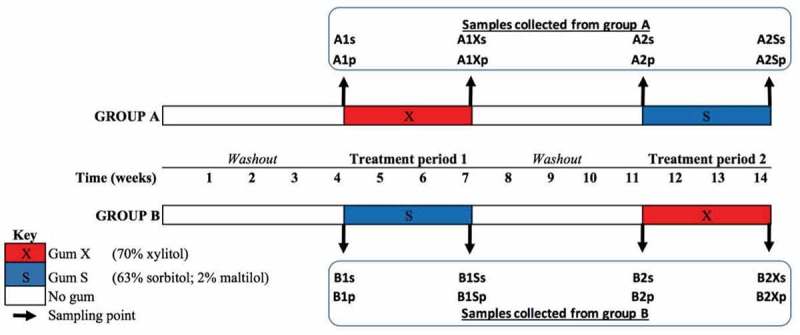
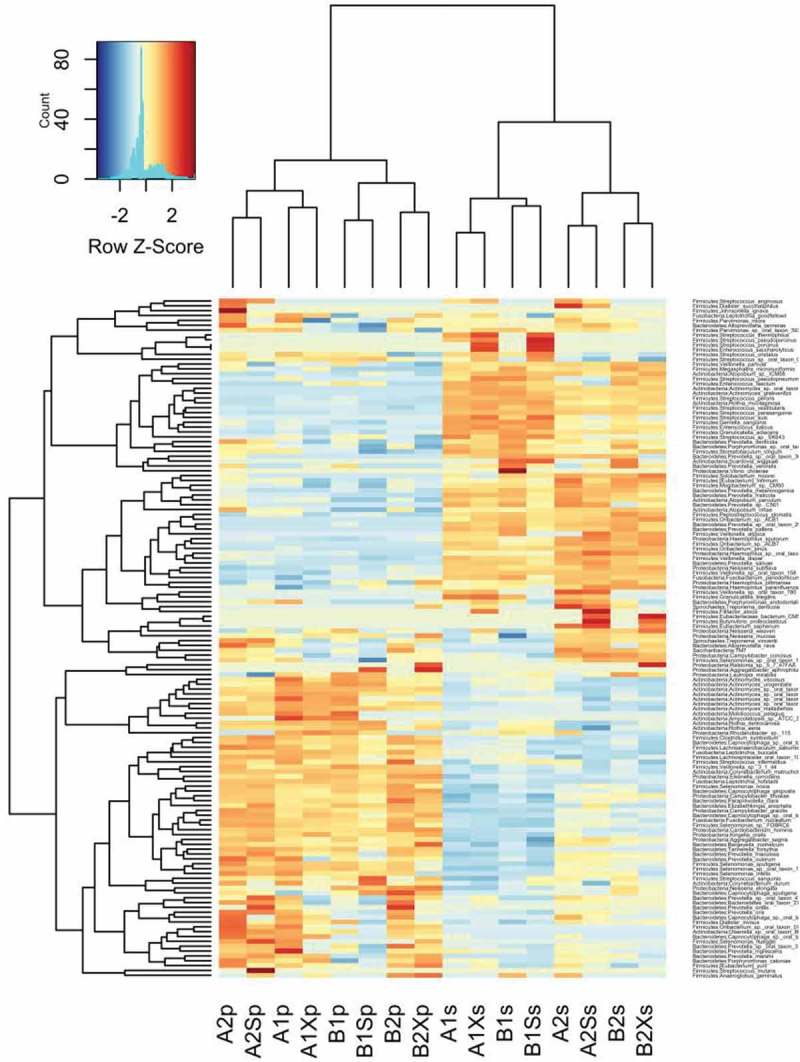
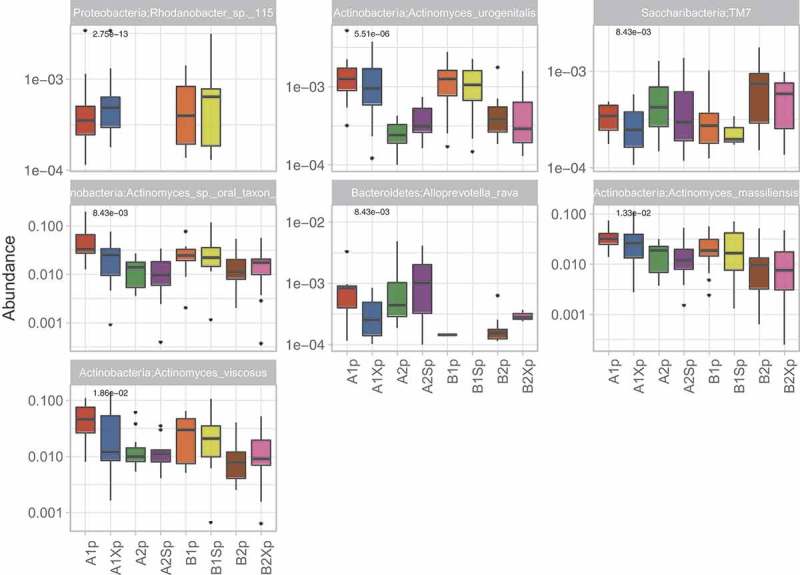
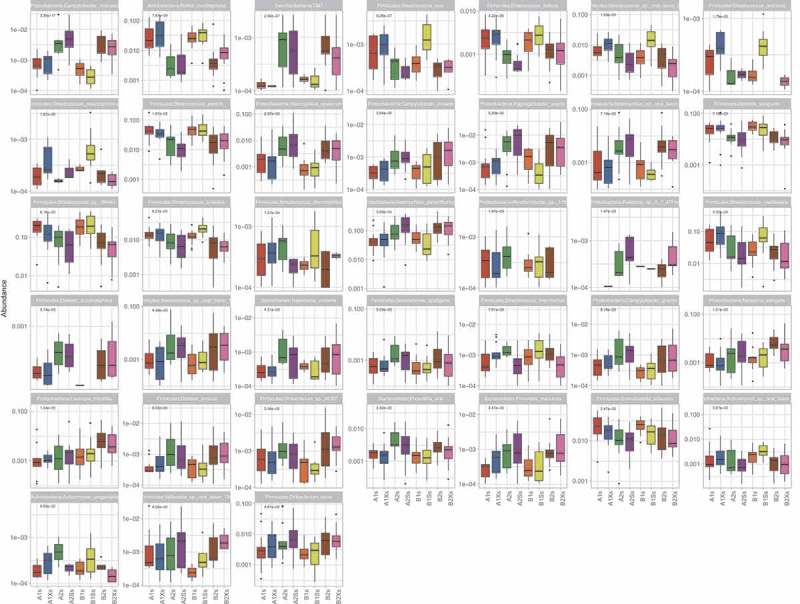
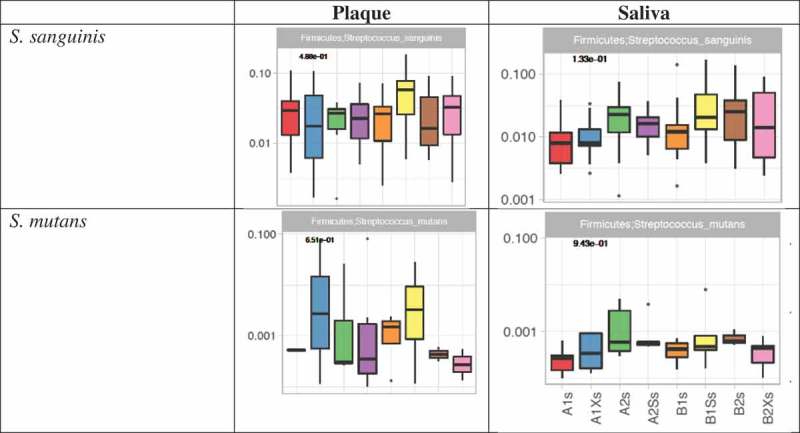
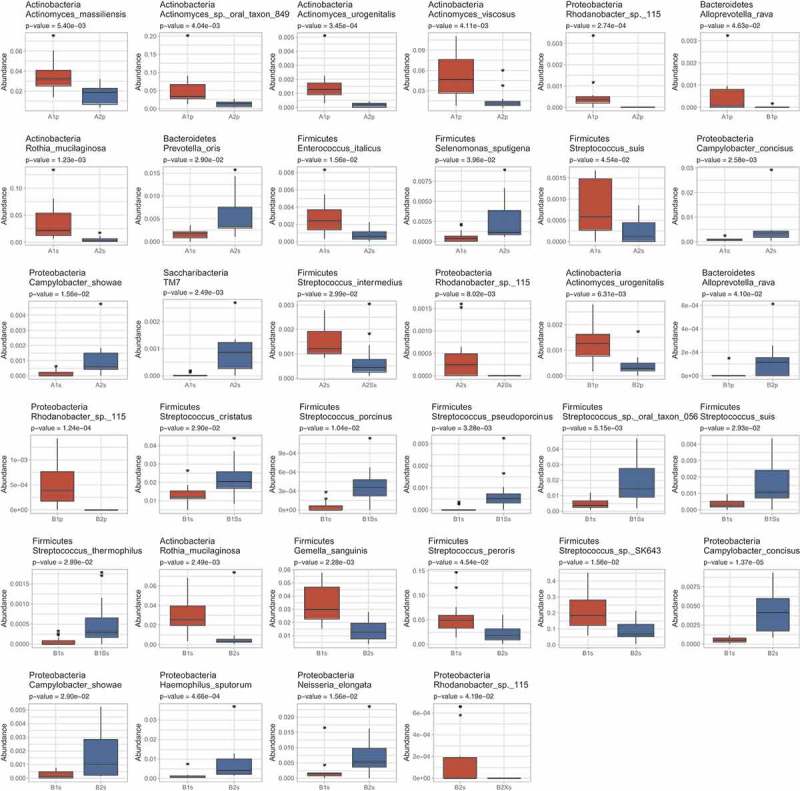
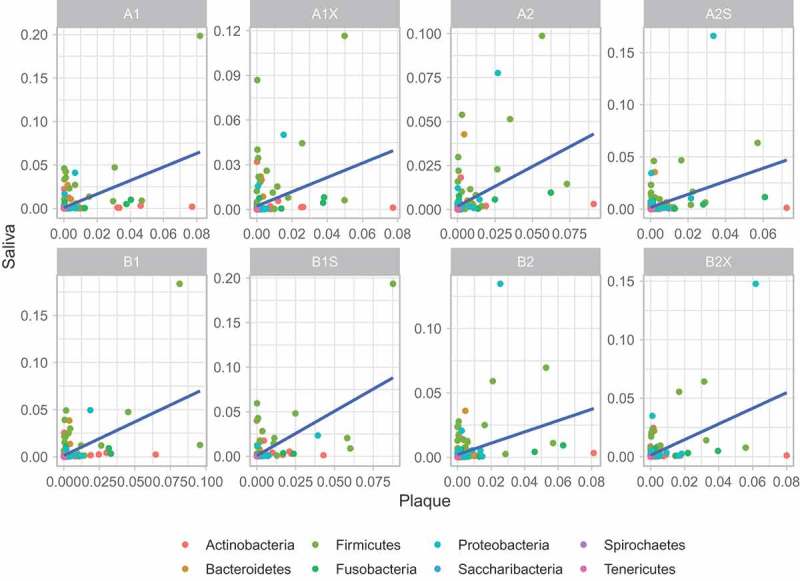
Chewing gum containing xylitol may help prevent caries by reducing levels of mutans streptococci (MS) and lactobacilli in saliva and plaque. Very little is known about other species which are possibly beneficial to oral health. In this study, we employed high-throughput sequencing of the 16S rRNA gene to profile microbial communities of saliva and plaque following short-term consumption of xylitol and sorbitol containing chewing gum. Participants ( = 30) underwent a washout period and were randomly assigned to one of two groups. Each group chewed either xylitol or sorbitol gum for three weeks, before undergoing a second four-week washout period after which they switched to the alternate gum for three weeks. Analysis of samples collected before and after each intervention identified distinct plaque and saliva microbial communities that altered dependent on the order in which gum treatments were given. Neither the xylitol nor sorbitol treatments significantly affected the bacterial composition of plaque. Lactobacilli were undetected and the number of sequence reads was very low and unaffected by either xylitol or sorbitol. However, sorbitol affected several other streptococcal species in saliva including increasing the abundance of , an oral commensal shown to inhibit bacteria associated with chronic periodontitis.
含有木糖醇的口香糖可能通过降低唾液和牙菌斑中变形链球菌(MS)和乳酸菌的水平来帮助预防龋齿。对于其他可能有益于口腔健康的物种,人们了解甚少。在本研究中,我们采用16S rRNA基因高通量测序技术,对短期食用含木糖醇和山梨醇口香糖后唾液和牙菌斑中的微生物群落进行分析。参与者(n = 30)经历了一个洗脱期,并被随机分为两组。每组咀嚼木糖醇口香糖或山梨醇口香糖三周,之后再经历一个四周的洗脱期,然后他们换用另一种口香糖再咀嚼三周。对每次干预前后收集的样本进行分析,发现牙菌斑和唾液微生物群落各不相同,且会根据口香糖处理的顺序而发生变化。木糖醇和山梨醇处理均未显著影响牙菌斑的细菌组成。未检测到乳酸菌,且序列读数的数量非常低,不受木糖醇或山梨醇的影响。然而,山梨醇影响了唾液中的其他几种链球菌,包括增加了某种链球菌的丰度,该菌是一种口腔共生菌,已被证明可抑制与慢性牙周炎相关的细菌。