Centre for Rural Health, School of Health Sciences, University of Tasmania, Australia Launceston, Tasmania, Australia.
College of Health and Medicine, University of Tasmania, Australia Alexandria, NSW, Australia.
PLoS One. 2019 Apr 18;14(4):e0215319. doi: 10.1371/journal.pone.0215319. eCollection 2019.
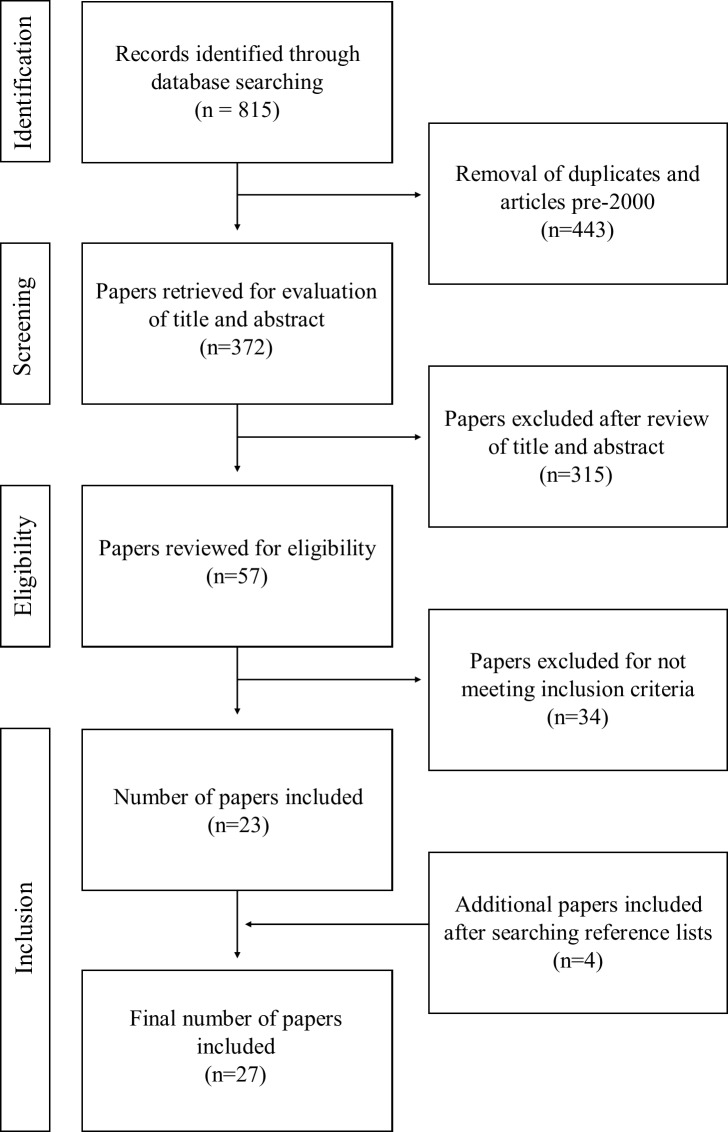
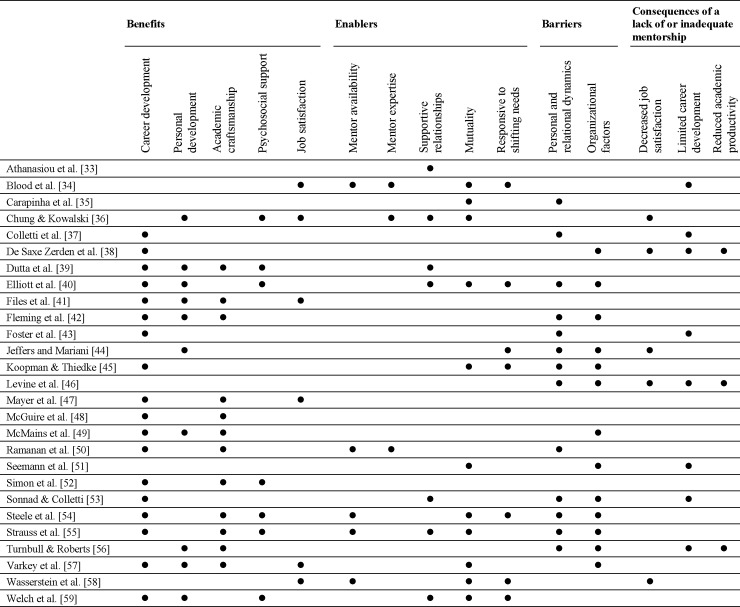
This integrative literature review synthesizes the primary research evidence on mentoring female health academics published from 2000 to 2018, to identify the benefits, enablers and barriers to mentoring women. The need for this review is underpinned by the magnitude of change in higher education, the high number of women in health disciplines, limited progress in advancing women's academic careers, escalating role expectations, faculty shortages and staff turnover. Data were sourced from Scopus, PubMed, EMBASE and Cumulative Index of Nursing and Allied Health Literature. Twenty-seven studies were included. Although effective mentoring facilitates personal and career development, academic craftsmanship, psychosocial support and job satisfaction, it is complicated by organizational factors and personal and relational dynamics. Enablers of mentoring are mentor availability and expertise, supportive relationships, mutuality and responsiveness. Lack of, or inadequate mentoring compromise women's job satisfaction, career development and academic productivity. Providing female health academics access to experienced, well-connected mentors with common interests who are committed to advancing their career, is an investment in optimizing potential, promoting supportive work environments and increasing productivity and retention. Realizing the institutional potential that mentoring female health academics offers, is contingent on academic leaders valuing mentorship as faculty business and understanding the role that the contemporary academic environment plays in achieving mentoring outcomes. Further empirical and longitudinal research is needed to evaluate effective approaches for mentoring women in the contemporary academic environment.
这篇综述综合了 2000 年至 2018 年间发表的关于指导女性健康学术人员的主要研究证据,以确定指导女性的益处、促成因素和障碍。进行这项综述的原因是高等教育的巨大变化、健康学科中女性人数众多、女性学术职业发展的进展有限、角色期望不断提高、教师短缺和员工流动率高。数据来自 Scopus、PubMed、EMBASE 和 Cumulative Index of Nursing and Allied Health Literature。共纳入 27 项研究。虽然有效的指导有助于个人和职业发展、学术技艺、社会心理支持和工作满意度,但它受到组织因素以及个人和关系动态的影响。指导的促成因素包括导师的可用性和专业知识、支持性关系、相互性和响应性。缺乏或不足的指导会影响女性的工作满意度、职业发展和学术生产力。为女性健康学术人员提供有经验、人脉广且有共同兴趣的导师,有助于发挥他们的潜力,促进支持性的工作环境,提高生产力和保留率。实现指导女性健康学术人员的机构潜力,取决于学术领导者将指导视为教师的业务,并理解当代学术环境在实现指导成果方面所起的作用。需要进一步进行实证和纵向研究,以评估在当代学术环境中指导女性的有效方法。