School of Biosciences, University of Birmingham , Birmingham B15 2TT , UK.
Philos Trans R Soc Lond B Biol Sci. 2019 Jun 10;374(1774):20180370. doi: 10.1098/rstb.2018.0370.
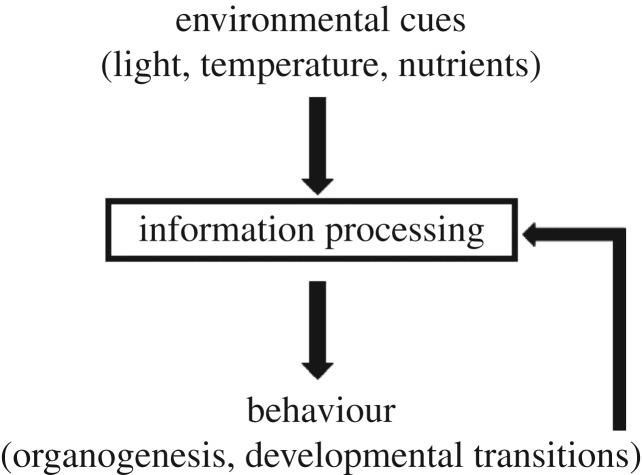
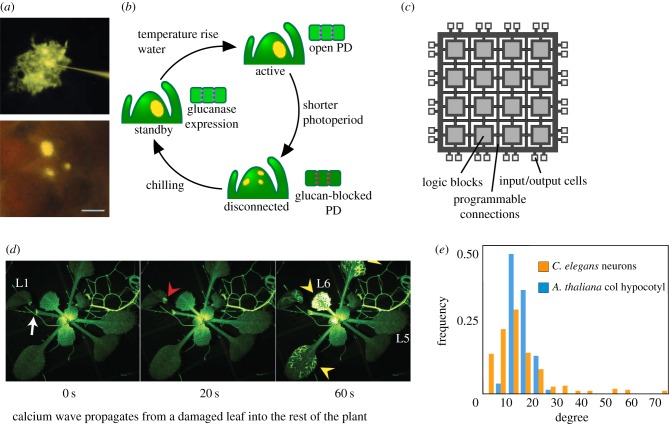
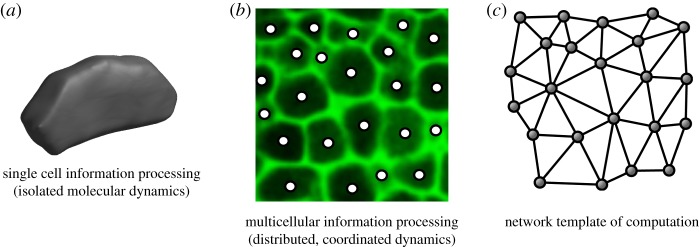
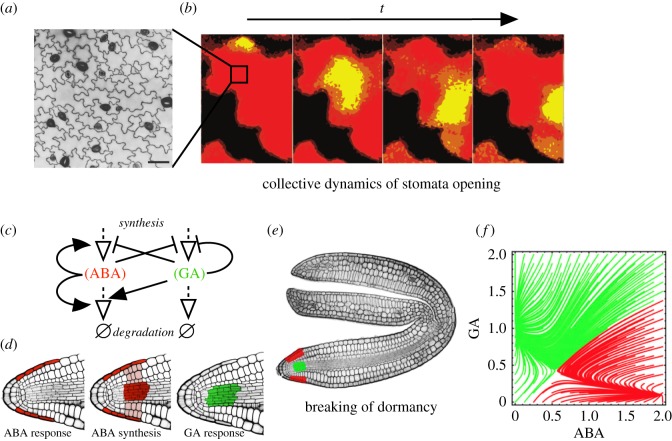
Information processing and storage underpins many biological processes of vital importance to organism survival. Like animals, plants also acquire, store and process environmental information relevant to their fitness, and this is particularly evident in their decision-making. The control of plant organ growth and timing of their developmental transitions are carefully orchestrated by the collective action of many connected computing agents, the cells, in what could be addressed as distributed computation. Here, we discuss some examples of biological information processing in plants, with special interest in the connection to formal computational models drawn from theoretical frameworks. Research into biological processes with a computational perspective may yield new insights and provide a general framework for information processing across different substrates. This article is part of the theme issue 'Liquid brains, solid brains: How distributed cognitive architectures process information'.
信息处理和存储是许多对生物生存至关重要的生物学过程的基础。与动物一样,植物也会获取、存储和处理与其适应性相关的环境信息,这在它们的决策中尤为明显。植物器官生长的控制和它们发育转变的时间是由许多相互连接的计算单元(细胞)的集体行动精心协调的,可以看作是分布式计算。在这里,我们讨论了植物中一些生物信息处理的例子,特别关注从理论框架中得出的与形式计算模型的联系。从计算角度研究生物过程可能会产生新的见解,并为不同基质上的信息处理提供一个通用框架。本文是“液体大脑,固体大脑:分布式认知架构如何处理信息”主题问题的一部分。