Ataei Behrooz, Alavian Sayed Moayed, Shahriari-Fard Faramarz, Rabiei Abbas Ali, Safaei Ali, Rabiei Ali, Ataei Mehdi
Department of Infectious Diseases, Isfahan University of Medical Sciences, Isfahan, Iran.
Baghiatallah Research Center for Gastroenterology and Liver Diseases, Baghiatallah University of Medical Sciences, Tehran, Iran.
J Res Med Sci. 2019 Mar 25;24:22. doi: 10.4103/jrms.JRMS_761_18. eCollection 2019.
Hepatitis B is one of the major causes of mortality among viral diseases. To reduce morbidity rate and increase knowledge of people about potential risk factors, the aim of this study was to determine the prevalence of hepatitis B among the general population and the risk factors associated with hepatitis B virus (HBV) infection in Isfahan, Iran.
In a case-control study, 314 HBV-infected patients and 557 healthy participants were recruited. Data on demographics, immunization history, medical history, family medical history, life history, therapeutic factors, and behavioral risk factors were collected through a standard checklist. Chi-square and logistic regression were used for univariate and multivariable analyses.
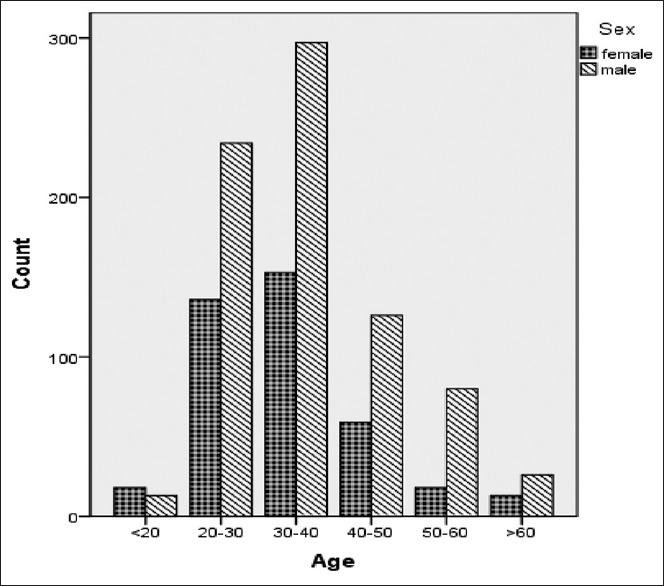
Our results showed that among sociodemographic variables, higher age, being male, lower economic status, and lower educational attainments increased the risk of affecting by HBV (odds ratio [OR] >1, < 0.001); furthermore, Iranian and no immigrant people showed higher significant risk of being affected by HBV. Multivariable logistic regression showed among medical, blood, and behavioral risk factors, family history of hepatitis (OR: 10.56; 95% confidence interval [CI]: 4.56-24.86), dental treatment history (OR: 4.30; 95% CI: 1.41-13.10), and hospitalization (OR: 2.94; 95% CI: 1.72-5.00).
Our results demonstrated that there are still several risk factors for hepatitis B surface antigen infection among the Iranian adult population. Immunization programs should continue and focus on high-risk adults, and interventions should be directed toward to reduce risk factors associated with hepatitis B.
乙型肝炎是病毒性疾病中导致死亡的主要原因之一。为降低发病率并提高人们对潜在风险因素的认识,本研究旨在确定伊朗伊斯法罕普通人群中乙型肝炎的患病率以及与乙型肝炎病毒(HBV)感染相关的风险因素。
在一项病例对照研究中,招募了314例HBV感染患者和557名健康参与者。通过标准检查表收集了人口统计学、免疫史、病史、家族病史、生活史、治疗因素和行为风险因素等数据。采用卡方检验和逻辑回归进行单变量和多变量分析。
我们的结果显示,在社会人口统计学变量中,年龄较大、男性、经济地位较低和教育程度较低会增加感染HBV的风险(优势比[OR]>1,P<0.001);此外,伊朗人和非移民人群感染HBV的风险更高。多变量逻辑回归显示,在医疗、血液和行为风险因素中,肝炎家族史(OR:10.56;95%置信区间[CI]:4.56 - 24.86)、牙科治疗史(OR:4.30;95%CI:1.41 - 13.10)和住院史(OR:2.94;95%CI:1.72 - 5.00)。
我们的结果表明,伊朗成年人群中仍存在若干乙型肝炎表面抗原感染的风险因素。免疫规划应继续并关注高危成年人,并且应采取干预措施以降低与乙型肝炎相关的风险因素。