Li Ning, Liu Tian-Hao, Yu Jing-Ze, Li Chen-Xi, Liu Yang, Wu Yue-Ying, Yang Zhong-Shan, Yuan Jia-Li
Faculty of Basic Medical Sciences, Yunnan University of Chinese Medicine, Yuhua Road, No. 1024, Kunming 650500, Yunnan, China.
Chinese Medicine College, Jinan University, 601 Huangpu West Avenue, Guangzhou 510632, Guangdong, China.
Evid Based Complement Alternat Med. 2019 Mar 17;2019:3035125. doi: 10.1155/2019/3035125. eCollection 2019.
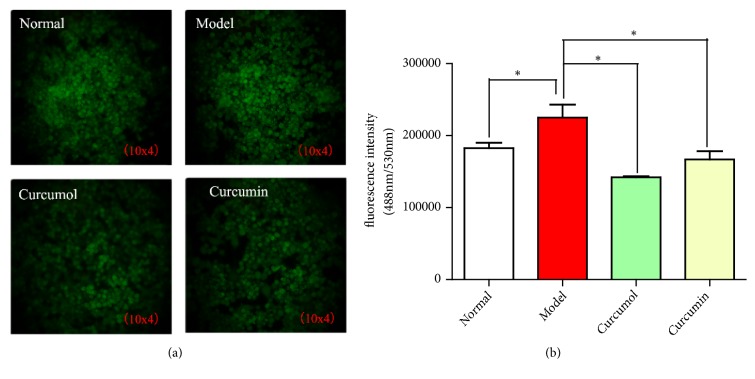
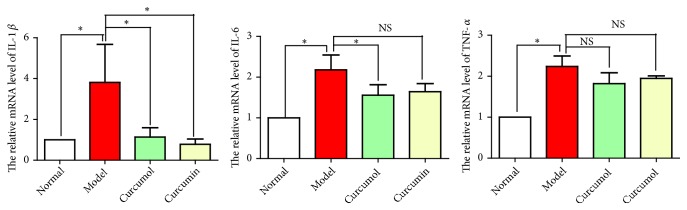
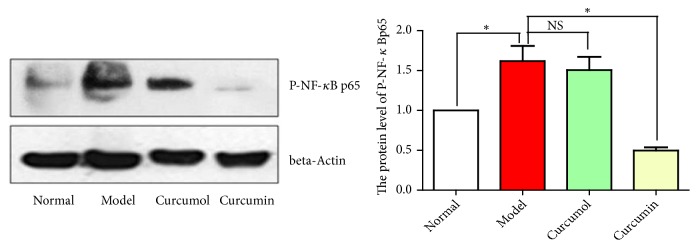
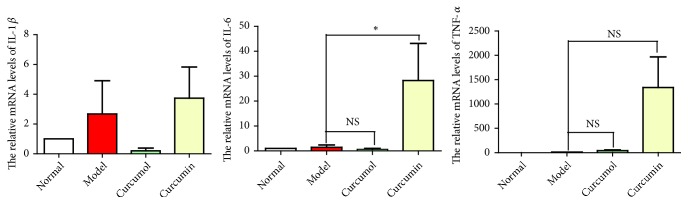
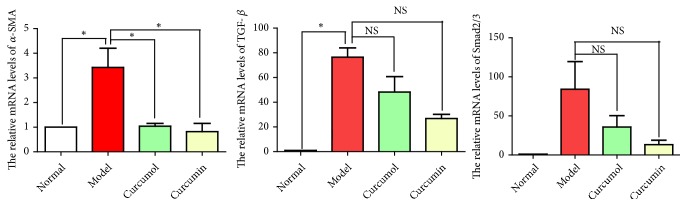
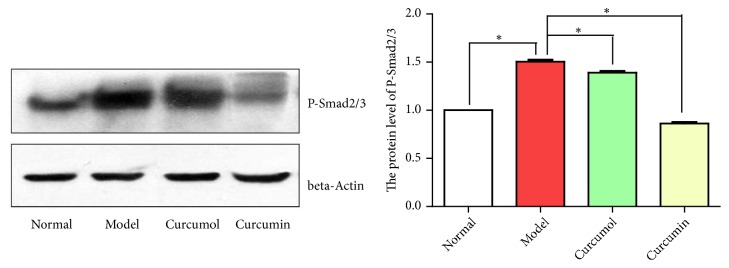
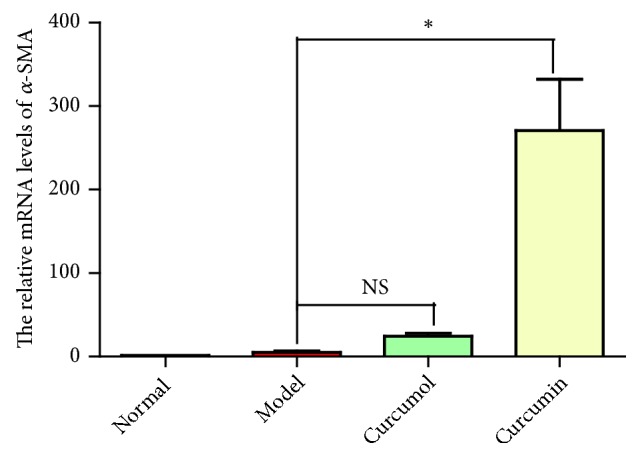
E-Zhu () is known as a classical traditional Chinese medicine and widely used in the treatment of cancers, cardiovascular disease, inflammation, and other diseases. Its main components include curcumol and curcumin, which have anti-inflammatory and antifibrosis effects. Here we established an inflammatory injury model by stimulating RAW246.7 cells with cigarette smoke extract (CSE) and detected the intervention effects of curcumin and curcumol on CSE-treated Raw246.7 macrophage cells to explore whether the two compounds inhibited the expression of inflammatory cytokines by inhibiting the NF-B signaling pathway. We detected the antifibrosis effects of curcumin and curcumol via TGF- /Smads signaling pathways. The model of macrophage damage group was established by CSE stimulation. Curcumol and curcumin were administered to Raw246.7 macrophage cells. The efficacy of curcumol and curcumin was evaluated by comparing the activation of proinflammatory factors, profibrotic factors, and NF-B and TGF- /Smads signaling pathway. In addition, CSE-treated group was employed to detect whether the efficacy of curcumol and curcumin was dependent on the NF-B signaling via the pretreatment with the inhibitor of NF-B. Our findings demonstrated that curcumol and curcumin could reduce the release of intracellular ROS from macrophages, inhibit the NF-B signaling pathway, and downregulate the release of proinflammatory factor. Curcumol and curcumin inhibited the TGF- /Smads signaling pathway and downregulated the release of fibrotic factors. Curcumin showed no anti-inflammatory effect in CSE-treated cells after the inhibition of NF-B. Curcumol and curcumin showed an anti-inflammatory effect by inhibiting the NF-B signaling pathway.
莪术是一种著名的传统中药,广泛应用于癌症、心血管疾病、炎症等疾病的治疗。其主要成分包括莪术醇和姜黄素,具有抗炎和抗纤维化作用。在此,我们通过用香烟烟雾提取物(CSE)刺激RAW246.7细胞建立了炎症损伤模型,并检测了姜黄素和莪术醇对CSE处理的Raw246.7巨噬细胞的干预作用,以探讨这两种化合物是否通过抑制NF-κB信号通路来抑制炎症细胞因子的表达。我们通过TGF-β/Smads信号通路检测了姜黄素和莪术醇的抗纤维化作用。通过CSE刺激建立巨噬细胞损伤组模型。将莪术醇和姜黄素给予Raw246.7巨噬细胞。通过比较促炎因子、促纤维化因子以及NF-κB和TGF-β/Smads信号通路的激活情况来评估莪术醇和姜黄素的疗效。此外,通过用NF-κB抑制剂预处理CSE处理组,检测莪术醇和姜黄素的疗效是否依赖于NF-κB信号通路。我们的研究结果表明,莪术醇和姜黄素可以减少巨噬细胞内活性氧的释放,抑制NF-κB信号通路,并下调促炎因子的释放。莪术醇和姜黄素抑制TGF-β/Smads信号通路并下调纤维化因子的释放。在抑制NF-κB后,姜黄素在CSE处理的细胞中未显示抗炎作用。莪术醇和姜黄素通过抑制NF-κB信号通路显示出抗炎作用。