Gardner Stephen J, Mao Weihua, Liu Chang, Aref Ibrahim, Elshaikh Mohamed, Lee Joon K, Pradhan Deepak, Movsas Benjamin, Chetty Indrin J, Siddiqui Farzan
Department of Radiation Oncology, Josephine Ford Cancer Institute, Henry Ford Health System, Detroit, Michigan.
Adv Radiat Oncol. 2019 Jan 10;4(2):390-400. doi: 10.1016/j.adro.2018.12.003. eCollection 2019 Apr-Jun.
This study aimed to evaluate the clinical utility of a novel iterative cone beam computed tomography (CBCT) reconstruction algorithm for prostate and head and neck (HN) cancer.
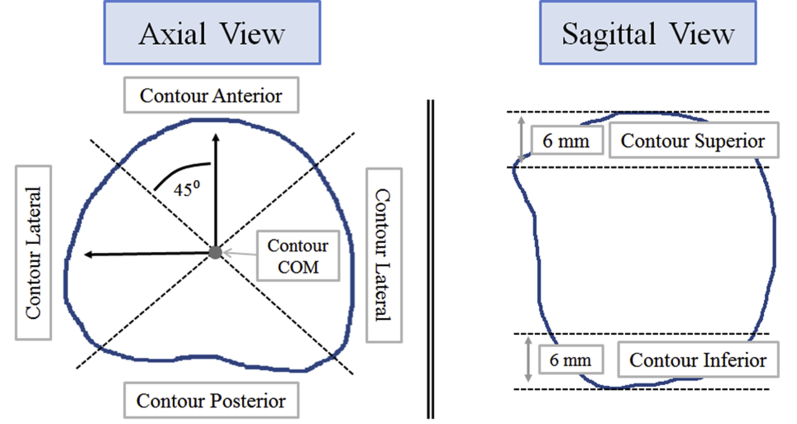
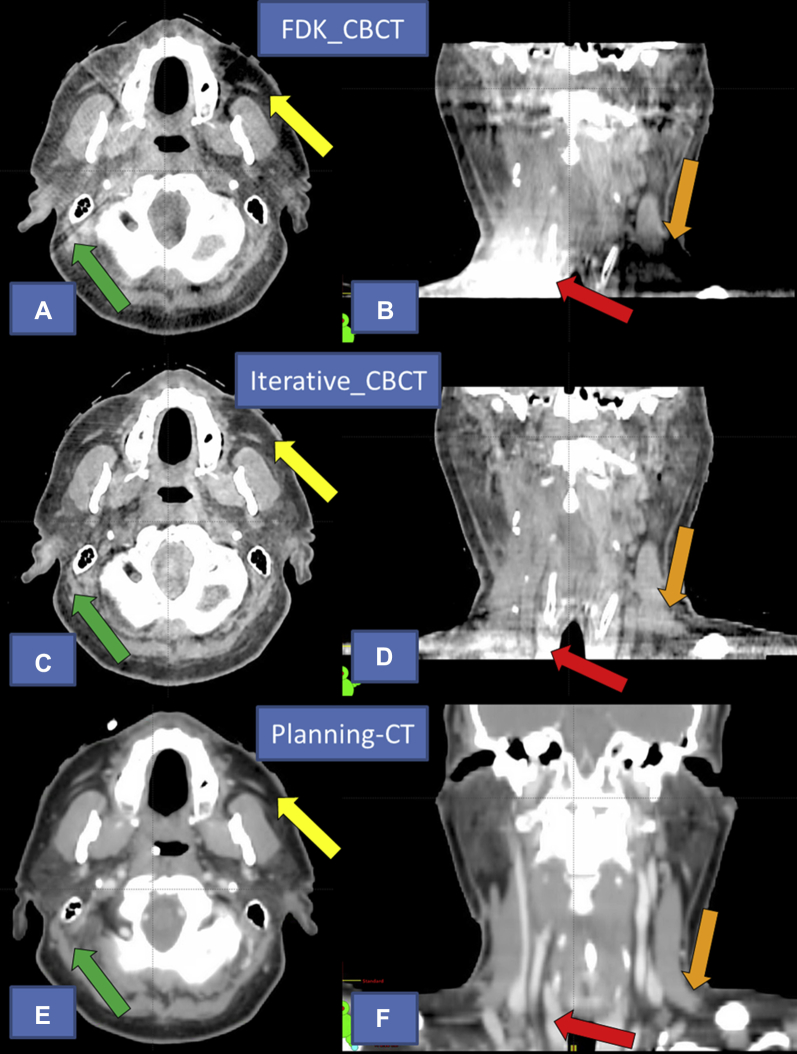
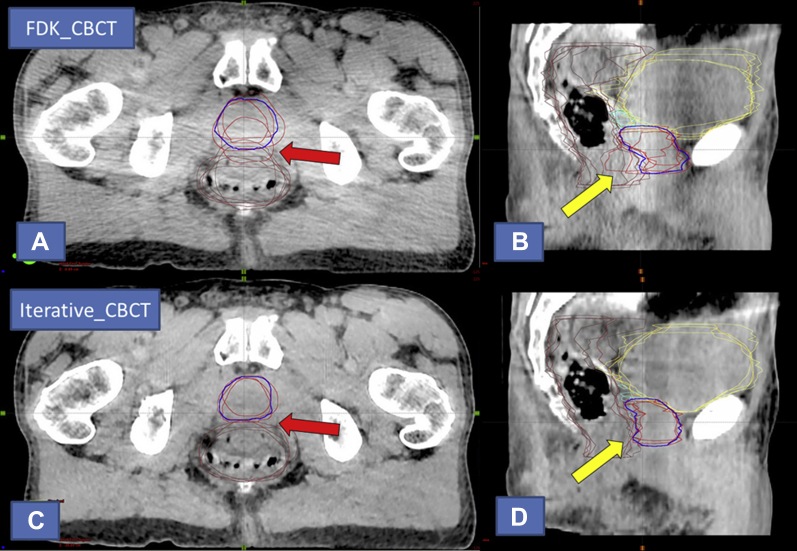
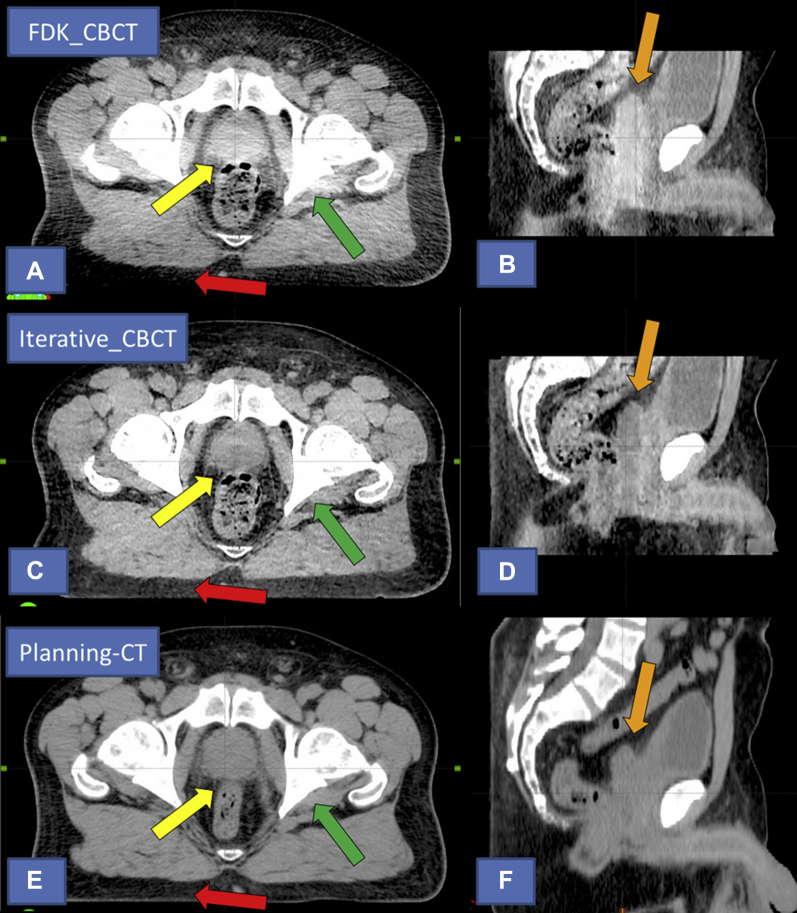
A total of 10 patients with HN and 10 patients with prostate cancer were analyzed. For each patient, raw CBCT acquisition data were used to reconstruct images with a currently available algorithm (FDK_CBCT) and novel iterative algorithm (Iterative_CBCT). Quantitative contouring variation analysis was performed using structures delineated by several radiation oncologists. For prostate, observers contoured the prostate, proximal 2 cm seminal vesicles, bladder, and rectum. For HN, observers contoured the brain stem, spinal canal, right-left parotid glands, and right-left submandibular glands. Observer contours were combined to form a reference consensus contour using the simultaneous truth and performance level estimation method. All observer contours then were compared with the reference contour to calculate the Dice coefficient, Hausdorff distance, and mean contour distance (prostate contour only). Qualitative image quality analysis was performed using a 5-point scale ranging from 1 (much superior image quality for Iterative_CBCT) to 5 (much inferior image quality for Iterative_CBCT).
The Iterative_CBCT data sets resulted in a prostate contour Dice coefficient improvement of approximately 2.4% ( = .029). The average prostate contour Dice coefficient for the Iterative_CBCT data sets was improved for all patients, with improvements up to approximately 10% for 1 patient. The mean contour distance results indicate an approximate 15% reduction in mean contouring error for all prostate regions. For the parotid contours, Iterative_CBCT data sets resulted in a Hausdorff distance improvement of approximately 2 mm ( < .01) and an approximate 2% improvement in Dice coefficient ( = .03). The Iterative_CBCT data sets were scored as equivalent or of better image quality for 97.3% (prostate) and 90.0% (HN) of the patient data sets.
Observers noted an improvement in image uniformity, noise level, and overall image quality for Iterative_CBCT data sets. In addition, expert observers displayed an improved ability to consistently delineate soft tissue structures, such as the prostate and parotid glands. Thus, the novel iterative reconstruction algorithm analyzed in this study is capable of improving the visualization for prostate and HN cancer image guided radiation therapy.
本研究旨在评估一种新型迭代锥束计算机断层扫描(CBCT)重建算法在前列腺癌和头颈部(HN)癌中的临床应用价值。
共分析了10名头颈部癌患者和10名前列腺癌患者。对于每位患者,使用原始CBCT采集数据,采用当前可用算法(FDK_CBCT)和新型迭代算法(Iterative_CBCT)重建图像。使用多名放射肿瘤学家勾勒的结构进行定量轮廓变化分析。对于前列腺,观察者勾勒出前列腺、近端2厘米精囊、膀胱和直肠。对于头颈部,观察者勾勒出脑干、椎管、左右腮腺和左右颌下腺。使用同时真相和性能水平估计方法将观察者轮廓合并形成参考共识轮廓。然后将所有观察者轮廓与参考轮廓进行比较,以计算骰子系数、豪斯多夫距离和平均轮廓距离(仅前列腺轮廓)。使用从1(Iterative_CBCT图像质量明显更好)到5(Iterative_CBCT图像质量明显更差)的5分制进行定性图像质量分析。
Iterative_CBCT数据集使前列腺轮廓骰子系数提高了约2.4%(P = 0.029)。Iterative_CBCT数据集的所有患者前列腺轮廓骰子系数平均提高,其中1名患者的提高高达约10%。平均轮廓距离结果表明,所有前列腺区域的平均轮廓误差降低了约15%。对于腮腺轮廓,Iterative_CBCT数据集使豪斯多夫距离提高了约2毫米(P < 0.01),骰子系数提高了约2%(P = 0.03)。Iterative_CBCT数据集在97.3%(前列腺)和90.0%(头颈部)的患者数据集中被评为图像质量相当或更好。
观察者注意到Iterative_CBCT数据集的图像均匀性、噪声水平和整体图像质量有所改善。此外,专家观察者在一致勾勒软组织结构(如前列腺和腮腺)方面的能力有所提高。因此,本研究中分析的新型迭代重建算法能够改善前列腺癌和头颈部癌图像引导放射治疗的可视化效果。