Academy of Micronutrient Medicine, Zweigertstr. 55, 45130 Essen, Germany.
Int J Mol Sci. 2019 Apr 28;20(9):2094. doi: 10.3390/ijms20092094.
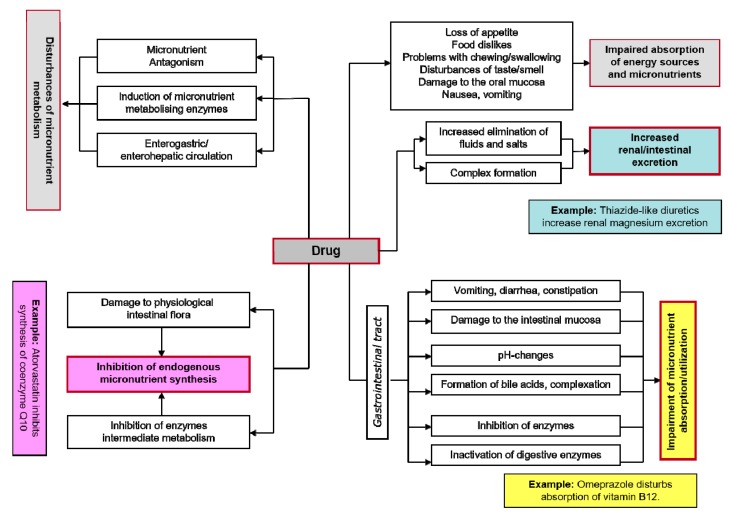
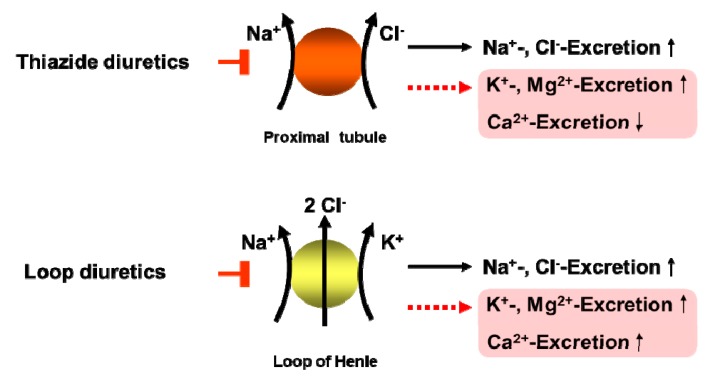
Several drugs including diuretics and proton-pump inhibitors can cause magnesium loss and hypomagnesemia. Magnesium and drugs use the same transport and metabolism pathways in the body for their intestinal absorption, metabolism, and elimination. This means that when one or more drug is taken, there is always a potential risk of interaction with the magnesium status. Consequently the action of a drug may be adversely affected by magnesium (e.g., magnesium, calcium, and zinc can interfere with the gastrointestinal absorption of tetracycline antibiotics) and simultaneously the physiological function of minerals such as magnesium may be impaired by a drug (e.g., diuretics induce renal magnesium loss). Given the ever-increasing number of drugs on the market and the frequency with which they are used, greater attention must be paid in daily medical and pharmaceutical practice focused in particular on the adverse effects of drug therapy on magnesium status in order to minimize the potential risk to the health of patients.
包括利尿剂和质子泵抑制剂在内的几种药物可导致镁丢失和低镁血症。镁和药物通过身体的相同转运和代谢途径进行肠道吸收、代谢和排泄。这意味着,当一种或多种药物被服用时,药物与镁状态之间始终存在潜在的相互作用风险。因此,药物的作用可能会受到镁的不利影响(例如,镁、钙和锌可干扰四环素类抗生素的胃肠道吸收),同时矿物质如镁的生理功能可能会因药物而受损(例如,利尿剂引起肾脏镁丢失)。鉴于市场上的药物数量不断增加,且使用频率越来越高,在日常医疗和药学实践中必须更加关注药物治疗对镁状态的不良影响,以尽量降低对患者健康的潜在风险。