Sahu Neety, Viljoen Hendrik J, Subramanian Anuradha
Department of Chemical and Biomolecular Engineering, University of Nebraska-Lincoln, Lincoln, NE, 68588-0643, USA.
Department of Chemical and Materials Engineering, University of Alabama at Huntsville, Huntsville, Alabama, 35899, USA.
BMC Musculoskelet Disord. 2019 May 4;20(1):193. doi: 10.1186/s12891-019-2566-4.
Cartilage repair outcomes are compromised in a pro-inflammatory environment; therefore, the mitigation of pro-inflammatory responses is beneficial. Treatment with continuous low-intensity ultrasound (cLIUS) at the resonant frequency of 5 MHz is proposed for the repair of chondral fissures under pro-inflammatory conditions.
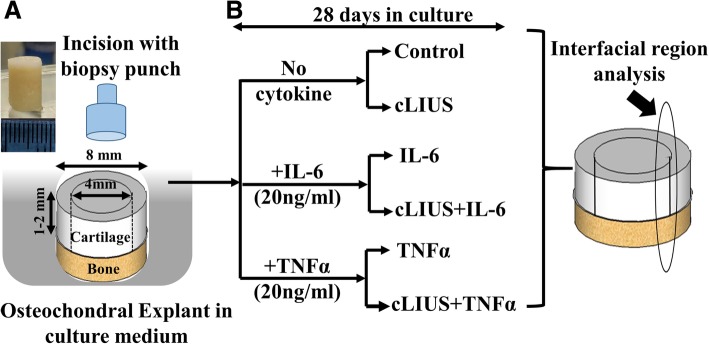
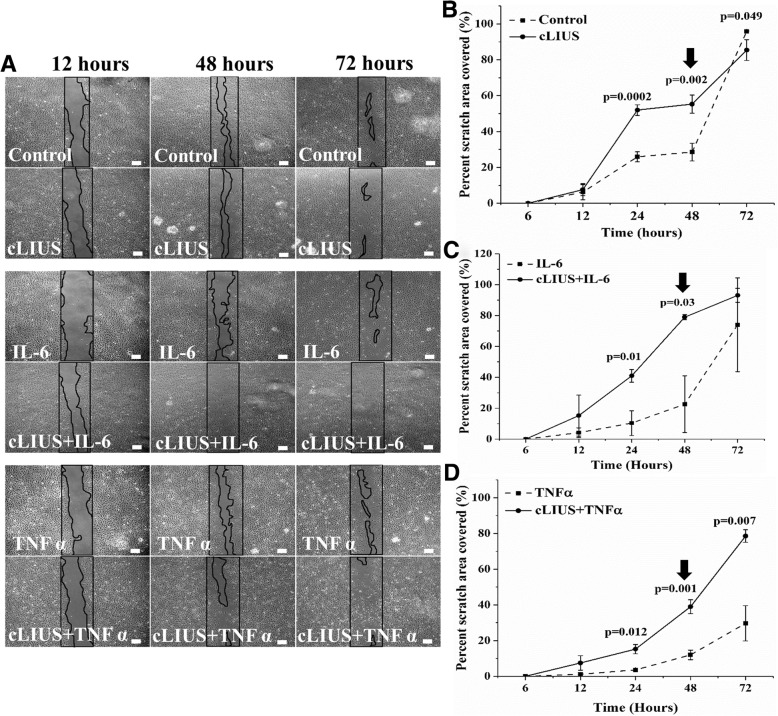
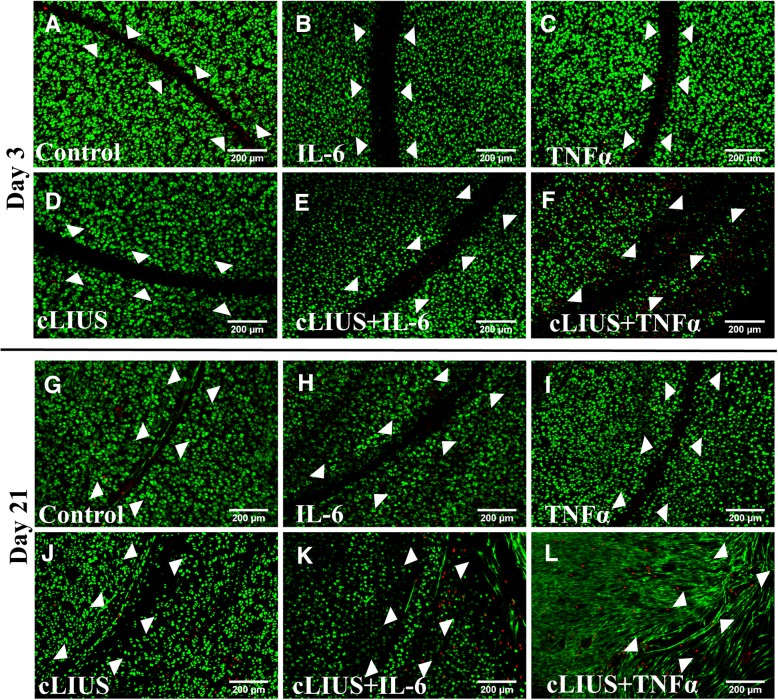
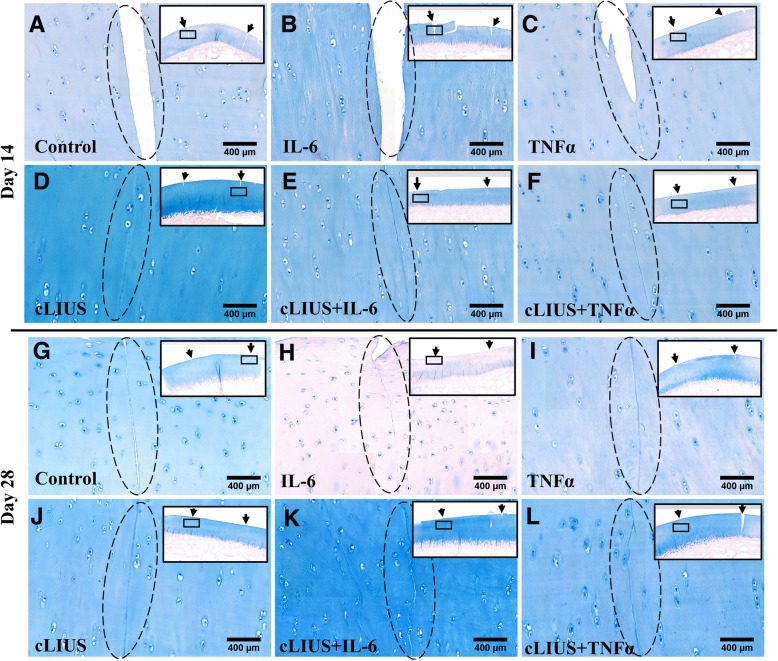
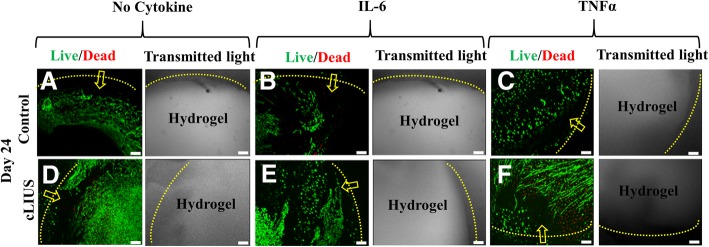
Bovine osteochondral explants, concentrically incised to create chondral fissures, were maintained under cLIUS (14 kPa (5 MHz, 2.5 Vpp), 20 min, 4 times/day) for a period of 28 days in the presence or absence of cytokines, interleukin-6 (IL-6) or tumor necrosis factor (TNF)α. Outcome assessments included histological and immunohistochemical staining of the explants; and the expression of catabolic and anabolic genes by qRT-PCR in bovine chondrocytes. Cell migration was assessed by scratch assays, and by visualizing migrating cells into the hydrogel core of cartilage-hydrogel constructs.
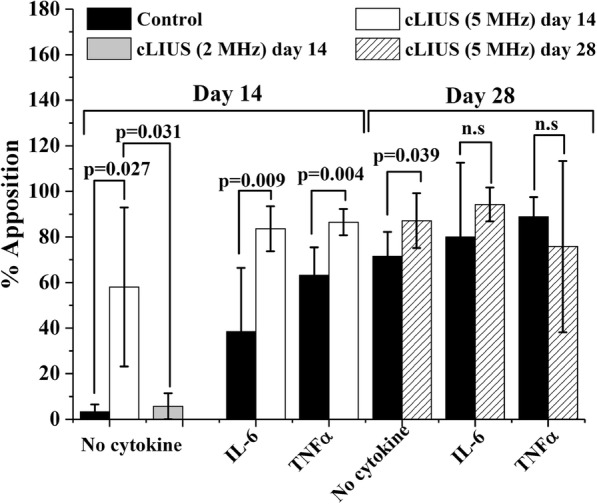
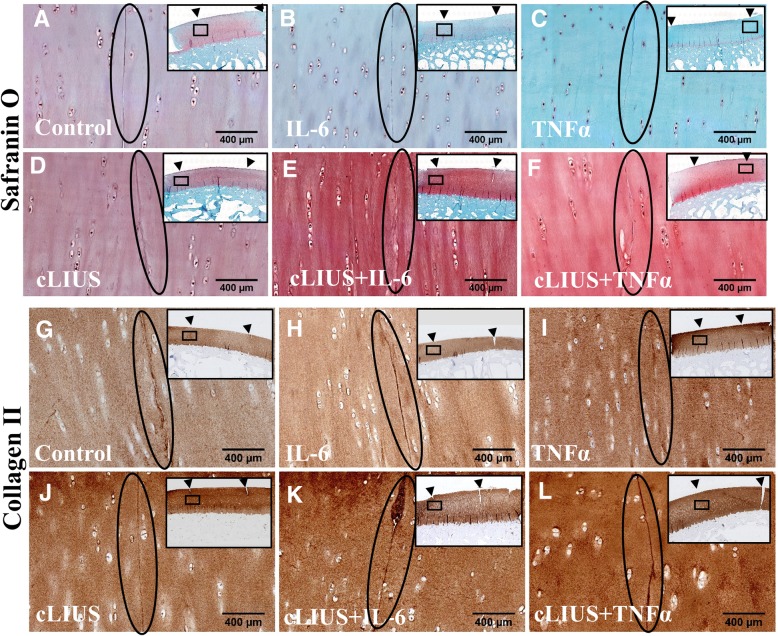
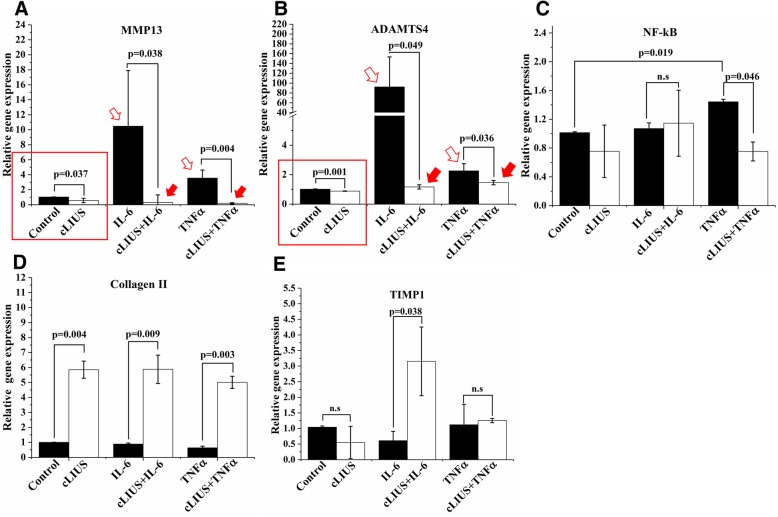
Both in the presence and absence of cytokines, higher percent apposition along with closure of fissures were noted in cLIUS-stimulated explants as compared to non-cLIUS-stimulated explants on day 14. On day 28, the percent apposition was not significantly different between unstimulated and cLIUS-stimulated explants exposed to cytokines. As compared to non-cLIUS-stimulated controls, on day 28, cLIUS preserved the distribution of proteoglycans and collagen II in explants despite exposure to cytokines. cLIUS enhanced the cell migration irrespective of cytokine treatment. IL-6 or TNFα-induced increases in MMP13 and ADAMTS4 gene expression was rescued by cLIUS stimulation in chondrocytes. Under cLIUS, TNFα-induced increase in NF-κB expression was suppressed, and the expression of collagen II and TIMP1 genes were upregulated.
cLIUS repaired chondral fissures, and elicited pro-anabolic and anti-catabolic effects, thus demonstrating the potential of cLIUS in improving cartilage repair outcomes.
在促炎环境中软骨修复结果会受到损害;因此,减轻促炎反应是有益的。有人提出采用频率为5MHz的连续低强度超声(cLIUS)治疗在促炎条件下的软骨裂隙修复。
将牛骨软骨外植体同心切开形成软骨裂隙,在有或无细胞因子、白细胞介素-6(IL-6)或肿瘤坏死因子(TNF)α存在的情况下,接受cLIUS(14kPa(5MHz,2.5Vpp),20分钟,每天4次)治疗28天。结果评估包括外植体的组织学和免疫组织化学染色;通过qRT-PCR检测牛软骨细胞中分解代谢和合成代谢基因的表达。通过划痕试验以及观察迁移到软骨-水凝胶构建体水凝胶核心中的细胞来评估细胞迁移。
在第14天,与未接受cLIUS刺激的外植体相比,无论有无细胞因子,接受cLIUS刺激的外植体均显示出更高的贴壁百分比以及裂隙闭合。在第28天,暴露于细胞因子的未刺激外植体与接受cLIUS刺激的外植体之间的贴壁百分比无显著差异。与未接受cLIUS刺激的对照组相比,在第28天,尽管暴露于细胞因子,cLIUS仍能保持外植体中蛋白聚糖和胶原蛋白II的分布。无论细胞因子处理如何,cLIUS均可促进细胞迁移。cLIUS刺激可挽救IL-6或TNFα诱导的软骨细胞中MMP13和ADAMTS4基因表达的增加。在cLIUS作用下,TNFα诱导的NF-κB表达增加受到抑制,胶原蛋白II和TIMP1基因的表达上调。
cLIUS修复了软骨裂隙,并产生了促合成代谢和抗分解代谢作用,从而证明了cLIUS在改善软骨修复结果方面的潜力。