Department of Environmental Health, Rollins School of Public Health, Emory University, 1518 Clifton Rd. NE, Atlanta, GA, 30322, USA.
Woodrow Wilson School of Public and International Affairs, Princeton University, Robertson Hall, Princeton, NJ, 08544, USA.
Nat Commun. 2019 May 7;10(1):2095. doi: 10.1038/s41467-019-09499-x.
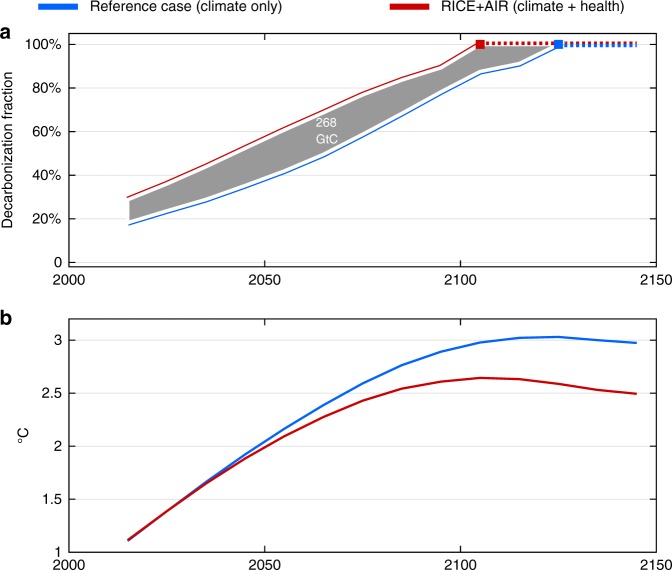
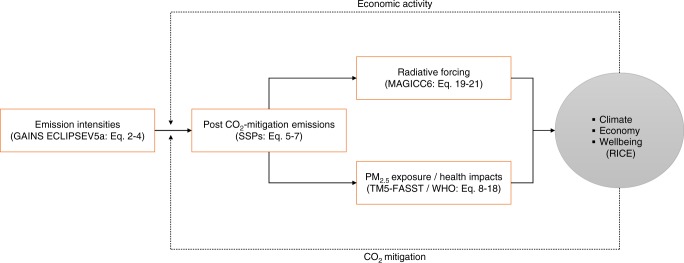
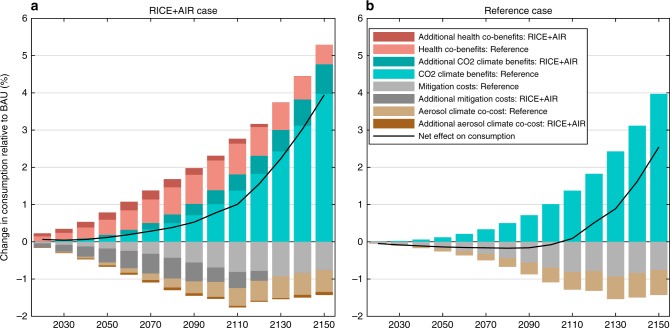
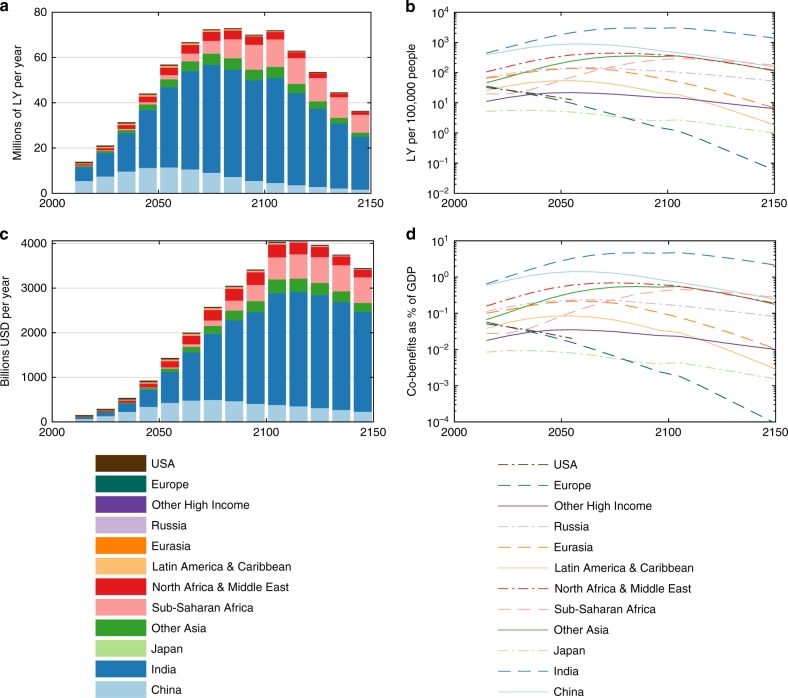
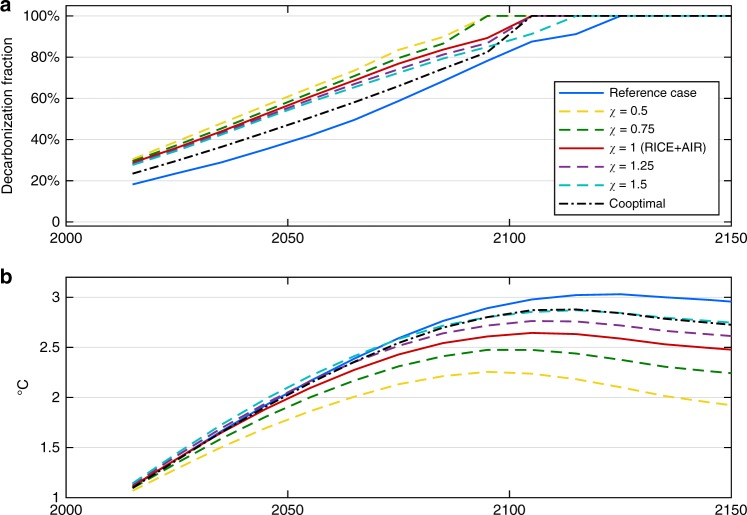
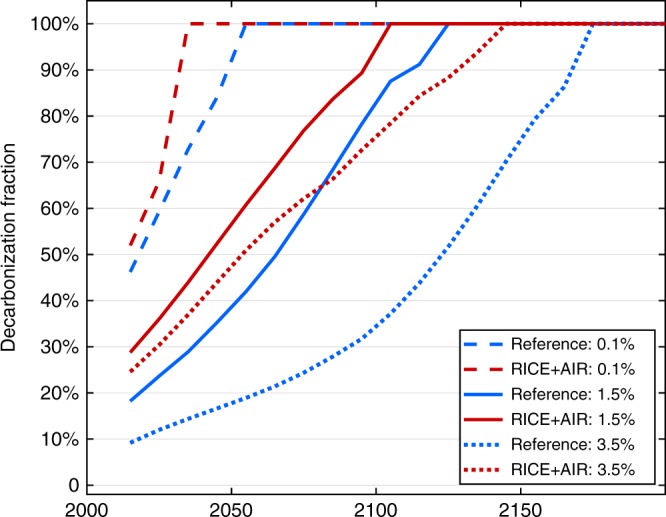
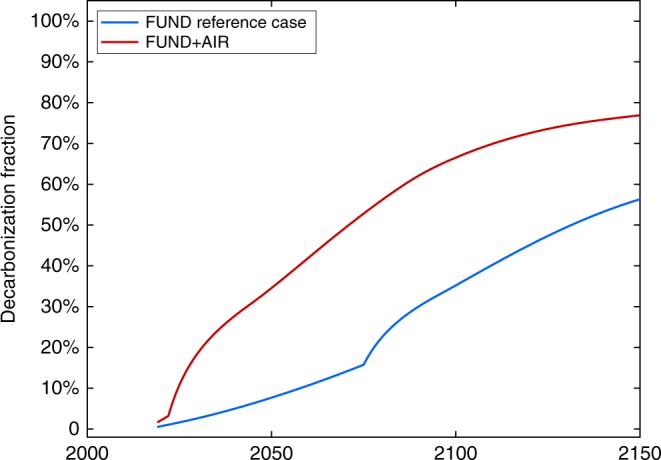
The health co-benefits of CO mitigation can provide a strong incentive for climate policy through reductions in air pollutant emissions that occur when targeting shared sources. However, reducing air pollutant emissions may also have an important co-harm, as the aerosols they form produce net cooling overall. Nevertheless, aerosol impacts have not been fully incorporated into cost-benefit modeling that estimates how much the world should optimally mitigate. Here we find that when both co-benefits and co-harms are taken fully into account, optimal climate policy results in immediate net benefits globally, overturning previous findings from cost-benefit models that omit these effects. The global health benefits from climate policy could reach trillions of dollars annually, but will importantly depend on the air quality policies that nations adopt independently of climate change. Depending on how society values better health, economically optimal levels of mitigation may be consistent with a target of 2 °C or lower.
CO 减排的健康协同效益可以为气候政策提供强有力的激励,因为在针对共同来源时,会减少空气污染物的排放。然而,减少空气污染物排放也可能会产生重要的副害,因为它们形成的气溶胶总体上会产生净冷却效应。尽管如此,气溶胶的影响尚未完全纳入成本效益建模中,该模型用于估算世界应如何最佳地减排。在这里,我们发现,当充分考虑到协同效益和副害时,最优的气候政策会在全球范围内立即产生净收益,这推翻了之前忽略这些影响的成本效益模型的发现。气候政策带来的全球健康效益可能达到每年数万亿美元,但重要的是取决于各国在气候变化之外独立采取的空气质量政策。根据社会对改善健康状况的重视程度,经济上最优的减排水平可能与 2°C 或更低的目标一致。