Medlab Clinical, Sydney, NSW 2015, Australia.
Centre for Clinical Research, The University of Queensland, Royal Brisbane & Women's Hospital Campus, Herston, Brisbane, QLD 4029, Australia.
Nutrients. 2019 May 7;11(5):1026. doi: 10.3390/nu11051026.
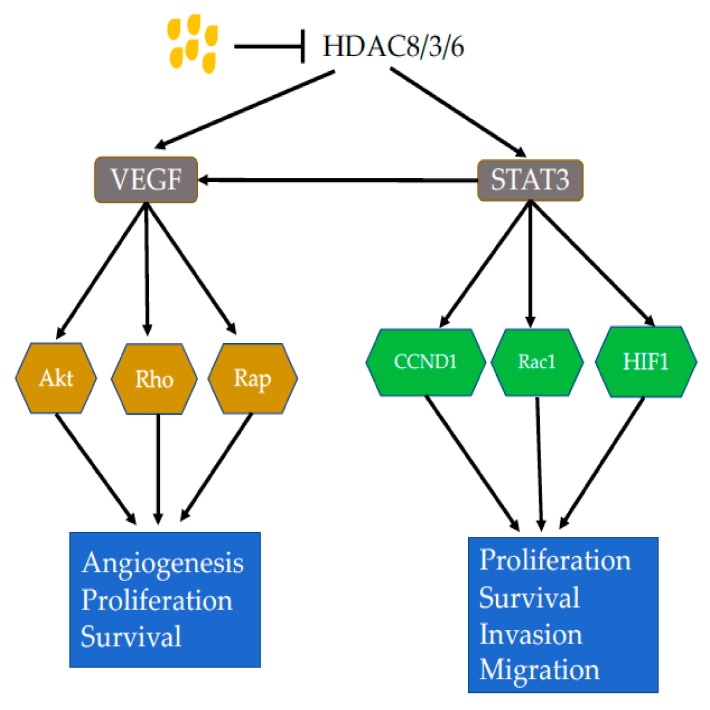
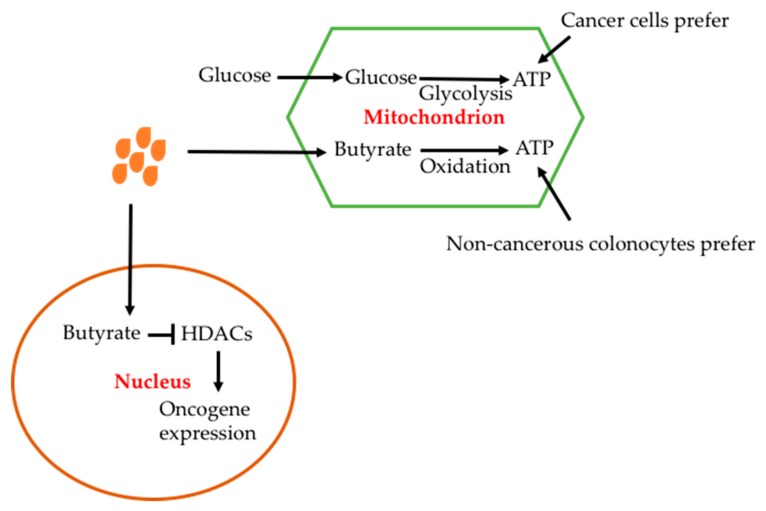
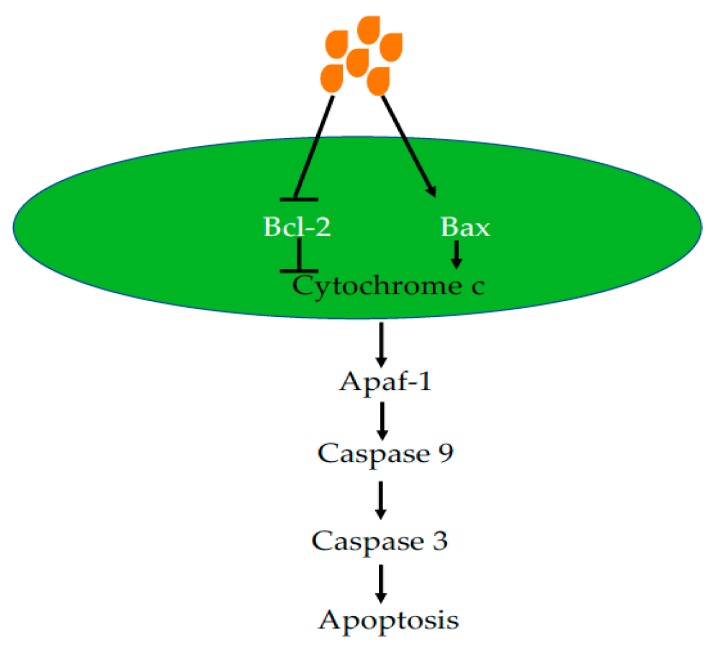
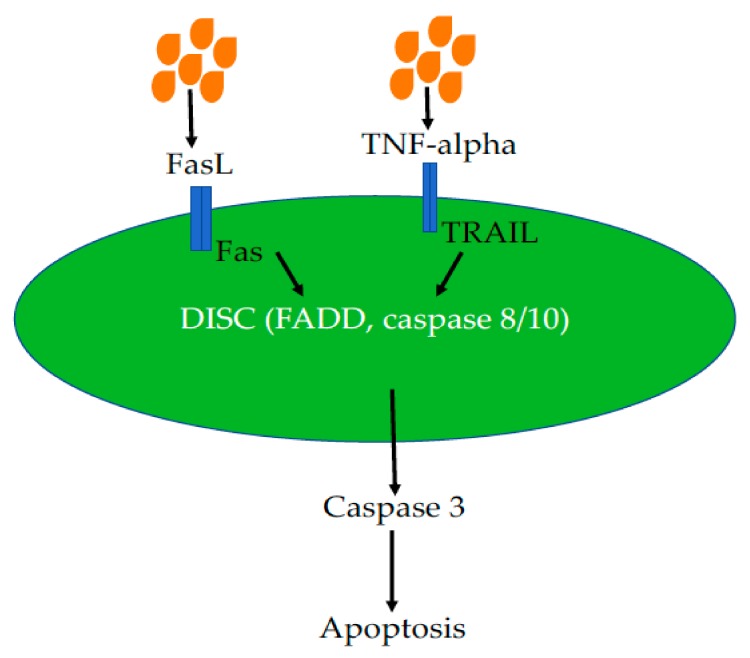
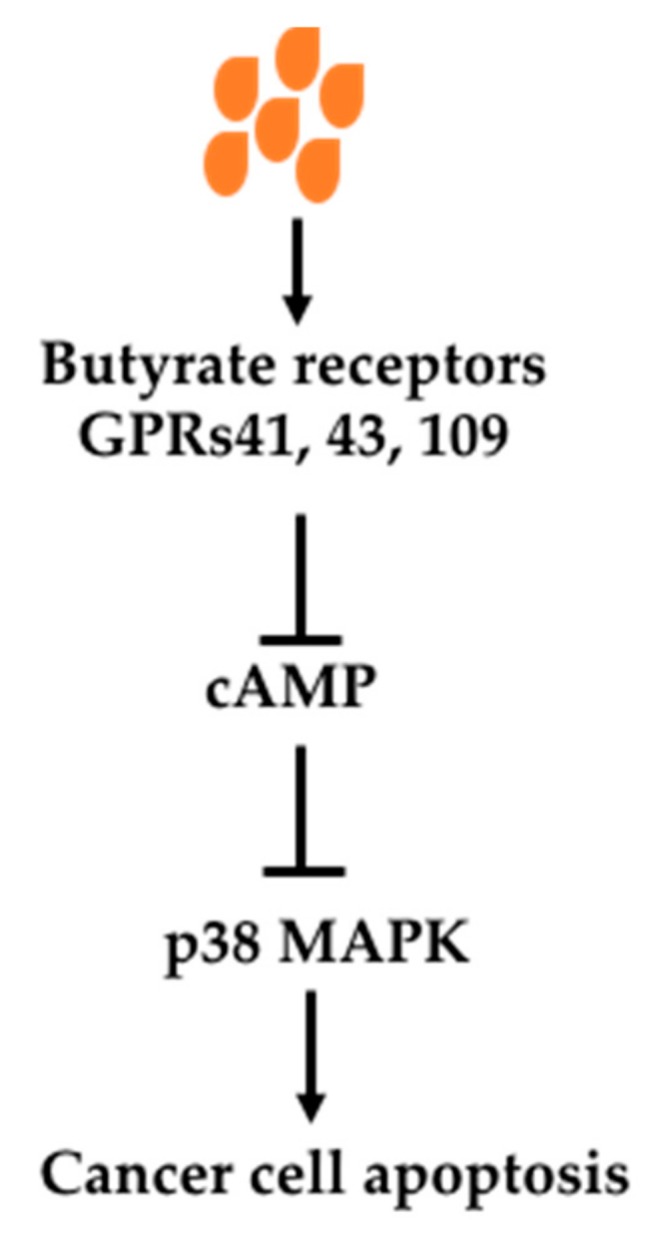
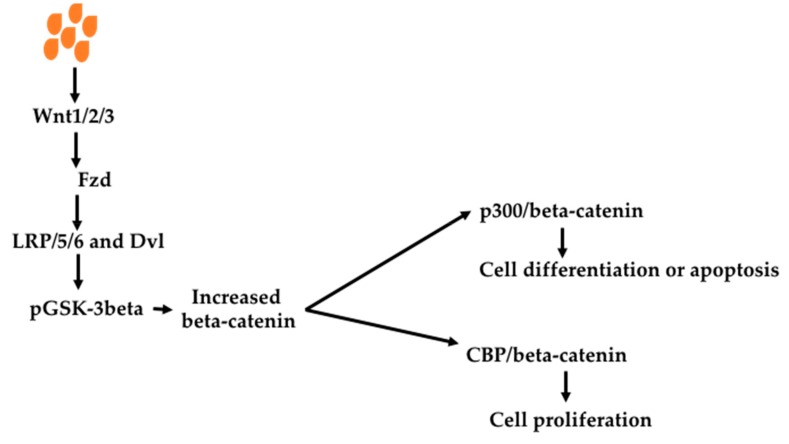
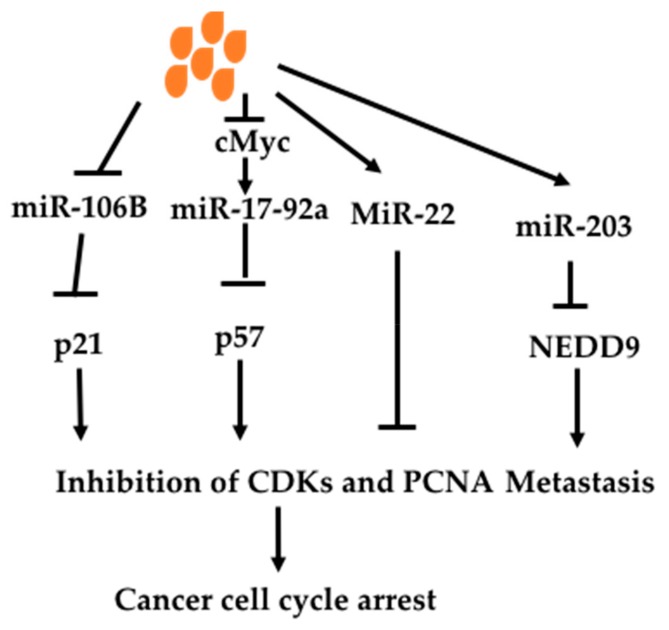
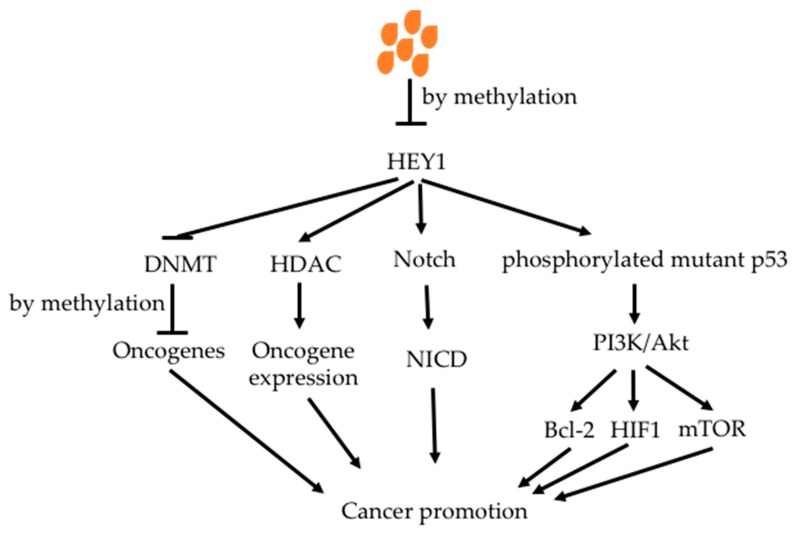
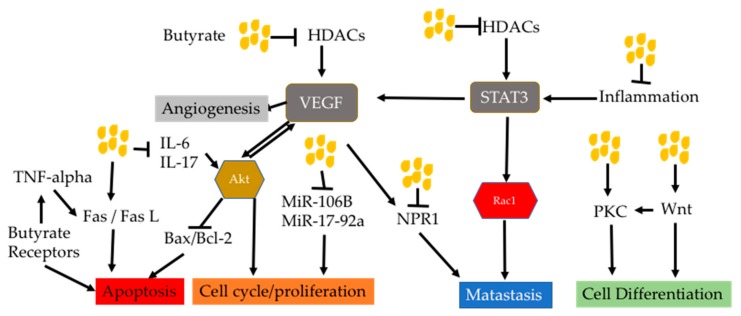
The intestinal microbiota is well known to have multiple benefits on human health, including cancer prevention and treatment. The effects are partially mediated by microbiota-produced short chain fatty acids (SCFAs) such as butyrate, propionate and acetate. The anti-cancer effect of butyrate has been demonstrated in cancer cell cultures and animal models of cancer. Butyrate, as a signaling molecule, has effects on multiple signaling pathways. The most studied effect is its inhibition on histone deacetylase (HDAC), which leads to alterations of several important oncogenic signaling pathways such as JAK2/STAT3, VEGF. Butyrate can interfere with both mitochondrial apoptotic and extrinsic apoptotic pathways. In addition, butyrate also reduces gut inflammation by promoting T-regulatory cell differentiation with decreased activities of the NF-κB and STAT3 pathways. Through PKC and Wnt pathways, butyrate increases cancer cell differentiation. Furthermore, butyrate regulates oncogenic signaling molecules through microRNAs and methylation. Therefore, butyrate has the potential to be incorporated into cancer prevention and treatment regimens. In this review we summarize recent progress in butyrate research and discuss the future development of butyrate as an anti-cancer agent with emphasis on its effects on oncogenic signaling pathways. The low bioavailability of butyrate is a problem, which precludes clinical application. The disadvantage of butyrate for medicinal applications may be overcome by several approaches including nano-delivery, analogue development and combination use with other anti-cancer agents or phytochemicals.
肠道微生物群对人类健康有多种益处,包括预防和治疗癌症。这些作用部分是由微生物产生的短链脂肪酸(SCFAs)介导的,如丁酸、丙酸和乙酸。丁酸在癌细胞培养物和癌症动物模型中已被证明具有抗癌作用。丁酸作为一种信号分子,对多种信号通路有影响。研究最多的作用是其对组蛋白去乙酰化酶(HDAC)的抑制作用,这导致了几个重要的致癌信号通路的改变,如 JAK2/STAT3、VEGF。丁酸可以通过干扰线粒体凋亡和外在凋亡途径来发挥作用。此外,丁酸还通过促进 T 调节细胞分化来减少肠道炎症,从而降低 NF-κB 和 STAT3 通路的活性。通过 PKC 和 Wnt 通路,丁酸增加了癌细胞的分化。此外,丁酸还通过 microRNAs 和甲基化来调节致癌信号分子。因此,丁酸有可能被纳入癌症预防和治疗方案中。在这篇综述中,我们总结了丁酸研究的最新进展,并讨论了丁酸作为一种抗癌剂的未来发展,重点是其对致癌信号通路的影响。丁酸的生物利用度低是一个问题,这限制了它的临床应用。丁酸在药用方面的缺点可以通过几种方法来克服,包括纳米递药、类似物的开发以及与其他抗癌药物或植物化学物质的联合使用。