Department of Medical Microbiology, Capital Medical University, Beijing, China.
Beijing Pediatric Research Institute, Beijing Children's Hospital, Capital Medical University, National Center for Children's Health, Beijing, China.
Front Cell Infect Microbiol. 2019 Apr 24;9:99. doi: 10.3389/fcimb.2019.00099. eCollection 2019.
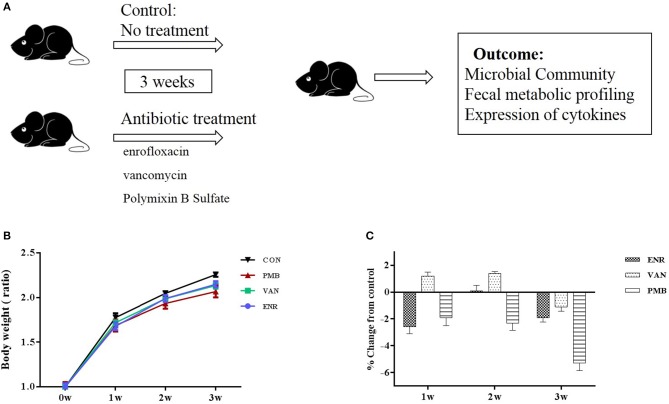
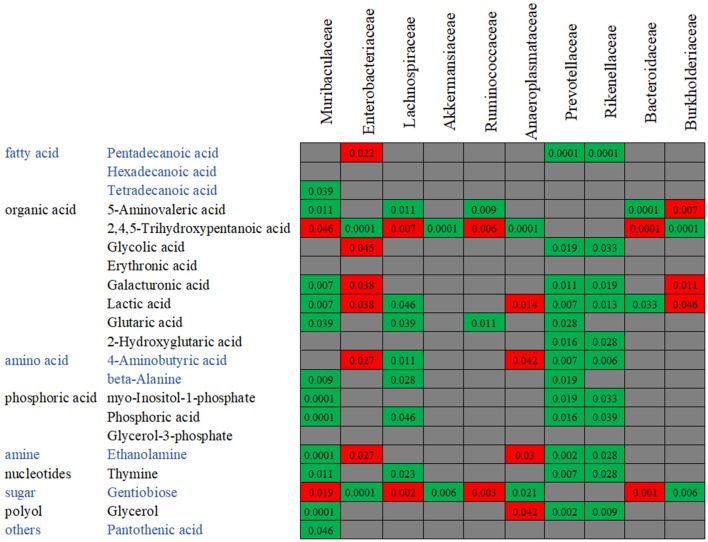
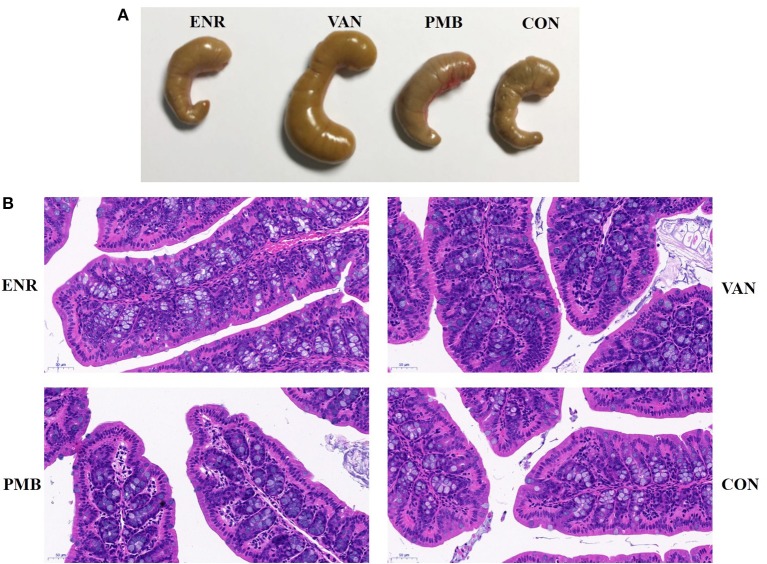
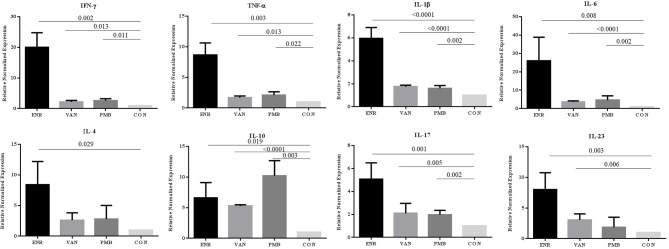
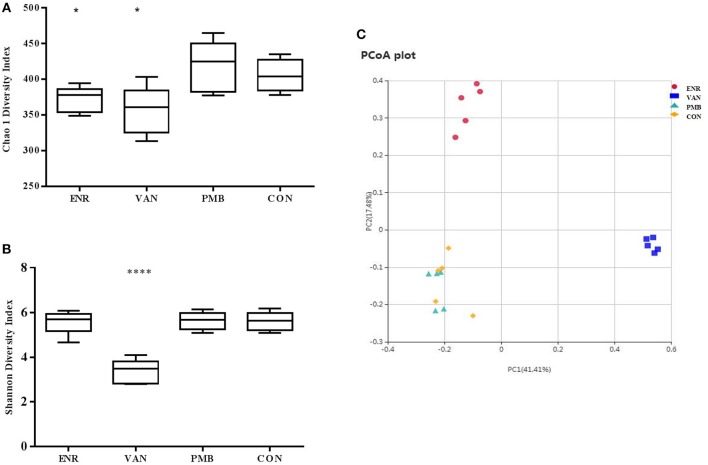
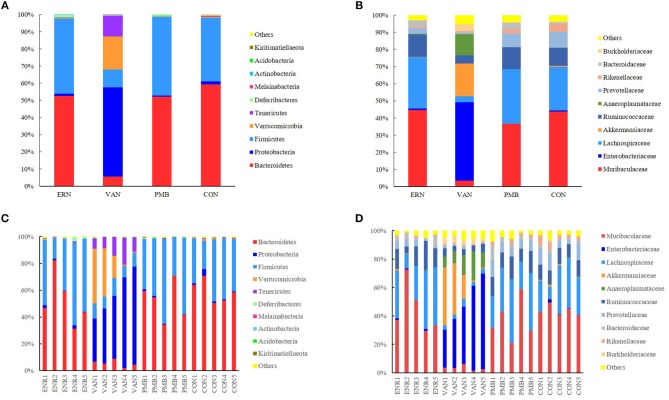
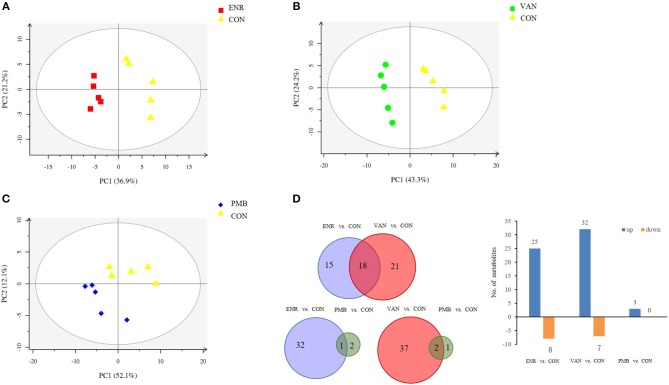
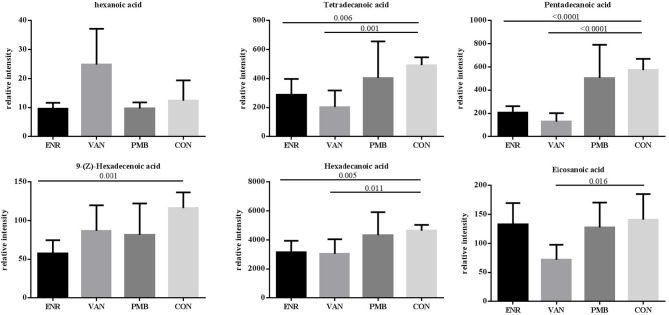
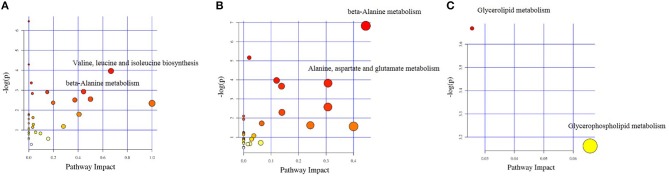
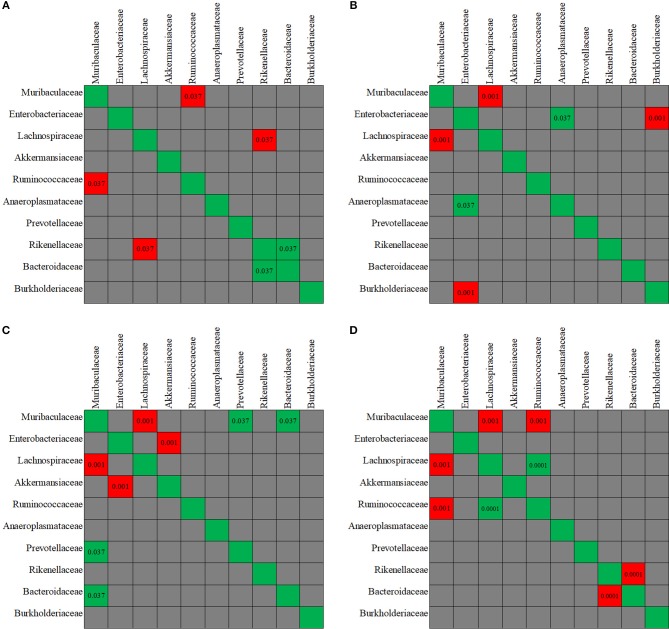
Gut microbiome plays an essential role in modulating host immune responses. However, little is known about the interaction of microbiota, their metabolites and relevant inflammatory responses in the gut. By treating the mice with three different antibiotics (enrofloxacin, vancomycin, and polymixin B sulfate), we aimed to investigate the effects of different antibiotics exposure on gut microbiota, microbial metabolism, inflammation responses in the gut, and most importantly, pinpoint the underlying interactions between them. Although the administration of different antibiotics can lead to different effects on mouse models, the treatment did not affect the average body weight of the mice. A heavier caecum was observed in vancomycin treated mice. Treatment by these three antibiotics significantly up-regulated gene expression of various cytokines in the colon. Enrofloxacin treated mice seemed to have an increased Th1 response in the colon. However, such a difference was not found in mice treated by vancomycin or polymixin B sulfate. Vancomycin treatment induced significant changes in bacterial composition at phylum and family level and decreased richness and diversity at species level. Enrofloxacin treatment only induced changes in composition at family presenting as an increase in and and a decrease in . However, no significant difference was observed after polymixin B sulfate treatment. When compared with the control group, significant metabolic shift was found in the enrofloxacin and vancomycin treated group. The metabolic changes mainly occurred in Valine, leucine, and isoleucine biosynthesis pathway and beta-Alanine metabolism in enrofloxacin treated group. For vancomycin treatment metabolic changes were mainly found in beta-Alanine metabolism and Alanine, aspartate and glutamate metabolism pathway. Moreover, modifications observed in the microbiota compositions were correlated with the metabolite concentrations. For example, concentration of pentadecanoic acid was positively correlated with richness of and and negatively correlated with . This study suggests that the antibiotic-induced changes in gut microbiota might contribute to the inflammation responses through the alternation of metabolic status, providing a novel insight regarding a complex network that integrates the different interactions between gut microbiota, metabolic functions, and immune responses in host.
肠道微生物群在调节宿主免疫反应方面发挥着重要作用。然而,人们对肠道中微生物群、其代谢物和相关炎症反应的相互作用知之甚少。通过用三种不同的抗生素(恩诺沙星、万古霉素和硫酸多粘菌素 B)处理小鼠,我们旨在研究不同抗生素暴露对肠道微生物群、微生物代谢、肠道炎症反应的影响,最重要的是,确定它们之间的潜在相互作用。尽管不同的抗生素处理会对小鼠模型产生不同的影响,但处理并没有影响小鼠的平均体重。万古霉素处理的小鼠盲肠较重。这三种抗生素的处理均显著上调了结肠中各种细胞因子的基因表达。恩诺沙星处理的小鼠结肠中似乎有更多的 Th1 反应。然而,在万古霉素或硫酸多粘菌素 B 处理的小鼠中没有发现这种差异。万古霉素处理诱导了门和科水平细菌组成的显著变化,并降低了物种水平的丰富度和多样性。恩诺沙星处理仅在科水平上引起组成的变化,表现为增加和减少。然而,硫酸多粘菌素 B 处理后没有观察到显著差异。与对照组相比,恩诺沙星和万古霉素处理组的代谢物发生了显著变化。代谢变化主要发生在缬氨酸、亮氨酸和异亮氨酸生物合成途径和β-丙氨酸代谢中恩诺沙星处理组。对于万古霉素处理,代谢变化主要发生在β-丙氨酸代谢和丙氨酸、天冬氨酸和谷氨酸代谢途径中。此外,微生物群组成的变化与代谢物浓度相关。例如,十五烷酸的浓度与和的丰富度呈正相关,与呈负相关。本研究表明,抗生素诱导的肠道微生物群变化可能通过改变代谢状态来促进炎症反应,为宿主中肠道微生物群、代谢功能和免疫反应之间的复杂网络提供了新的见解。