Lopes Marinho A, Goodfellow Marc, Terry John R
Living Systems Institute, University of Exeter, Exeter, United Kingdom.
Wellcome Trust Centre for Biomedical Modelling and Analysis, University of Exeter, Exeter, United Kingdom.
Front Comput Neurosci. 2019 Apr 26;13:25. doi: 10.3389/fncom.2019.00025. eCollection 2019.
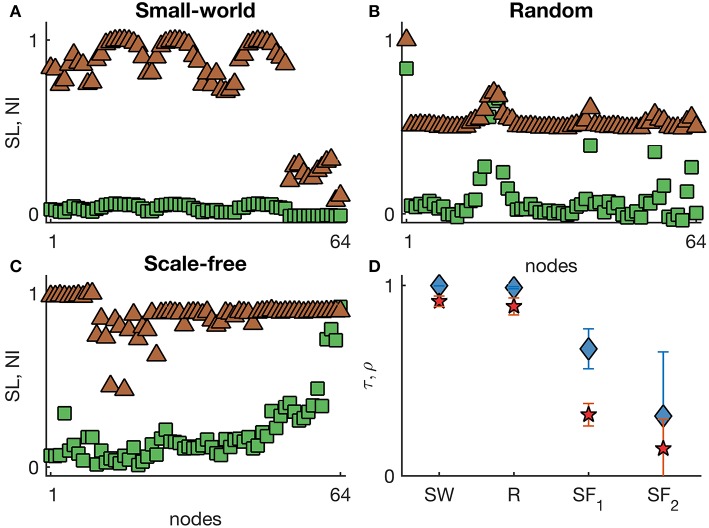
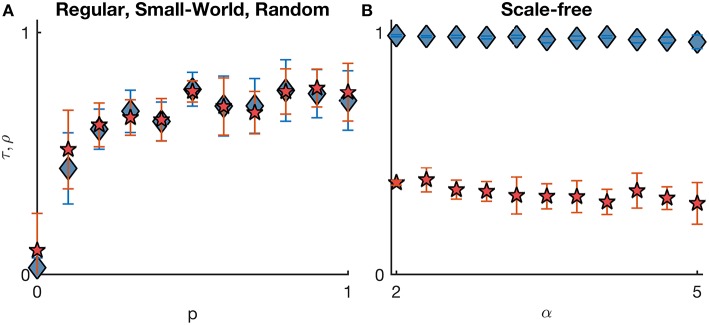
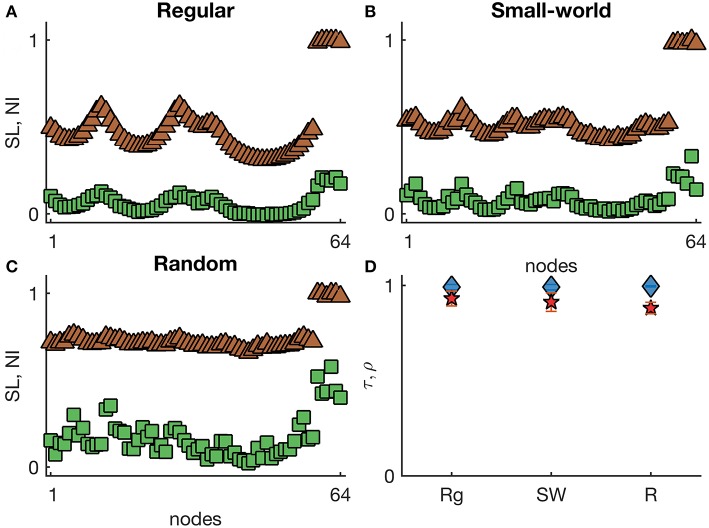
Epilepsy surgery is a clinical procedure that aims to remove the brain tissue responsible for the emergence of seizures, the epileptogenic zone (EZ). It is preceded by an evaluation to determine the brain tissue that must be resected. The identification of the seizure onset zone (SOZ) from intracranial EEG recordings stands as one of the key proxies for the EZ. In this study we used computational models of epilepsy to assess to what extent the SOZ may or may not represent the EZ. We considered a set of different synthetic networks (e.g., regular, small-world, random, and scale-free networks) to represent large-scale brain networks and a phenomenological network model of seizure generation. In the model, the SOZ was inferred from the seizure likelihood (SL), a measure of the propensity of single nodes to produce epileptiform dynamics, whilst a surgery corresponded to the removal of nodes and connections from the network. We used the concept of node ictogenicity (NI) to quantify the effectiveness of each node removal on reducing the network's propensity to generate seizures. This framework enabled us to systematically compare the SOZ and the seizure control achieved by each considered surgery. Specifically, we compared the distributions of SL and NI across different networks. We found that SL and NI were concordant when all nodes were similarly ictogenic, whereas when there was a small fraction of nodes with high NI, the SL was not specific at identifying these nodes. We further considered networks with heterogeneous node excitabilities, i.e., nodes with different susceptibilities of being engaged in seizure activity, to understand how such heterogeneity may affect the relationship between SL and NI. We found that while SL and NI are concordant when there is a small fraction of hyper-excitable nodes in a network that is otherwise homogeneous, they do diverge if the network is heterogeneous, such as in scale-free networks. We observe that SL is highly dependent on node excitabilities, whilst the effect of surgical resections as revealed by NI is mostly determined by network structure. Together our results suggest that the SOZ is not always a good marker of the EZ.
癫痫手术是一种临床操作,旨在切除引发癫痫发作的脑组织,即致痫区(EZ)。在此之前需要进行评估,以确定必须切除的脑组织。从颅内脑电图记录中识别癫痫发作起始区(SOZ)是确定EZ的关键指标之一。在本研究中,我们使用癫痫计算模型来评估SOZ在何种程度上可能代表或不代表EZ。我们考虑了一组不同的合成网络(例如规则网络、小世界网络、随机网络和无标度网络)来表示大规模脑网络以及癫痫发作产生的唯象网络模型。在模型中,从癫痫发作可能性(SL)推断SOZ,SL是单个节点产生癫痫样动力学倾向的一种度量,而手术相当于从网络中移除节点和连接。我们使用节点致痫性(NI)的概念来量化每次节点移除对降低网络产生癫痫发作倾向的有效性。这个框架使我们能够系统地比较SOZ和每种考虑的手术所实现的癫痫控制。具体而言,我们比较了不同网络中SL和NI的分布。我们发现,当所有节点的致痫性相似时,SL和NI是一致的,而当存在一小部分具有高NI的节点时,SL在识别这些节点方面并不具有特异性。我们进一步考虑了具有异质节点兴奋性的网络,即参与癫痫活动的易感性不同的节点,以了解这种异质性如何影响SL和NI之间的关系。我们发现,当在一个原本均匀的网络中存在一小部分高兴奋性节点时,SL和NI是一致的,但如果网络是异质的,如无标度网络,则它们会出现分歧。我们观察到,SL高度依赖于节点兴奋性,而NI所揭示的手术切除效果主要由网络结构决定。我们的结果共同表明,SOZ并不总是EZ的良好标志物。