Gerster Moritz, Taher Halgurd, Škoch Antonín, Hlinka Jaroslav, Guye Maxime, Bartolomei Fabrice, Jirsa Viktor, Zakharova Anna, Olmi Simona
Institut für Theoretische Physik, Technische Universität Berlin, Berlin, Germany.
Inria Sophia Antipolis Méditerranée Research Centre, MathNeuro Team, Valbonne, France.
Front Syst Neurosci. 2021 Sep 1;15:675272. doi: 10.3389/fnsys.2021.675272. eCollection 2021.
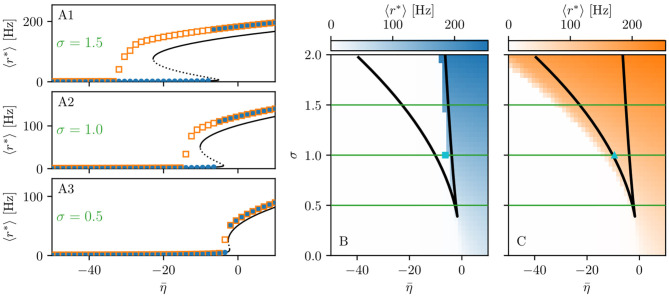
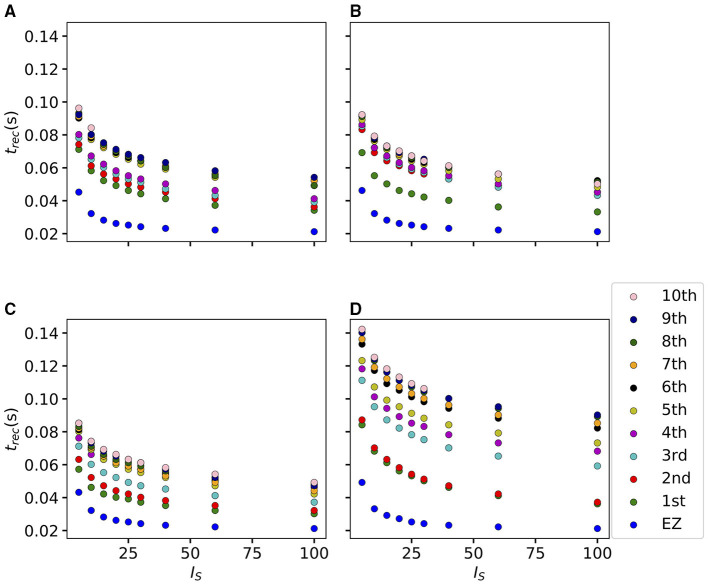
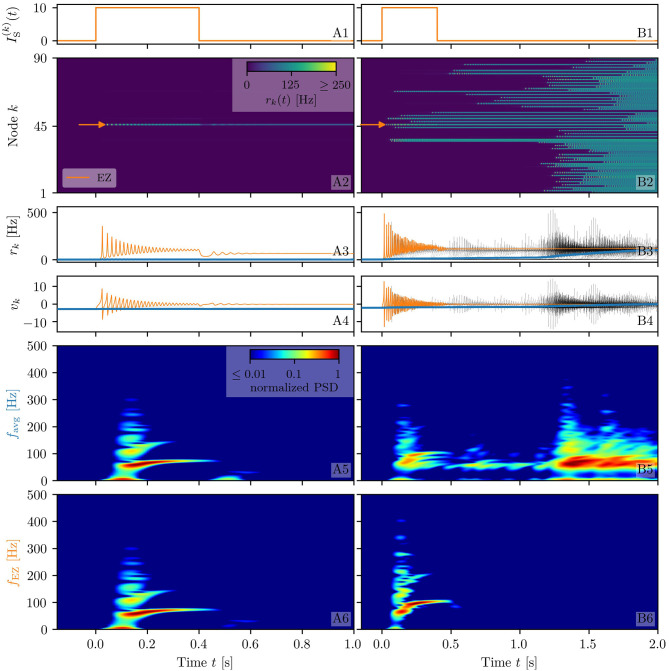
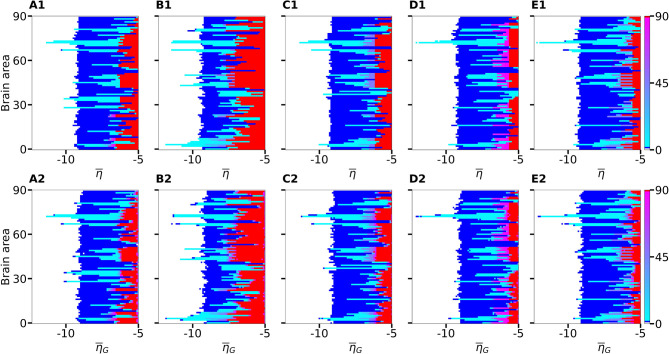
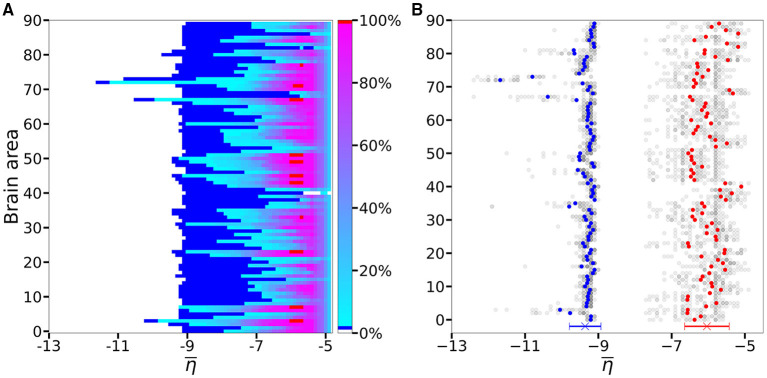
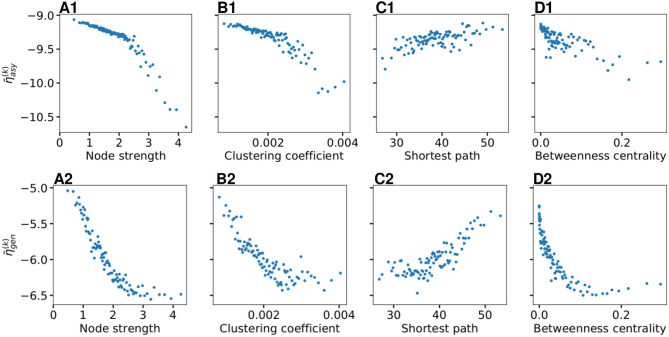
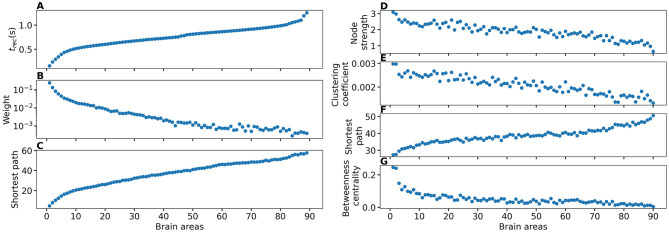
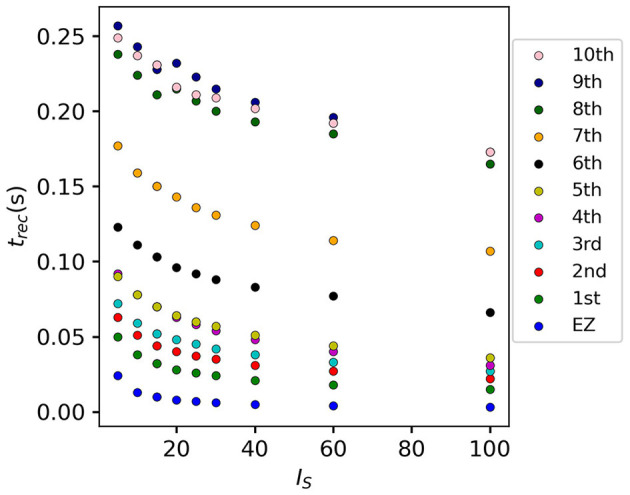
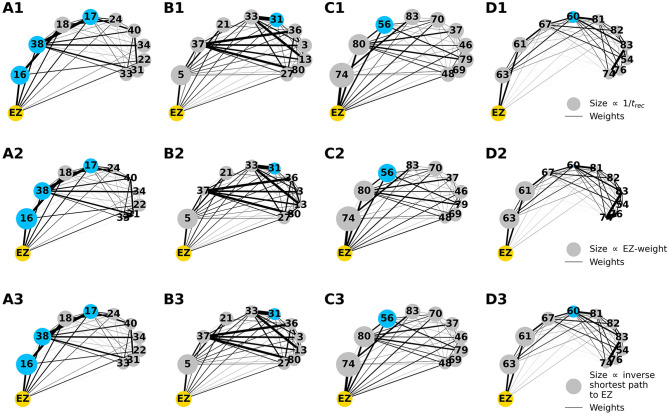
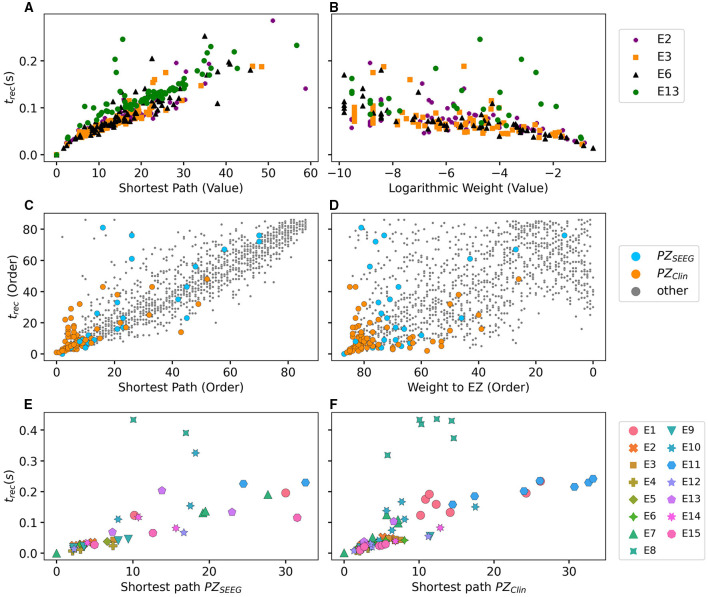
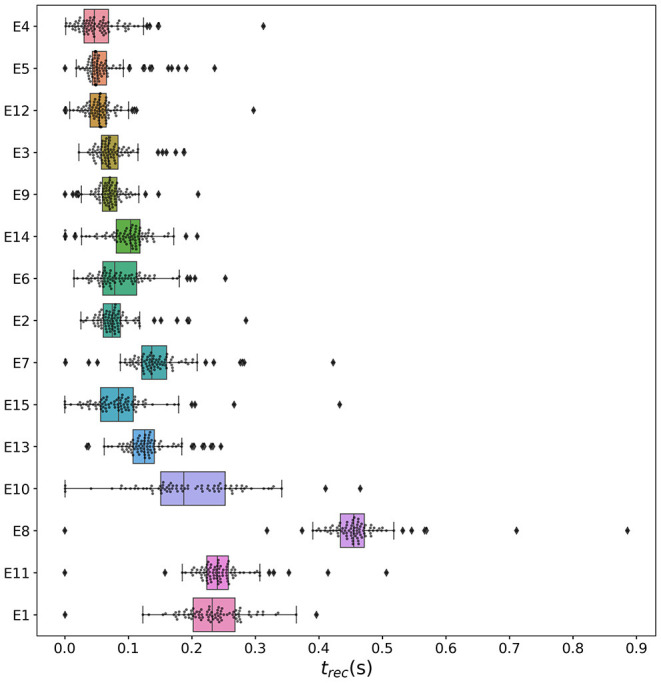
Dynamics underlying epileptic seizures span multiple scales in space and time, therefore, understanding seizure mechanisms requires identifying the relations between seizure components within and across these scales, together with the analysis of their dynamical repertoire. In this view, mathematical models have been developed, ranging from single neuron to neural population. In this study, we consider a neural mass model able to exactly reproduce the dynamics of heterogeneous spiking neural networks. We combine mathematical modeling with structural information from non invasive brain imaging, thus building large-scale brain network models to explore emergent dynamics and test the clinical hypothesis. We provide a comprehensive study on the effect of external drives on neuronal networks exhibiting multistability, in order to investigate the role played by the neuroanatomical connectivity matrices in shaping the emergent dynamics. In particular, we systematically investigate the conditions under which the network displays a transition from a low activity regime to a high activity state, which we identify with a seizure-like event. This approach allows us to study the biophysical parameters and variables leading to multiple recruitment events at the network level. We further exploit topological network measures in order to explain the differences and the analogies among the subjects and their brain regions, in showing recruitment events at different parameter values. We demonstrate, along with the example of diffusion-weighted magnetic resonance imaging (dMRI) connectomes of 20 healthy subjects and 15 epileptic patients, that individual variations in structural connectivity, when linked with mathematical dynamic models, have the capacity to explain changes in spatiotemporal organization of brain dynamics, as observed in network-based brain disorders. In particular, for epileptic patients, by means of the integration of the clinical hypotheses on the epileptogenic zone (EZ), i.e., the local network where highly synchronous seizures originate, we have identified the sequence of recruitment events and discussed their links with the topological properties of the specific connectomes. The predictions made on the basis of the implemented set of exact mean-field equations turn out to be in line with the clinical pre-surgical evaluation on recruited secondary networks.
癫痫发作背后的动力学在空间和时间上跨越多个尺度,因此,理解发作机制需要识别这些尺度内和跨尺度的发作成分之间的关系,以及对其动力学特征进行分析。从这个角度来看,已经开发了从单个神经元到神经群体的数学模型。在本研究中,我们考虑一种能够精确再现异质脉冲神经网络动力学的神经质量模型。我们将数学建模与来自非侵入性脑成像的结构信息相结合,从而构建大规模脑网络模型来探索涌现动力学并检验临床假设。我们对外部驱动对表现出多稳定性的神经元网络的影响进行了全面研究,以探讨神经解剖连接矩阵在塑造涌现动力学中所起的作用。特别是,我们系统地研究了网络从低活动状态转变为高活动状态的条件,我们将其识别为类似发作的事件。这种方法使我们能够研究导致网络层面多次募集事件的生物物理参数和变量。我们进一步利用拓扑网络测量来解释不同受试者及其脑区之间的差异和相似之处,以展示不同参数值下的募集事件。我们以20名健康受试者和15名癫痫患者的扩散加权磁共振成像(dMRI)连接组为例进行说明,当与数学动态模型相结合时,结构连接性的个体差异能够解释基于网络的脑部疾病中观察到的脑动力学时空组织变化。特别是对于癫痫患者,通过整合关于致痫区(EZ)的临床假设,即高度同步发作起源的局部网络,我们确定了募集事件的顺序,并讨论了它们与特定连接组拓扑特性的联系。基于所实施的精确平均场方程组所做的预测结果与对募集的二级网络的临床术前评估一致。