School of Agronomy, Anhui Agricultural University, Hefei 230036, China.
School of Life Sciences, Anhui Agricultural University, Hefei 230036, China.
Int J Mol Sci. 2019 May 23;20(10):2541. doi: 10.3390/ijms20102541.
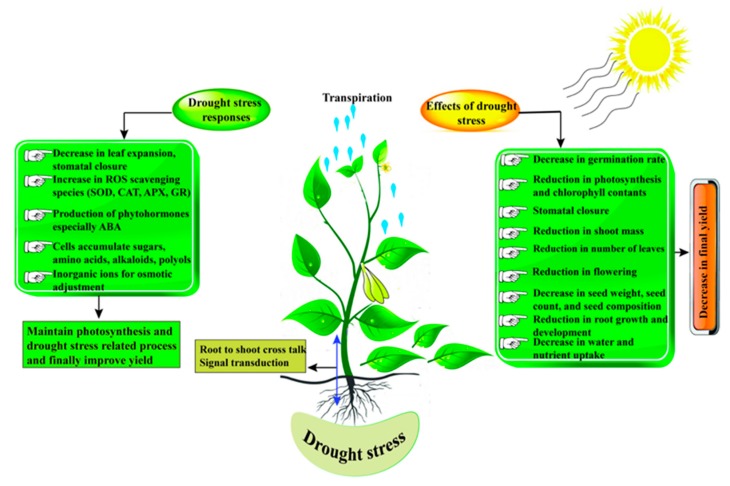
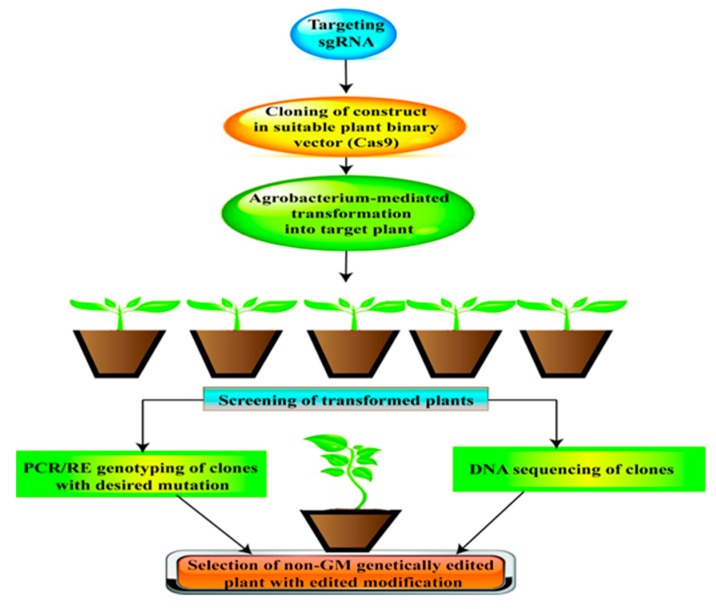
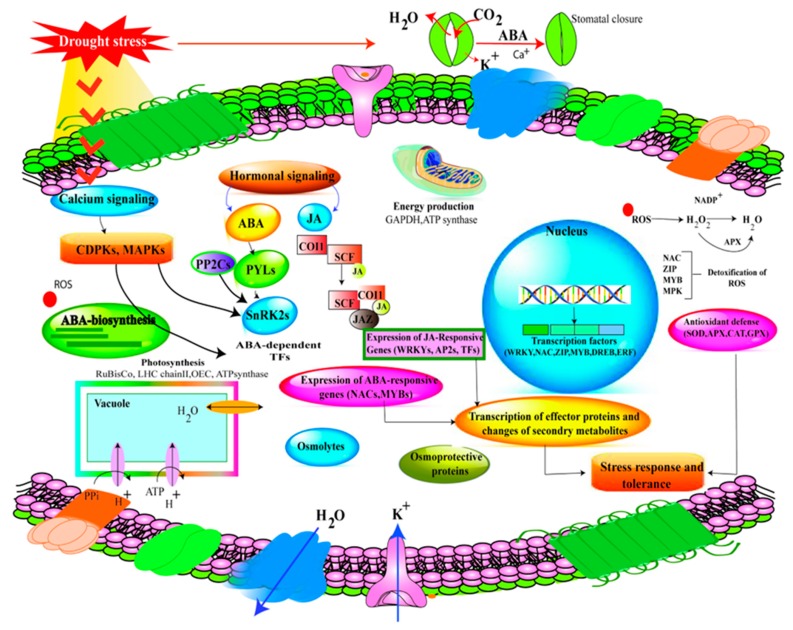
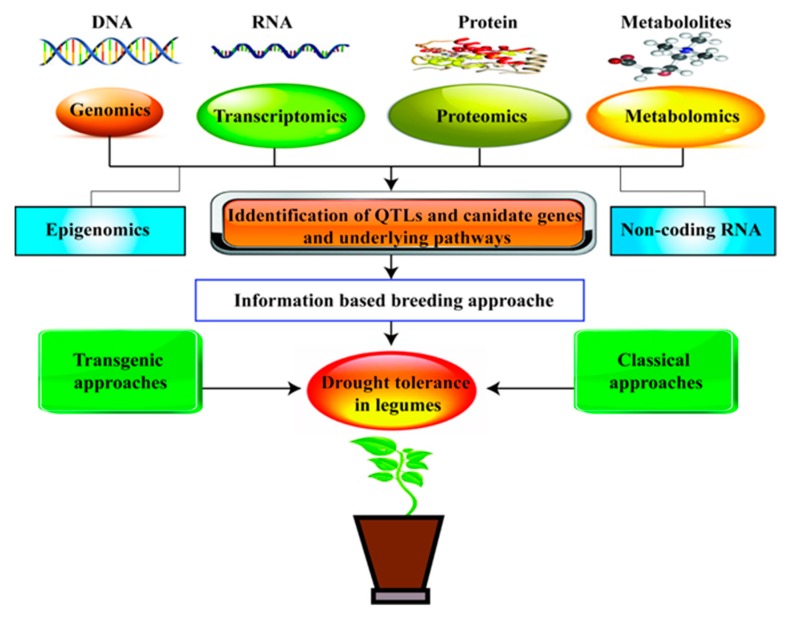
Climate change, food shortage, water scarcity, and population growth are some of the threatening challenges being faced in today's world. Drought stress (DS) poses a constant challenge for agricultural crops and has been considered a severe constraint for global agricultural productivity; its intensity and severity are predicted to increase in the near future. Legumes demonstrate high sensitivity to DS, especially at vegetative and reproductive stages. They are mostly grown in the dry areas and are moderately drought tolerant, but severe DS leads to remarkable production losses. The most prominent effects of DS are reduced germination, stunted growth, serious damage to the photosynthetic apparatus, decrease in net photosynthesis, and a reduction in nutrient uptake. To curb the catastrophic effect of DS in legumes, it is imperative to understand its effects, mechanisms, and the agronomic and genetic basis of drought for sustainable management. This review highlights the impact of DS on legumes, mechanisms, and proposes appropriate management approaches to alleviate the severity of water stress. In our discussion, we outline the influence of water stress on physiological aspects (such as germination, photosynthesis, water and nutrient uptake), growth parameters and yield. Additionally, mechanisms, various management strategies, for instance, agronomic practices (planting time and geometry, nutrient management), plant growth-promoting and arbuscular mycorrhizal fungal inoculation, quantitative trait loci (QTLs), functional genomics and advanced strategies (CRISPR-Cas9) are also critically discussed. We propose that the integration of several approaches such as agronomic and biotechnological strategies as well as advanced genome editing tools is needed to develop drought-tolerant legume cultivars.
气候变化、粮食短缺、水资源匮乏和人口增长是当今世界面临的一些威胁性挑战。干旱胁迫(DS)对农作物构成持续挑战,被认为是全球农业生产力的严重制约因素;预计其强度和严重程度将在不久的将来增加。豆类植物对 DS 表现出高度的敏感性,尤其是在营养生长和生殖生长阶段。它们主要生长在干旱地区,具有一定的耐旱能力,但严重的 DS 会导致显著的产量损失。DS 最显著的影响是降低发芽率、生长受阻、严重破坏光合作用器官、净光合作用减少以及养分吸收减少。为了遏制 DS 对豆类植物的灾难性影响,必须了解其影响、机制以及豆类植物耐旱性的农艺和遗传基础,以实现可持续管理。本综述强调了 DS 对豆类植物的影响、机制,并提出了适当的管理方法来减轻水分胁迫的严重程度。在我们的讨论中,我们概述了水分胁迫对生理方面(如发芽、光合作用、水和养分吸收)、生长参数和产量的影响。此外,还讨论了各种机制和管理策略,例如农业实践(种植时间和几何形状、养分管理)、植物生长促进和丛枝菌根真菌接种、数量性状位点(QTLs)、功能基因组学和先进策略(CRISPR-Cas9)。我们提出,需要整合几种方法,如农业和生物技术策略以及先进的基因组编辑工具,以开发耐旱豆类植物品种。