Cell and Gene Therapy Program, Fred Hutchinson Cancer Research Center, Seattle, WA, USA.
Department of Pathology, University of Washington, Seattle, WA, USA.
Nat Mater. 2019 Oct;18(10):1124-1132. doi: 10.1038/s41563-019-0385-5. Epub 2019 May 27.
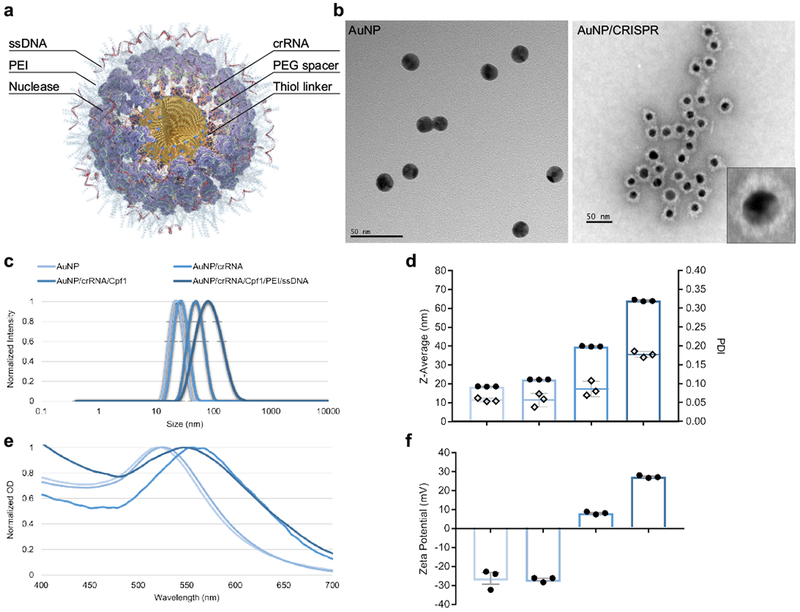
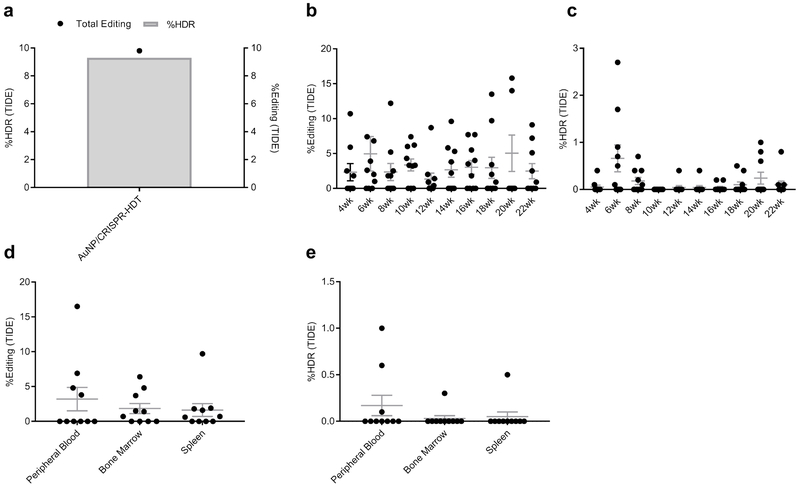
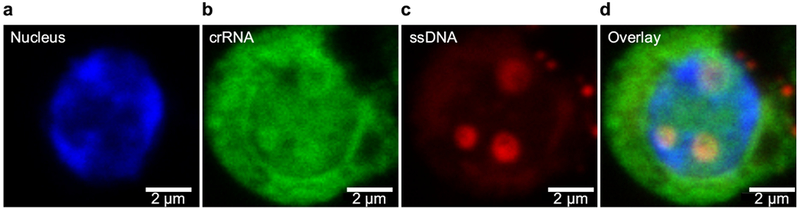
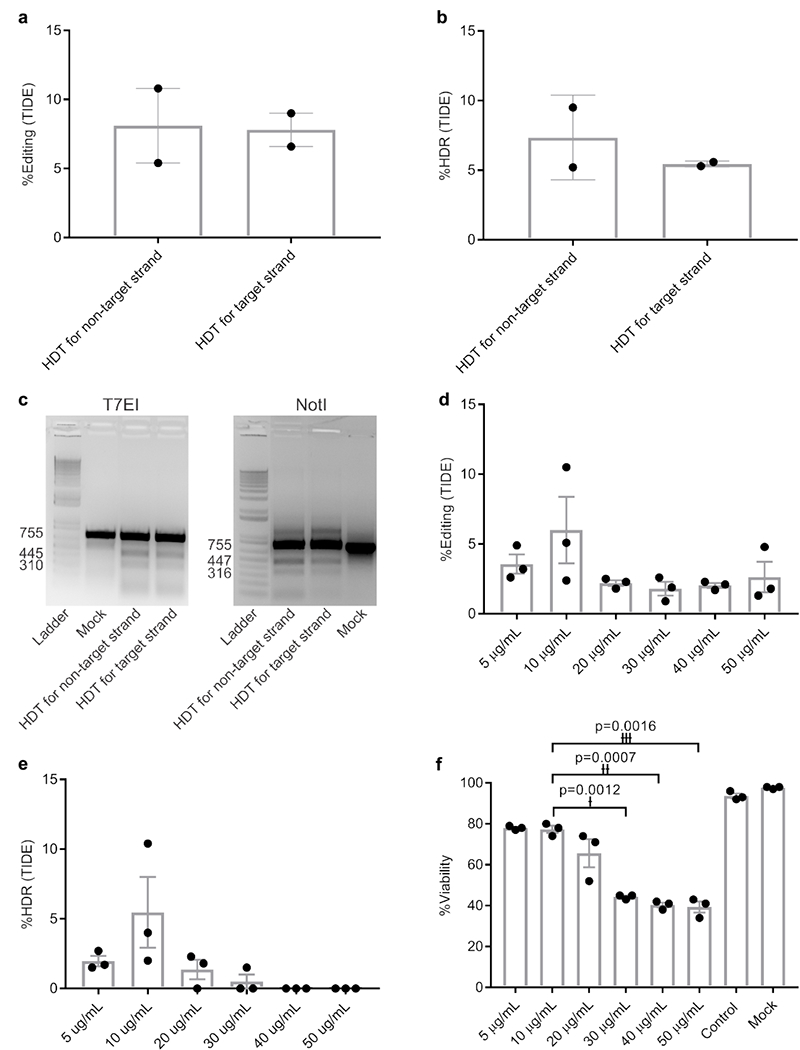
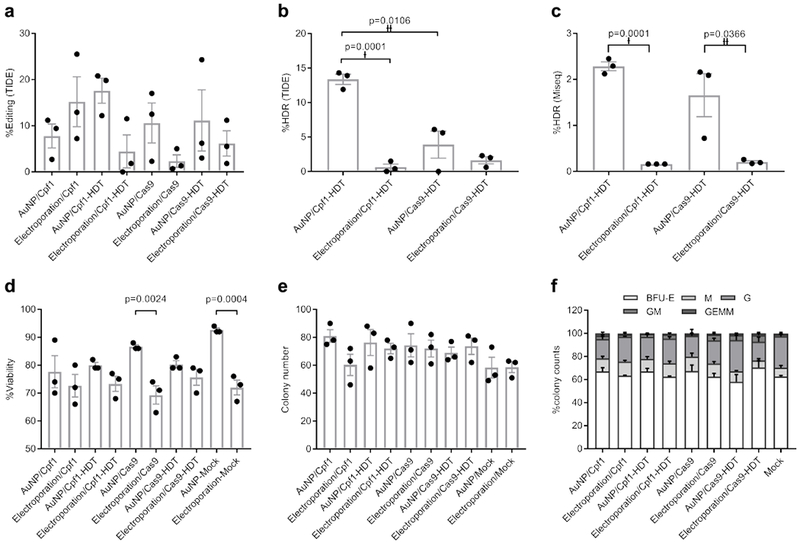
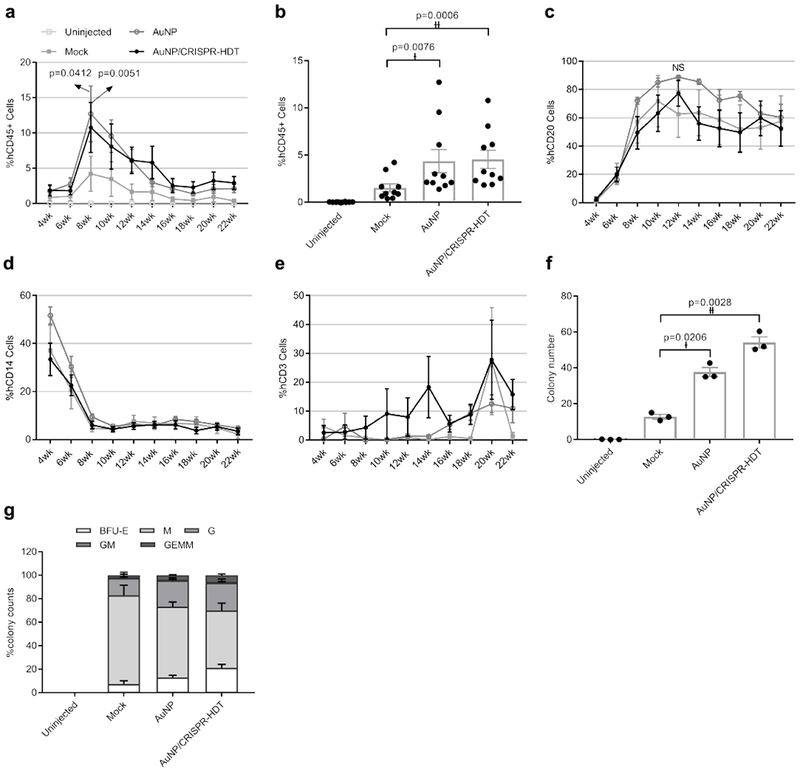
Ex vivo CRISPR gene editing in haematopoietic stem and progenitor cells has opened potential treatment modalities for numerous diseases. The current process uses electroporation, sometimes followed by virus transduction. While this complex manipulation has resulted in high levels of gene editing at some genetic loci, cellular toxicity was observed. We have developed a CRISPR nanoformulation based on colloidal gold nanoparticles with a unique loading design capable of cellular entry without the need for electroporation or viruses. This highly monodispersed nanoformulation avoids lysosomal entrapment and localizes to the nucleus in primary human blood progenitors without toxicity. Nanoformulation-mediated gene editing is efficient and sustained with different CRISPR nucleases at multiple loci of therapeutic interest. The engraftment kinetics of nanoformulation-treated primary cells in humanized mice are better relative to those of non-treated cells, with no differences in differentiation. Here we demonstrate non-toxic delivery of the entire CRISPR payload into primary human blood progenitors.
体外 CRISPR 基因编辑在造血干细胞和祖细胞中开辟了许多疾病的潜在治疗方法。目前的过程使用电穿孔,有时接着是病毒转导。虽然这种复杂的操作在一些遗传基因座上产生了高水平的基因编辑,但观察到了细胞毒性。我们开发了一种基于胶体金纳米粒子的 CRISPR 纳米制剂,具有独特的装载设计,能够在不需要电穿孔或病毒的情况下进入细胞。这种高度单分散的纳米制剂避免了溶酶体捕获,并在没有毒性的情况下定位于原发性人血液祖细胞的核内。纳米制剂介导的基因编辑在多个治疗靶点的不同 CRISPR 核酸酶中具有高效和持续的效果。纳米制剂处理的原代细胞在人源化小鼠中的植入动力学优于未经处理的细胞,并且分化没有差异。在这里,我们证明了整个 CRISPR 有效载荷的无毒递送到原发性人血液祖细胞中。