Department of Pathology and Immunology, Washington University School of Medicine, St. Louis, MO, United States.
Front Immunol. 2019 May 7;10:861. doi: 10.3389/fimmu.2019.00861. eCollection 2019.
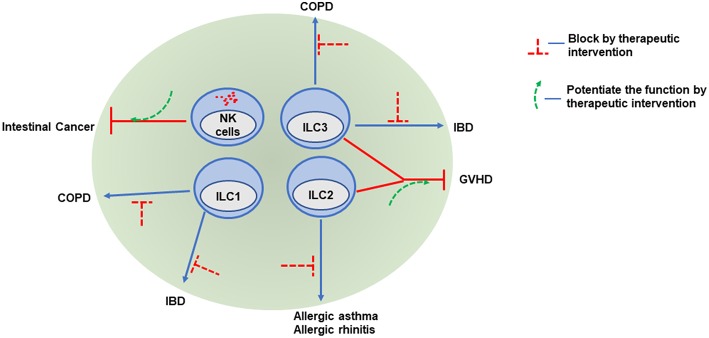
Innate lymphoid cells (ILCs) are innate counterparts of T cells that contribute to immune responses by secreting effector cytokines and regulating the functions of other innate and adaptive immune cells. ILCs carry out some unique functions but share some tasks with T cells. ILCs are present in lymphoid and non-lymphoid organs and are particularly abundant at the mucosal barriers, where they are exposed to allergens, commensal microbes, and pathogens. The impact of ILCs in mucosal immune responses has been extensively investigated in the gastrointestinal and respiratory tracts, as well as in the oral cavity. Here we review the state-of-the-art knowledge of ILC functions in infections, allergy and autoimmune disorders of the mucosal barriers.
先天淋巴细胞 (ILCs) 是 T 细胞的先天对应物,通过分泌效应细胞因子和调节其他先天和适应性免疫细胞的功能来促进免疫反应。ILCs 执行一些独特的功能,但与 T 细胞具有一些共同的任务。ILCs 存在于淋巴器官和非淋巴器官中,在黏膜屏障中尤其丰富,在那里它们暴露于过敏原、共生微生物和病原体。ILCs 在黏膜免疫反应中的作用在胃肠道和呼吸道以及口腔中得到了广泛的研究。在这里,我们综述了 ILCs 在黏膜屏障感染、过敏和自身免疫性疾病中的功能的最新知识。