Experimental Psychology, Faculty of Social Sciences, Utrecht University, Utrecht, The Netherlands.
Behav Res Methods. 2019 Oct;51(5):2106-2119. doi: 10.3758/s13428-019-01256-8.
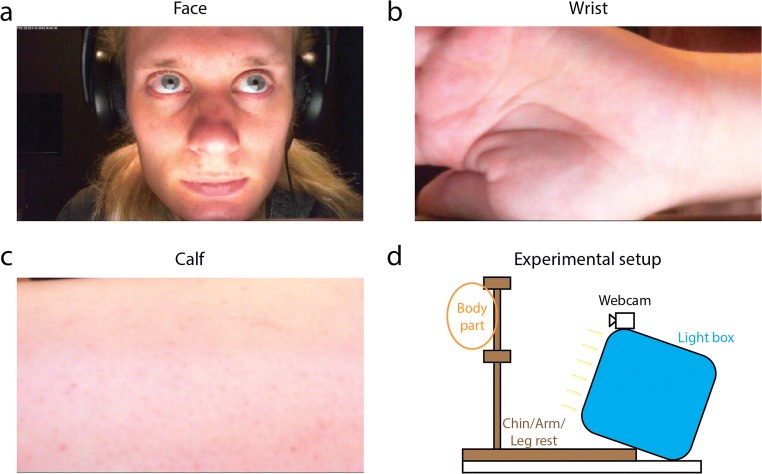
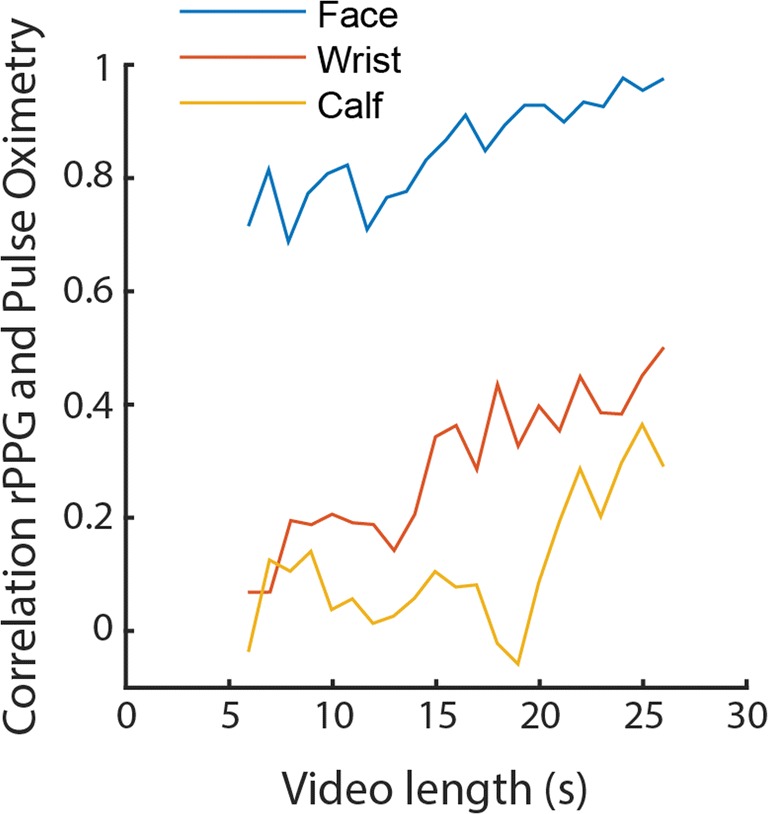
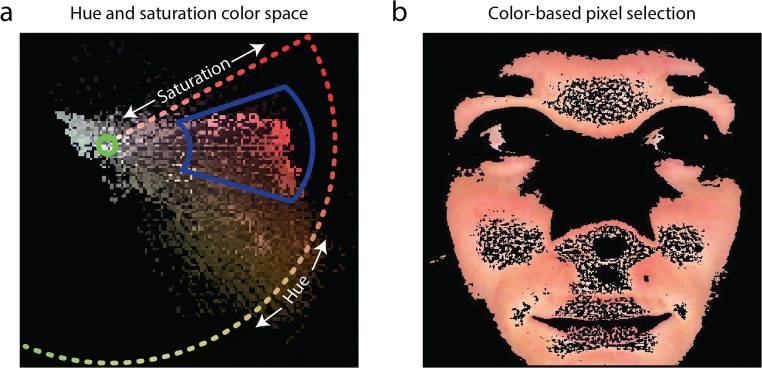
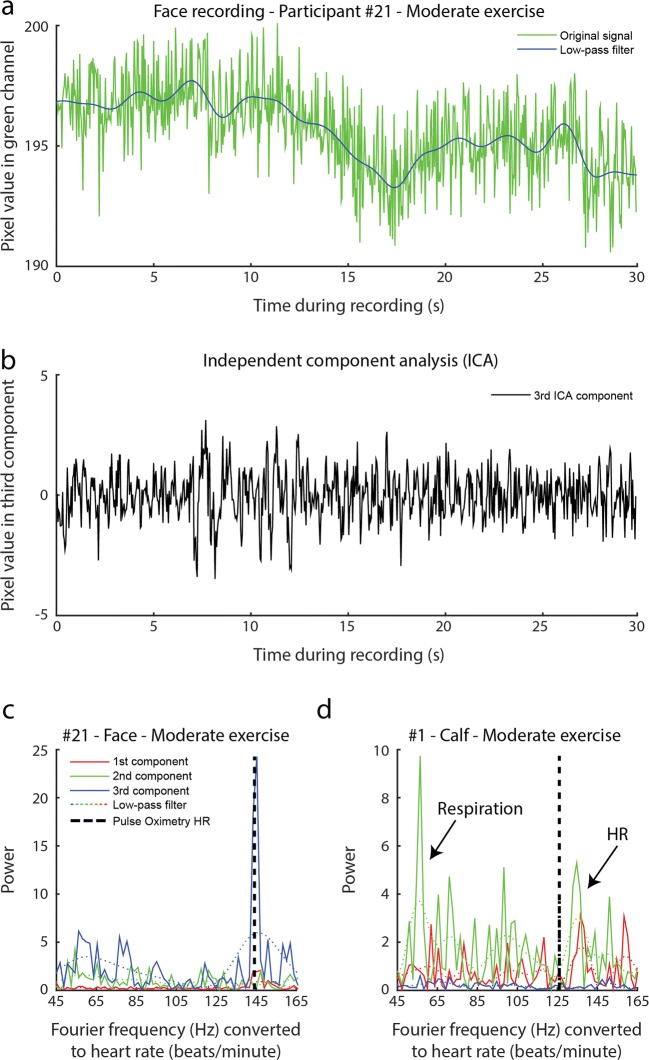
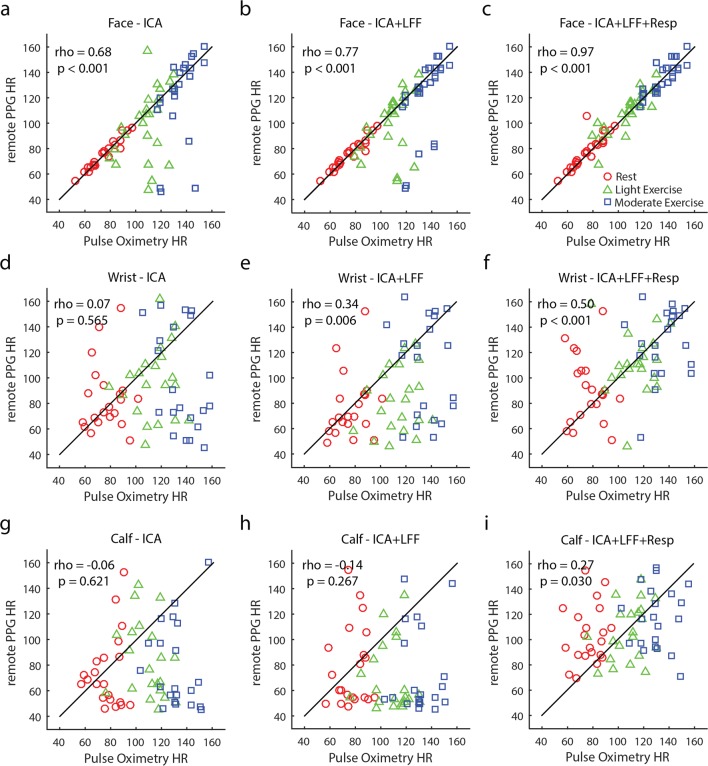
Recent developments in computer science and digital image processing have enabled the extraction of an individual's heart pulsations from pixel changes in recorded video images of human skin surfaces. This method is termed remote photoplethysmography (rPPG) and can be achieved with consumer-level cameras (e.g., a webcam or mobile camera). The goal of the present publication is two-fold. First, we aim to organize future rPPG software developments in a tractable and nontechnical manner, such that the public gains access to a basic open-source rPPG code, comes to understand its utility, and can follow its most recent progressions. The second goal is to investigate rPPG's accuracy in detecting heart rates from the skin surfaces of several body parts after physical exercise and under ambient lighting conditions with a consumer-level camera. We report that rPPG is highly accurate when the camera is aimed at facial skin tissue, but that the heart rate recordings from wrist regions are less reliable, and recordings from the calves are unreliable. Facial rPPG remained accurate despite the high heart rates after exercise. The proposed research procedures and the experimental findings provide guidelines for future studies on rPPG.
计算机科学和数字图像处理的最新发展使得可以从人体皮肤表面记录的视频图像中的像素变化中提取个体的心跳。这种方法被称为远程光电容积描记法(rPPG),可以使用消费级相机(例如网络摄像头或移动相机)来实现。本出版物的目的有两个。首先,我们旨在以易于管理且非技术性的方式组织未来的 rPPG 软件开发,以便公众可以访问基本的开源 rPPG 代码,了解其用途,并可以跟踪其最新进展。第二个目标是研究 rPPG 在运动后和环境光照条件下使用消费级相机从身体多个部位的皮肤表面检测心率的准确性。我们报告说,当相机对准面部皮肤组织时,rPPG 非常准确,但是从手腕区域记录的心率记录不太可靠,而从小腿记录的心率记录则不可靠。尽管运动后心率很高,但面部 rPPG 仍然准确。所提出的研究程序和实验结果为 rPPG 的未来研究提供了指导。