• 文献检索
  • 文档翻译
  • 深度研究
  • 学术资讯
  • Suppr Zotero 插件Zotero 插件
  • 邀请有礼
  • 套餐&价格
  • 历史记录
应用&插件
Suppr Zotero 插件Zotero 插件浏览器插件Mac 客户端Windows 客户端微信小程序
定价
高级版会员购买积分包购买API积分包
服务
文献检索文档翻译深度研究API 文档MCP 服务
关于我们
关于 Suppr公司介绍联系我们用户协议隐私条款
关注我们

Suppr 超能文献

核心技术专利:CN118964589B侵权必究
粤ICP备2023148730 号-1Suppr @ 2026

文献检索

告别复杂PubMed语法,用中文像聊天一样搜索,搜遍4000万医学文献。AI智能推荐,让科研检索更轻松。

立即免费搜索

文件翻译

保留排版,准确专业,支持PDF/Word/PPT等文件格式,支持 12+语言互译。

免费翻译文档

深度研究

AI帮你快速写综述,25分钟生成高质量综述,智能提取关键信息,辅助科研写作。

立即免费体验

表现出破坏性行为而被转介到预防犯罪项目中的儿童的情绪识别和同理心障碍的性质和程度。

The nature and extent of emotion recognition and empathy impairments in children showing disruptive behaviour referred into a crime prevention programme.

机构信息

School of Psychology, Cardiff University, Cardiff, Wales, UK.

Department of Criminology and Criminal Justice, University of Northampton, Northampton, UK.

出版信息

Eur Child Adolesc Psychiatry. 2020 Mar;29(3):363-371. doi: 10.1007/s00787-019-01358-w. Epub 2019 Jun 1.

DOI:10.1007/s00787-019-01358-w
PMID:31154516
原文链接:https://pmc.ncbi.nlm.nih.gov/articles/PMC7056692/
Abstract

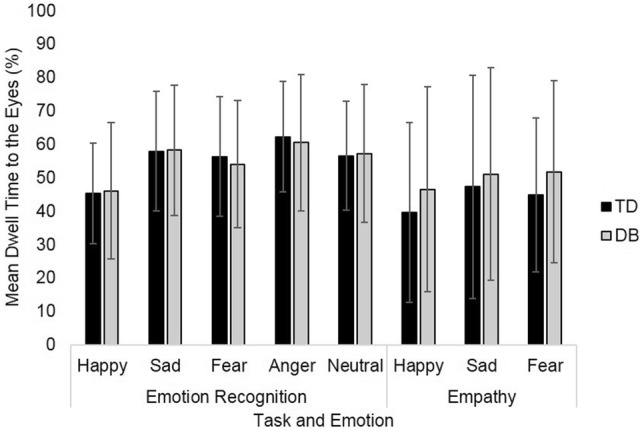
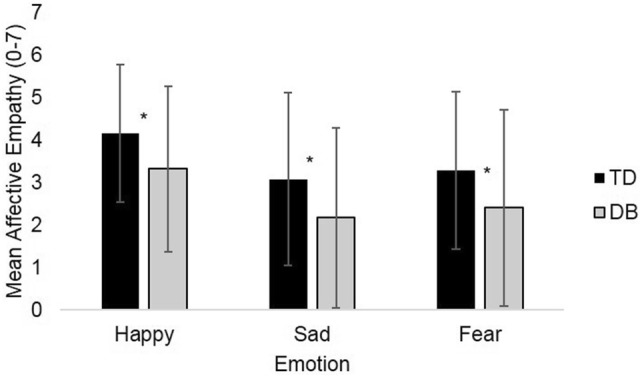
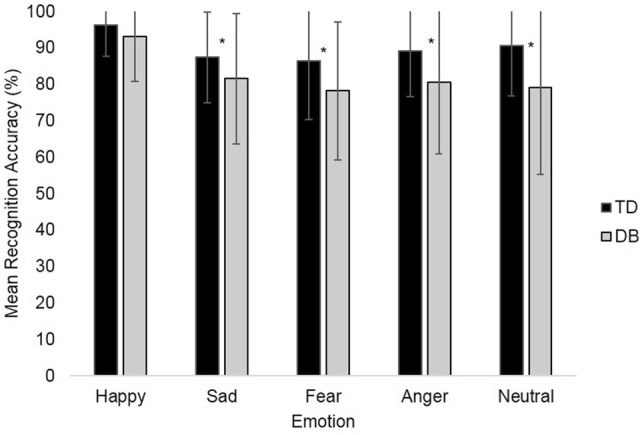
Childhood disruptive behaviour has been linked to later antisocial and criminal behaviour. Emotion recognition and empathy impairments, thought to be caused by inattention to the eye region, are hypothesised to contribute to antisocial and criminal behaviour. This is the first study to simultaneously examine emotion recognition and empathy impairments, their relationship, and the mechanism behind these impairments, in children with disruptive behaviour. We hypothesised that children with disruptive behaviour would exhibit negative emotion recognition and cognitive and affective empathy impairments, but that these impairments would not be due to reduced attention to the eye region. We expected these emotion impairments to be driven by disruptive behaviour. We also expected a relationship between emotion recognition and cognitive empathy only. Ninety-two children with disruptive behaviour, who were participating in a police crime prevention programme and rated by their schoolteacher using the Strengths and Difficulties Questionnaire (DB; mean age 8.8 years, 80% male), took part. There was a comparison group of 58 typically developing children (TD; mean age 9.7 years, 78% male). All children completed emotion recognition and empathy tasks, both with concurrent eye tracking to assess social attention. Not only were DB children significantly impaired in negative emotion and neutral emotion recognition, and in cognitive and affective empathy compared to the TD children, but severity of disruptive behaviour also predicted intensity of emotion impairments. There were no differences in social attention to the eye region. Negative emotion recognition and empathy impairments are already present in an identifiable group of children displaying disruptive behaviour. These findings provide evidence to encourage the use of targeted interventions.

摘要

儿童期的破坏性行为与后期的反社会和犯罪行为有关。情绪识别和同理心受损,被认为是由于对眼部区域的注意力不集中而导致的,被假设为导致反社会和犯罪行为的原因。这是第一项同时检查破坏性行为儿童的情绪识别和同理心受损、它们之间的关系以及这些受损背后的机制的研究。我们假设具有破坏性行为的儿童会表现出消极情绪识别和认知及情感同理心受损,但这些受损不是由于对眼部区域的注意力减少所致。我们期望这些情绪受损是由破坏性行为驱动的。我们还期望情绪识别和认知同理心之间存在关系。共有 92 名具有破坏性行为的儿童(DB;平均年龄 8.8 岁,80%为男性)参加了这项研究,他们正在参加一项警察犯罪预防计划,并由他们的教师使用《长处与困难问卷》(Strengths and Difficulties Questionnaire,SDQ)进行评估。还有一个对照组,由 58 名具有典型发展的儿童(TD;平均年龄 9.7 岁,78%为男性)组成。所有儿童都完成了情绪识别和同理心任务,同时进行眼动追踪以评估社交注意力。DB 儿童在识别消极情绪和中性情绪、认知和情感同理心方面都明显不如 TD 儿童,而且破坏性行为的严重程度也预测了情绪受损的程度。在对眼部区域的社交注意力方面没有差异。在表现出破坏性行为的可识别儿童群体中,已经存在负性情绪识别和同理心受损的情况。这些发现为鼓励使用有针对性的干预措施提供了证据。
https://cdn.ncbi.nlm.nih.gov/pmc/blobs/e353/7056692/3b79bad2db46/787_2019_1358_Fig4_HTML.jpg
https://cdn.ncbi.nlm.nih.gov/pmc/blobs/e353/7056692/cf649def5c7f/787_2019_1358_Fig1_HTML.jpg
https://cdn.ncbi.nlm.nih.gov/pmc/blobs/e353/7056692/169312bf7c62/787_2019_1358_Fig2_HTML.jpg
https://cdn.ncbi.nlm.nih.gov/pmc/blobs/e353/7056692/b531b32d2337/787_2019_1358_Fig3_HTML.jpg
https://cdn.ncbi.nlm.nih.gov/pmc/blobs/e353/7056692/3b79bad2db46/787_2019_1358_Fig4_HTML.jpg
https://cdn.ncbi.nlm.nih.gov/pmc/blobs/e353/7056692/cf649def5c7f/787_2019_1358_Fig1_HTML.jpg
https://cdn.ncbi.nlm.nih.gov/pmc/blobs/e353/7056692/169312bf7c62/787_2019_1358_Fig2_HTML.jpg
https://cdn.ncbi.nlm.nih.gov/pmc/blobs/e353/7056692/b531b32d2337/787_2019_1358_Fig3_HTML.jpg
https://cdn.ncbi.nlm.nih.gov/pmc/blobs/e353/7056692/3b79bad2db46/787_2019_1358_Fig4_HTML.jpg

相似文献

1
The nature and extent of emotion recognition and empathy impairments in children showing disruptive behaviour referred into a crime prevention programme.表现出破坏性行为而被转介到预防犯罪项目中的儿童的情绪识别和同理心障碍的性质和程度。
Eur Child Adolesc Psychiatry. 2020 Mar;29(3):363-371. doi: 10.1007/s00787-019-01358-w. Epub 2019 Jun 1.
2
Affective empathy, cognitive empathy and social attention in children at high risk of criminal behaviour.具有犯罪行为高风险儿童的情感共情、认知共情和社会注意力
J Child Psychol Psychiatry. 2017 Aug;58(8):913-921. doi: 10.1111/jcpp.12724. Epub 2017 Apr 11.
3
Can facial emotion recognition be rapidly improved in children with disruptive behavior? A targeted and preventative early intervention study.面部情绪识别能否快速提高行为障碍儿童的能力?一项有针对性和预防性的早期干预研究。
Dev Psychopathol. 2022 Feb;34(1):85-93. doi: 10.1017/S0954579420001091. Epub 2021 Jan 12.
4
Improving Negative Emotion Recognition in Young Offenders Reduces Subsequent Crime.提高青少年罪犯的负面情绪识别能力可减少其后续犯罪行为。
PLoS One. 2015 Jun 29;10(6):e0132035. doi: 10.1371/journal.pone.0132035. eCollection 2015.
5
Impairments in negative emotion recognition and empathy for pain in Huntington's disease families.亨廷顿病患者家庭在识别负性情绪和共情疼痛方面的障碍。
Neuropsychologia. 2015 Feb;68:158-67. doi: 10.1016/j.neuropsychologia.2015.01.012. Epub 2015 Jan 9.
6
Antisocial, angry, and unsympathetic: "hard-to-manage" preschoolers' peer problems and possible cognitive influences.反社会、易怒且缺乏同情心:“难以管教”的学龄前儿童的同伴问题及可能的认知影响。
J Child Psychol Psychiatry. 2000 Feb;41(2):169-79.
7
Emotional processing deficits in Italian children with Disruptive Behavior Disorder: The role of callous unemotional traits.意大利患有破坏性行为障碍的儿童的情绪处理缺陷:无情特质的作用。
Behav Res Ther. 2019 Feb;113:32-38. doi: 10.1016/j.brat.2018.12.011. Epub 2018 Dec 20.
8
Recognition of Facial Emotion and Affective Prosody in Children at High Risk of Criminal Behavior.犯罪行为高风险儿童的面部情绪和情感韵律识别。
J Int Neuropsychol Soc. 2019 Jan;25(1):57-64. doi: 10.1017/S1355617718000796. Epub 2018 Nov 5.
9
Empathic Accuracy in Male Adolescents with Conduct Disorder and Higher versus Lower Levels of Callous-Unemotional Traits.具有较高和较低冷酷无情特质的品行障碍男性青少年的共情准确性。
J Abnorm Child Psychol. 2017 Oct;45(7):1385-1397. doi: 10.1007/s10802-016-0243-8.
10
Callous-unemotional traits in children and mechanisms of impaired eye contact during expressions of love: a treatment target?儿童的冷酷无情特质与表达爱意时眼神交流受损的机制:一个治疗靶点?
J Child Psychol Psychiatry. 2014 Jul;55(7):771-80. doi: 10.1111/jcpp.12155. Epub 2013 Oct 9.

引用本文的文献

1
Psychometric evaluation of the Indonesian Version of the Empathy Questionnaire for Children and Adolescents (EmQue-CA).印度尼西亚版儿童青少年共情问卷(EmQue-CA)的心理测量学评估。
Belitung Nurs J. 2025 May 27;11(3):363-369. doi: 10.33546/bnj.3861. eCollection 2025.
2
Effectiveness of group-based indicated prevention in children identified with disruptive behavior problems: results of an implementation study in the German health care system.针对已确诊有破坏性行为问题儿童的基于小组的指示性预防措施的有效性:德国医疗保健系统中的一项实施研究结果
Child Adolesc Psychiatry Ment Health. 2025 May 16;19(1):55. doi: 10.1186/s13034-025-00902-8.
3

本文引用的文献

1
Investigation of a New Couples Intervention for Individuals With Brain Injury: A Randomized Controlled Trial.脑损伤患者新夫妻干预措施的研究:一项随机对照试验。
Arch Phys Med Rehabil. 2019 Feb;100(2):195-204.e1. doi: 10.1016/j.apmr.2018.08.174. Epub 2018 Sep 7.
2
Facial Emotion Recognition and Eye Gaze in Attention-Deficit/Hyperactivity Disorder With and Without Comorbid Conduct Disorder.注意缺陷多动障碍伴或不伴品行障碍患者的面部情绪识别与眼动。
J Am Acad Child Adolesc Psychiatry. 2018 Aug;57(8):561-570. doi: 10.1016/j.jaac.2018.04.016. Epub 2018 Jun 19.
3
Face memory and face recognition in children and adolescents with attention deficit hyperactivity disorder: A systematic review.
Age- and sex-related differences in social competence and emotion labeling in pre-adolescence.
青春期前社会能力和情绪识别中的年龄及性别差异。
Dev Cogn Neurosci. 2025 Jan;71:101503. doi: 10.1016/j.dcn.2024.101503. Epub 2024 Dec 24.
4
Relationships between empathy, executive functions, and internalizing and externalizing symptoms in early adolescents.青少年早期同理心、执行功能与内外化症状的关系。
BMC Psychiatry. 2024 Nov 28;24(1):858. doi: 10.1186/s12888-024-06324-8.
5
Impaired Social Attention and Cognitive Empathy in a Paediatric Sample of Children with Symptoms of Anxiety.患有焦虑症状的儿童儿科样本中社交注意力和认知同理心受损。
Res Child Adolesc Psychopathol. 2024 Dec;52(12):1945-1960. doi: 10.1007/s10802-024-01240-7. Epub 2024 Sep 18.
6
The Emotion Authenticity Recognition (EAR) test: normative data of an innovative test using dynamic emotional stimuli to evaluate the ability to recognize the authenticity of emotions expressed by faces.情感真实性识别(EAR)测试:一项创新测试的常模数据,该测试使用动态情感刺激来评估识别面部所表达情感真实性的能力。
Neurol Sci. 2025 Jan;46(1):133-145. doi: 10.1007/s10072-024-07689-0. Epub 2024 Jul 18.
7
Facial Emotion Recognition Deficit in Children with Moderate/Severe Obstructive Sleep Apnea.中重度阻塞性睡眠呼吸暂停患儿的面部表情识别缺陷
Brain Sci. 2022 Dec 8;12(12):1688. doi: 10.3390/brainsci12121688.
8
Unmasking the psychology of recognizing emotions of people wearing masks: The role of empathizing, systemizing, and autistic traits.揭开识别戴口罩者情绪的心理奥秘:共情、系统化和自闭症特质的作用。
Pers Individ Dif. 2022 Feb;185:111249. doi: 10.1016/j.paid.2021.111249. Epub 2021 Sep 16.
9
Atypical Facial Expressivity in Young Children with Problematic Peer Relationships.有问题同伴关系的幼儿中不典型的面部表情。
Child Psychiatry Hum Dev. 2024 Jun;55(3):695-704. doi: 10.1007/s10578-022-01445-1. Epub 2022 Sep 26.
10
Psychological Characteristics and Health Behavior for Juvenile Delinquency Groups.青少年犯罪群体的心理特征和健康行为。
Occup Ther Int. 2022 Aug 2;2022:3684691. doi: 10.1155/2022/3684691. eCollection 2022.
注意缺陷多动障碍儿童和青少年的面孔记忆和面孔识别:系统评价。
Neurosci Biobehav Rev. 2018 Jun;89:1-12. doi: 10.1016/j.neubiorev.2018.03.026. Epub 2018 Mar 28.
4
Facial emotion recognition and eye movement behaviour in conduct disorder.注意缺陷多动障碍患者的面部情绪识别与眼动行为。
J Child Psychol Psychiatry. 2018 Mar;59(3):247-257. doi: 10.1111/jcpp.12795. Epub 2017 Sep 7.
5
Gaze Dynamics in the Recognition of Facial Expressions of Emotion.情绪面部表情识别中的注视动态
Perception. 2015;44(8-9):1007-19. doi: 10.1177/0301006615594942. Epub 2015 Aug 14.
6
Callous-unemotional traits and empathy deficits: Mediating effects of affective perspective-taking and facial emotion recognition.冷酷无情特质与共情缺陷:情感观点采择和面部情绪识别的中介作用。
Cogn Emot. 2016 Sep;30(6):1049-62. doi: 10.1080/02699931.2015.1047327. Epub 2015 Jul 20.
7
Improving Negative Emotion Recognition in Young Offenders Reduces Subsequent Crime.提高青少年罪犯的负面情绪识别能力可减少其后续犯罪行为。
PLoS One. 2015 Jun 29;10(6):e0132035. doi: 10.1371/journal.pone.0132035. eCollection 2015.
8
Cognitive and affective empathy in children with conduct problems: additive and interactive effects of callous-unemotional traits and autism spectrum disorders symptoms.具有品行问题儿童的认知和情感同理心:冷酷无情特质和自闭症谱系障碍症状的附加和交互作用。
Psychiatry Res. 2014 Nov 30;219(3):625-30. doi: 10.1016/j.psychres.2014.06.025. Epub 2014 Jun 24.
9
Young Offenders' Emotion Recognition Dysfunction Across Emotion Intensities: Explaining Variation Using Psychopathic Traits, Conduct Disorder and Offense Severity.不同情绪强度下青少年罪犯的情绪识别功能障碍:利用精神病态特质、品行障碍和犯罪严重程度解释差异
J Psychopathol Behav Assess. 2014;36(1):60-73. doi: 10.1007/s10862-013-9368-z.
10
Motivated empathy: the mechanics of the empathic gaze.动机性共情:共情凝视的机制
Cogn Emot. 2014;28(8):1522-30. doi: 10.1080/02699931.2014.890563. Epub 2014 Feb 25.