Bolla Srinivasa Rao, Mohammed Al-Subaie Abeer, Yousuf Al-Jindan Reem, Papayya Balakrishna Janardhana, Kanchi Ravi Padma, Veeraraghavan Vishnu Priya, Arumugam Pillai Aruthra, Gollapalli Shiva Shankar Reddy, Palpath Joseph Joel, Surapaneni Krishna Mohan
Department of Anatomy, College of Medicine, Imam Abdulrahman Bin Faisal University, P.O. Box 2114, Dammam 31451, Saudi Arabia.
Department of Clinical Laboratory Sciences, College of Applied Medical Sciences, Imam Abdulrahman Bin Faisal University, P.O. Box 2435, Dammam 31451, Saudi Arabia.
Heliyon. 2019 May 20;5(5):e01648. doi: 10.1016/j.heliyon.2019.e01648. eCollection 2019 May.
Identification and assessment of therapeutic potential of natural products derived from medicinal plants have led to the discovery of innovative and economical drugs to treat several diseases, including chronic wounds. cell based scratch assay is an appropriate and inexpensive method for initial understanding of wound healing potential of medicinal plant extracts. The current study was aimed at investigating the wound healing capacity of leaf extract by using scratch assay as a primary model, where proliferative and migratory capabilities of test compounds could be monitored through microscopy studies. is an evergreen climbing shrub belongs to the family Aristolochiaceae.
Methanolic extraction of the plant material was done using Soxhlet apparatus and the cytotoxicity of the extract on L929 cells was studied by 3-(4,5-dimethylthiazol-2-yl)-2,5-diphenyltetrazolium bromide (MTT) assay. L929 is a human fibroblast cell line. scratch assay was performed to evaluate the wound healing properties of leaf extract and possible mechanism of action was analyzed by flow cytometric expression studies of an extracellular matrix (ECM) factor, collagen type-1.
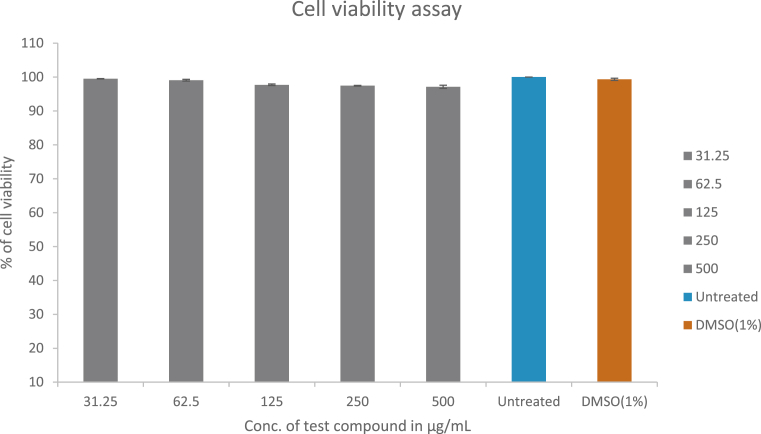
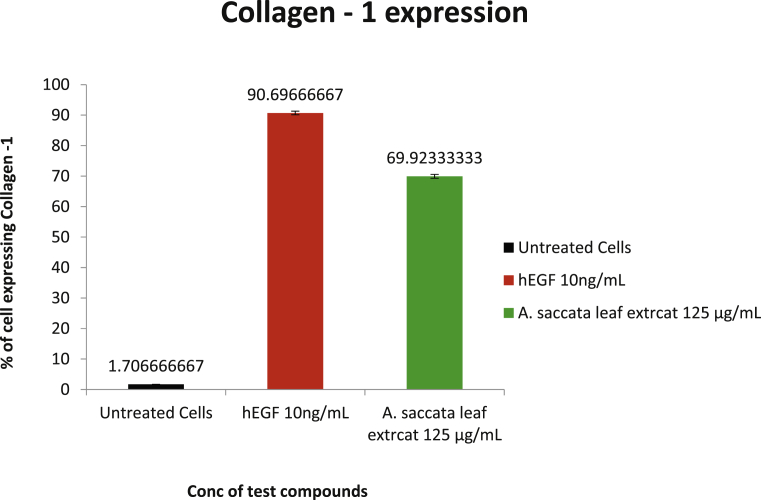
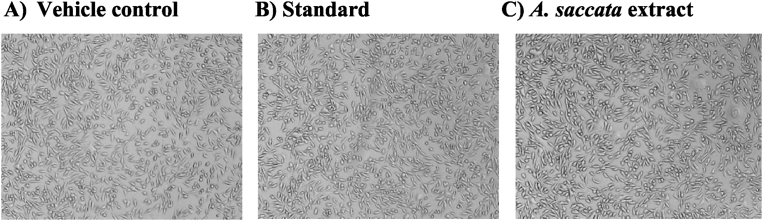
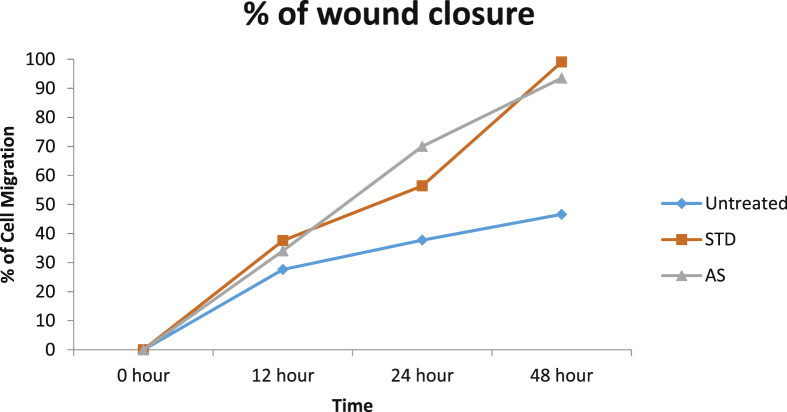
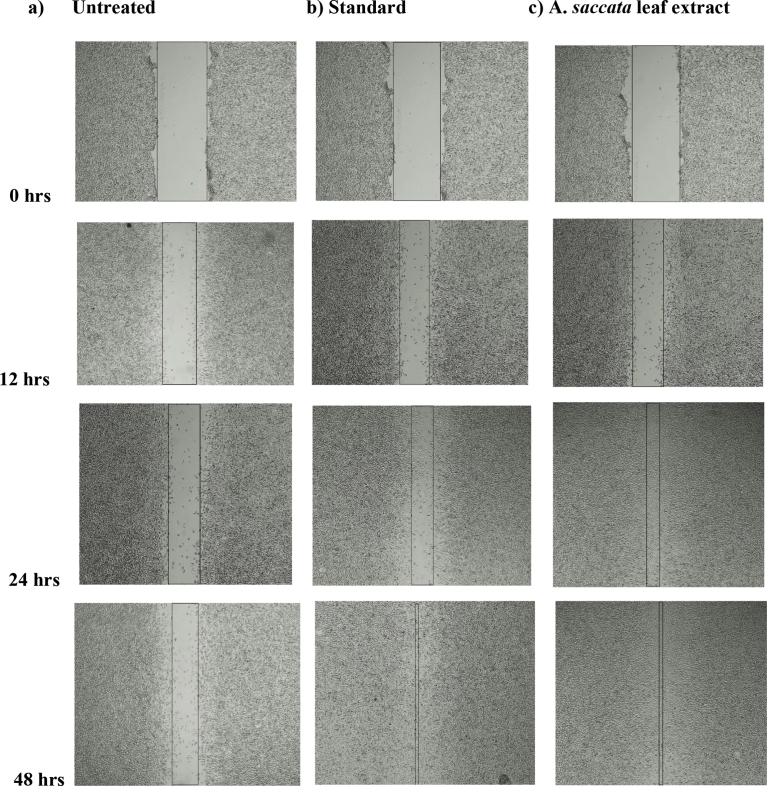
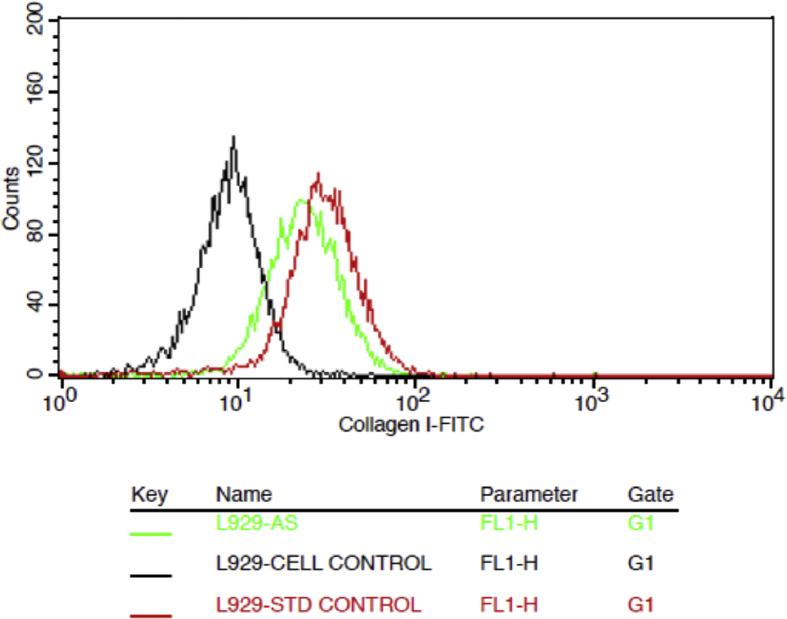
MTT assay revealed that leaf extract had no cytotoxic effect on the cells and at higher concentrations, the extract showed mild toxicity resulting in the death of just 2.88% cells. Scratch assay showed 34.05%, 70.00%, 93.52% wound closure at 12hrs, 24hrs and 48hrs of incubation respectively. These results were similar compared to positive control which showed 37.60, 56.41 and 99.05% of wound closure. Further, flow cytometry-based studies revealed that the leaf extract induced the expression of ECM remodelling factor collagen-1.
Our study revealed the wound healing capabilities of . Hence, could be recommended as a potential source of wound healing agents.
对药用植物衍生的天然产物的治疗潜力进行鉴定和评估,已促成了用于治疗包括慢性伤口在内的多种疾病的创新且经济的药物的发现。基于细胞的划痕试验是初步了解药用植物提取物伤口愈合潜力的一种合适且廉价的方法。本研究旨在以划痕试验作为主要模型,研究[植物名称]叶提取物的伤口愈合能力,通过显微镜研究可以监测受试化合物的增殖和迁移能力。[植物名称]是一种属于马兜铃科的常绿攀缘灌木。
使用索氏提取器对植物材料进行甲醇提取,并通过3-(4,5-二甲基噻唑-2-基)-2,5-二苯基四氮唑溴盐(MTT)试验研究提取物对L929细胞的细胞毒性。L929是一种人成纤维细胞系。进行划痕试验以评估[植物名称]叶提取物的伤口愈合特性,并通过细胞外基质(ECM)因子I型胶原的流式细胞术表达研究分析可能的作用机制。
MTT试验表明,[植物名称]叶提取物对细胞无细胞毒性,在较高浓度下,提取物显示出轻度毒性,仅导致2.88%的细胞死亡。划痕试验显示,在孵育12小时、24小时和48小时时,伤口闭合率分别为34.05%、70.00%、93.52%。与阳性对照相比,这些结果相似,阳性对照的伤口闭合率分别为37.60%、56.41%和99.05%。此外,基于流式细胞术的研究表明,[植物名称]叶提取物诱导了ECM重塑因子I型胶原的表达。
我们的研究揭示了[植物名称]的伤口愈合能力。因此,[植物名称]可被推荐为伤口愈合剂的潜在来源。