Roy Ishika, Magesh Karuppur Thiagarajan, Sathyakumar Mayilvakanam, Sivachandran Annamalai, Purushothaman Deenadayalan, Aravindhan Ravi
Department of Oral Pathology and Microbiology, SRM Kattankulathur Dental College and Hospital, SRM Institute of Science and Technology, Potheri, Chengalpet Dt., Tamil Nadu, India.
Department of Oral Pathology and Microbiology, SRM Kattankulathur Dental College and Hospital, SRM Institute of Science and Technology, Potheri, Chengalpet Dt, Tamil Nadu, India.
J Pharm Bioallied Sci. 2023 Jul;15(Suppl 1):S630-S635. doi: 10.4103/jpbs.jpbs_61_23. Epub 2023 Jul 5.
The successful restoration of damaged tissue requires a complicated, dynamic process called wound healing, which is supported by a wide range of cellular activities. Natural materials generated from medicinal plants have been identified, and their therapeutic potential evaluation has resulted in the development of novel, affordable medicines that can be used to treat a variety of illnesses, including chronic wounds, with limited side effects.
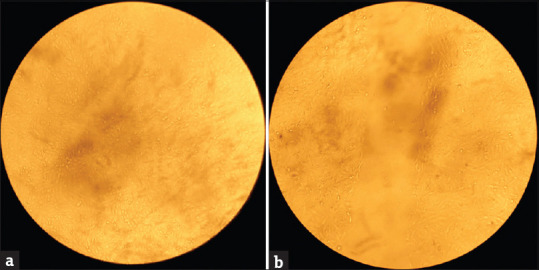
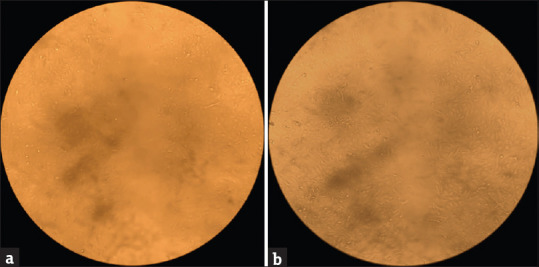
This study aimed to assess the wound-healing property of Glycyrrhiza Glabra (Athimathuram) plant extracts by using an scratch assay test, as well as to evaluate their cellular toxicity.
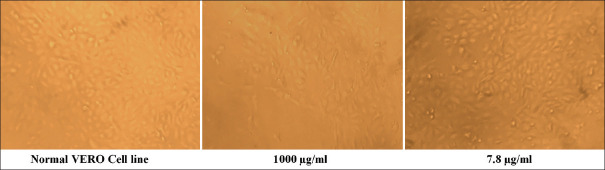
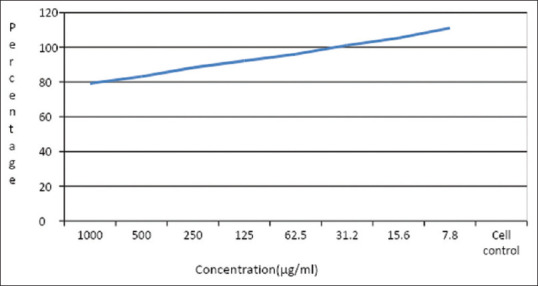
Using the Soxhlet device, ethanolic extraction of the plant material was done, and the cytotoxicity of the extract on the Vero cell line was examined using the 3-(4,5-dimethylthiazol-2-yl)-2,5-diphenyltetrazolium bromide (MTT) assay. One of the most often utilized mammalian cell lines in research was Vero cells. To assess the wound healing properties of G. glabra plant extract, an scratch assay was used, and their potential mechanisms of action were examined.
Even at higher concentrations, the MTT assay showed that G. Glabra plant extracts had no cytotoxic effects on the cells. scratch assay showed that the healing process of the cell line was increased by 23.33% when compared with the controlled cell lines.
Our research demonstrated that G. glabra has wound healing capabilities. As a result, G. glabra can be suggested as a possible source of compounds that treat wounds.
受损组织的成功修复需要一个复杂的动态过程,即伤口愈合,这一过程由广泛的细胞活动所支持。已鉴定出药用植物产生的天然物质,对其治疗潜力的评估促成了新型、经济实惠药物的开发,这些药物可用于治疗包括慢性伤口在内的多种疾病,且副作用有限。
本研究旨在通过划痕试验评估光果甘草(Athimathuram)植物提取物的伤口愈合特性,并评估其细胞毒性。
使用索氏提取器对植物材料进行乙醇提取,并使用3-(4,5-二甲基噻唑-2-基)-2,5-二苯基四氮唑溴盐(MTT)试验检测提取物对Vero细胞系的细胞毒性。Vero细胞是研究中最常用的哺乳动物细胞系之一。为了评估光果甘草植物提取物的伤口愈合特性,采用划痕试验,并研究其潜在作用机制。
MTT试验表明,即使在较高浓度下,光果甘草植物提取物对细胞也没有细胞毒性作用。划痕试验表明,与对照细胞系相比,该细胞系的愈合过程提高了23.33%。
我们的研究表明光果甘草具有伤口愈合能力。因此,光果甘草可被认为是治疗伤口的化合物的一个可能来源。