Department of Basic Sciences, São Paulo State University (UNESP) - School of Dentistry, Araçatuba, São Paulo, Brazil.
Department of Diagnostic and Biomedical Sciences, University of Texas Health Science Center at Houston, Houston, Texas, United States of America.
PLoS One. 2019 Jun 14;14(6):e0214173. doi: 10.1371/journal.pone.0214173. eCollection 2019.
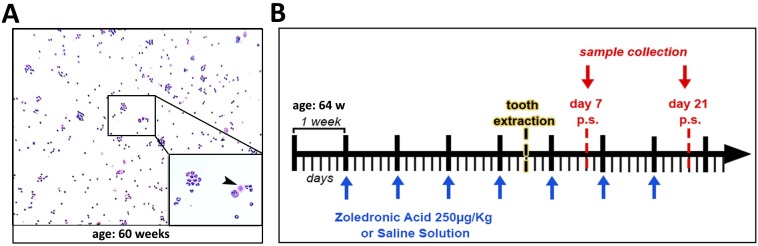
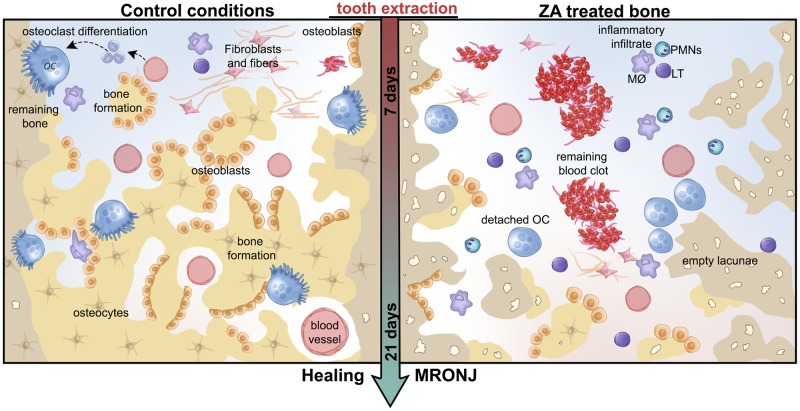
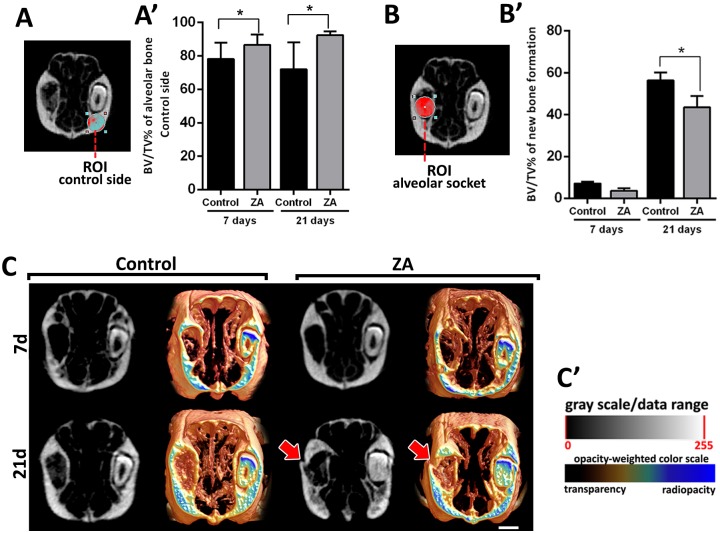
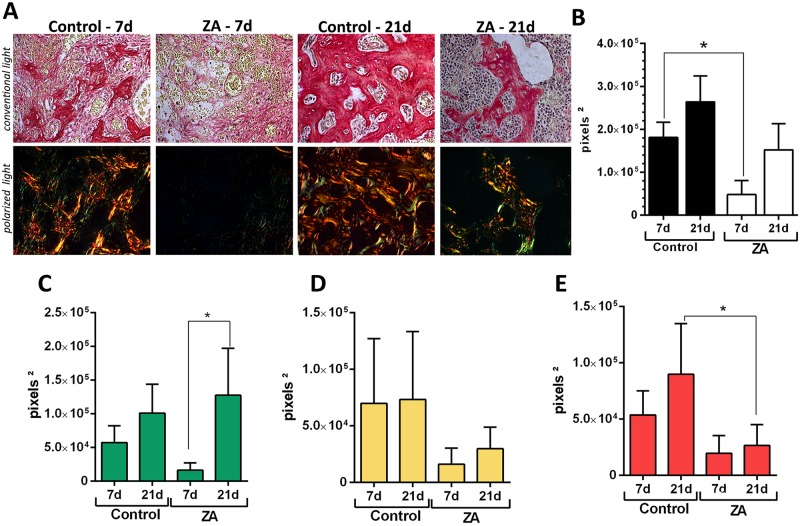
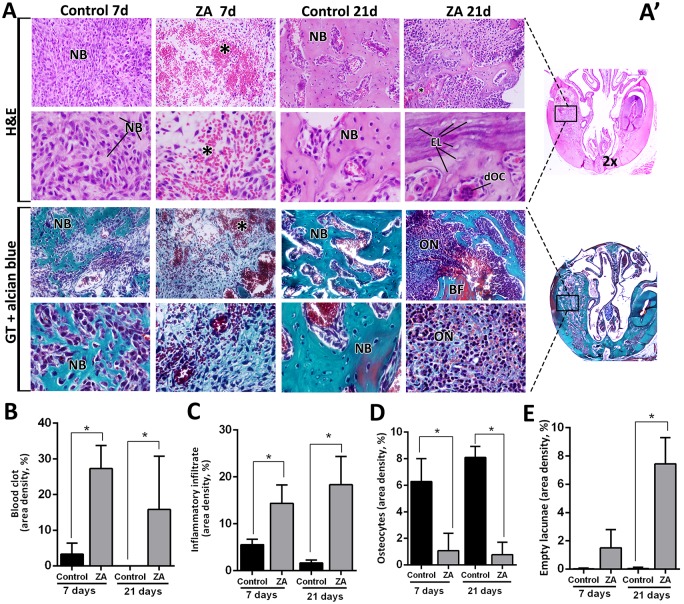
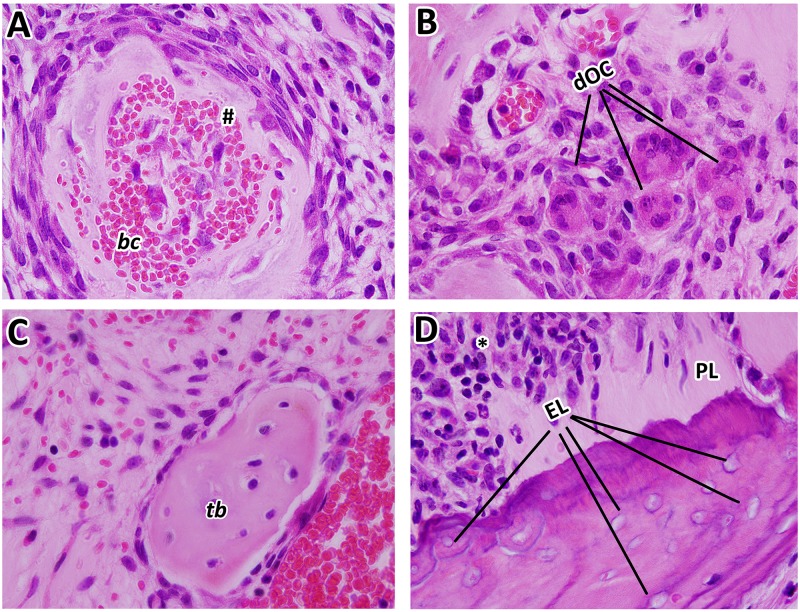
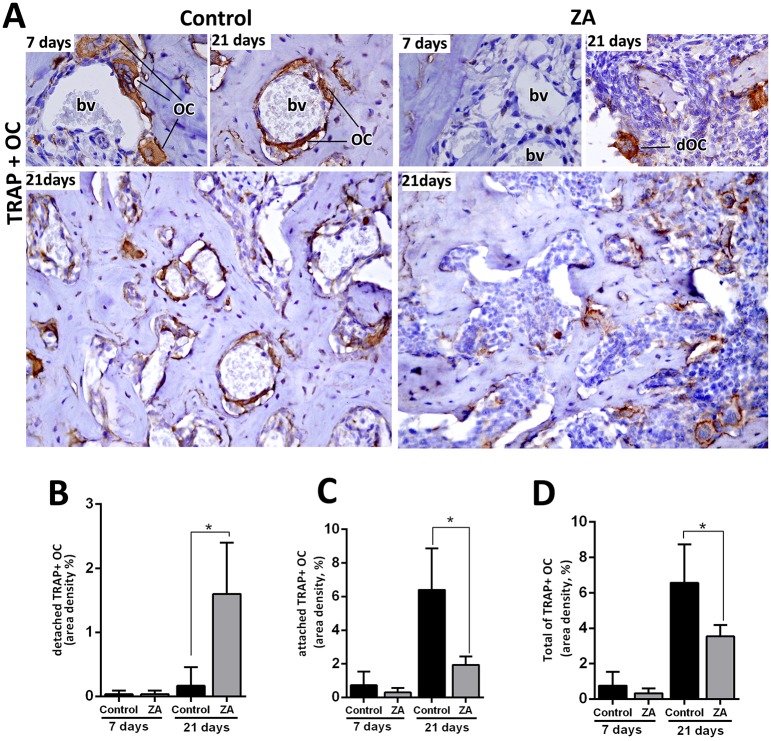
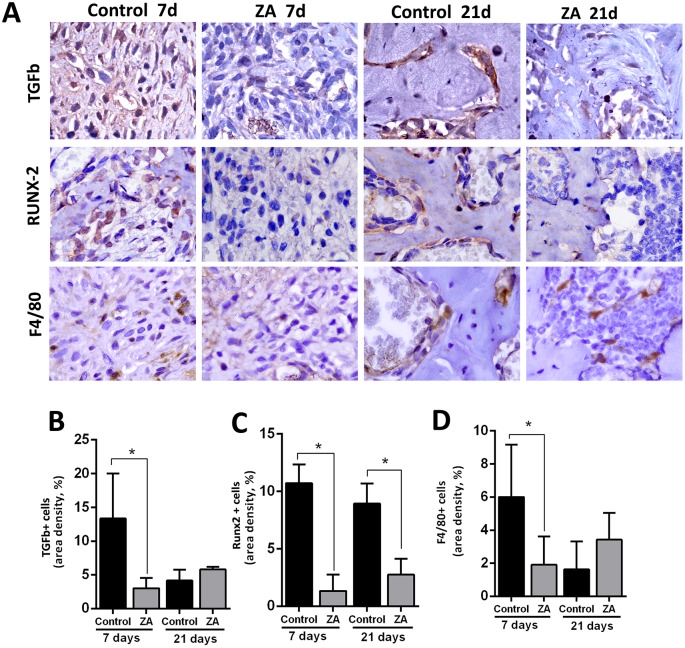
Treatment with cumulative dosages of zoledronic acid (ZA) in elderly patients is a risk factor for the development of medication-related osteonecrosis of the jaws (MRONJ), mainly related to surgical triggers such as tooth extraction. However, animal models for the investigation and understanding of MRONJ pathophysiology in senescent and postmenopausal stages remains to be developed and characterized. The aim of this study was to analyze MRONJ development in senescent female mice treated with cumulative dosages of ZA. For this purpose, twenty 129/Sv female mice, 64 weeks old, were treated with 0.9% saline solution as control group (n = 10), and with ZA at 250μg/Kg (n = 10), once a week, starting 4 weeks before the upper right incisor extraction and until the end of the experimental time points (7 days and 21 days). At 7 and 21 days post-surgery, specimens were harvested for microCT, histological, birefringence and immunohistochemical analysis. Clinically, an incomplete epithelialization was observed in ZA group at 7 days and a delayed bone matrix mineralization and collagen maturation at 7 and 21 days compared to the controls. Controls revealed sockets filled with mature bone at 21 days as observed by microCT and birefringence, while ZA group presented delayed bone deposition at 7 and 21 days, as well increased leukocyte infiltration and blood clot at 7 days, and increased bone sequestrum and empty osteocyte lacunae at 21 days (p<0.05). Also, ZA group presented decreased quantity of TGFb+ and Runx-2+ cells at 7 days, and decreased quantity of TRAP+ osteoclasts compared to the control at 21 days (p<0.05). Altogether, these data demonstrate the usefulness of this model to understanding the pathophysiology of MRONJ.
唑来膦酸(ZA)累积剂量治疗老年患者是导致药物相关性下颌骨坏死(MRONJ)的一个风险因素,主要与拔牙等手术诱因有关。然而,用于研究和了解衰老和绝经后阶段 MRONJ 病理生理学的动物模型仍有待开发和表征。本研究旨在分析接受 ZA 累积剂量治疗的衰老雌性小鼠的 MRONJ 发展情况。为此,将 20 只 129/Sv 雌性小鼠(64 周龄)分为对照组(n=10)和 ZA 组(n=10),对照组用 0.9%生理盐水处理,ZA 组用 250μg/Kg 的 ZA 处理,每周一次,在上颌右切牙拔除前 4 周开始,直至实验结束(7 天和 21 天)。术后 7 天和 21 天,采集标本进行 microCT、组织学、双折射和免疫组织化学分析。临床观察发现,ZA 组在术后 7 天出现不完全上皮化,在 7 天和 21 天出现骨基质矿化和胶原成熟延迟。对照组在 21 天 microCT 和双折射检查显示牙槽窝充满成熟骨,而 ZA 组在 7 天和 21 天显示骨沉积延迟,7 天白细胞浸润和血栓形成增加,21 天骨块吸收和空骨陷窝增加(p<0.05)。此外,ZA 组在术后 7 天 TGFb+和 Runx-2+细胞数量减少,在术后 21 天 TRAP+破骨细胞数量减少,与对照组相比(p<0.05)。综上所述,这些数据表明该模型有助于理解 MRONJ 的病理生理学。