Department of Gerontology and Geriatrics, Leiden University Medical Center, Leiden, The Netherlands.
Department of Emergency Medicine, Spaarne Gasthuis, Haarlem, the Netherlands.
PLoS One. 2019 Jun 20;14(6):e0218596. doi: 10.1371/journal.pone.0218596. eCollection 2019.
BACKGROUND/OBJECTIVES: Cognitive impairment is a frequent problem among older patients attending the Emergency Department (ED) and can be the result of pre-existing cognitive impairment, delirium, or neurologic disorders. Another cause can also be acute disturbance of brain perfusion and oxygenation, which may be reversed by optimal resuscitation. This study aimed to assess the relationship between vital signs, as a measure of acute hemodynamic changes, and cognitive impairment in older ED patients.
Prospective cohort study.
ED's of two tertiary care and two secondary care hospitals in the Netherlands.
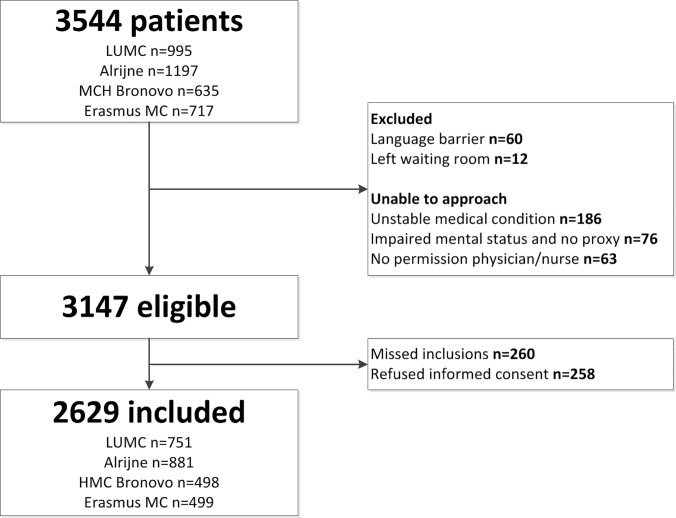
2629 patients aged 70-years and older.
Vital signs were measured at the moment of ED arrival as part of routine clinical care. Cognition was measured using the Six-Item Cognitive Impairment Test (6-CIT).
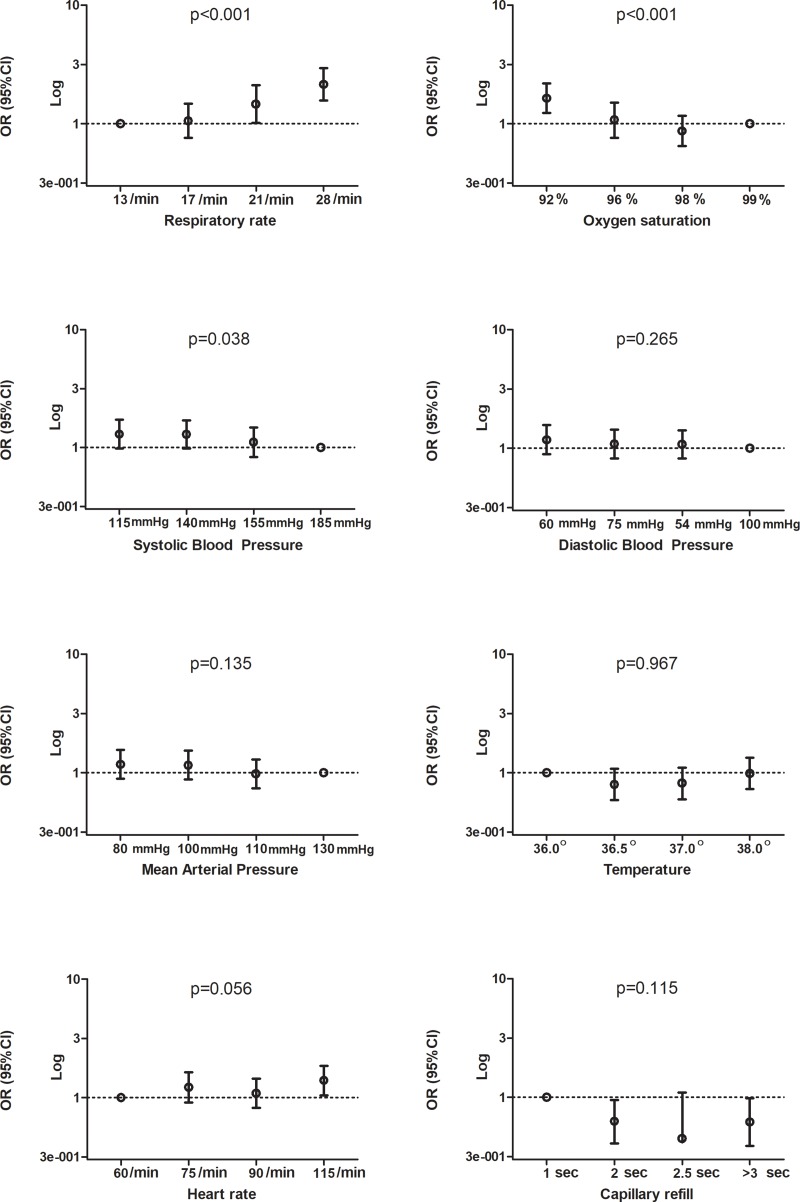
The median age of patients was 78 years (IQR 74-84). Cognitive impairment was present in 738 patients (28.1%). When comparing lowest with highest quartiles, a systolic blood pressure of <129 mmHg (OR 1.30, 95% confidence interval (95%CI) 0.98-1.73)was associated with increased risk of cognitive impairment. A higher respiratory rate (>21/min) was associated with increased risk of impaired cognition (OR 2.16, 95% CI 1.58-2.95) as well as oxygen saturation of <95% (OR 1.64, 95%CI 1.24-2.19).
Abnormal vital signs associated with decreased brain perfusion and oxygenation are also associated with cognitive impairment in older ED patients. This may partially be explained by the association between disease severity and delirium, but also by acute disturbance of brain perfusion and oxygenation. Future studies should establish whether normalization of vital signs will also acutely improve cognition.
背景/目的:认知障碍是老年急诊科患者常见的问题,可能是由于预先存在的认知障碍、谵妄或神经障碍引起的,也可能是由于大脑灌注和氧合的急性紊乱所致,这种紊乱可以通过最佳复苏来逆转。本研究旨在评估生命体征(作为急性血液动力学变化的衡量标准)与老年急诊科患者认知障碍之间的关系。
前瞻性队列研究。
荷兰两家三级和两家二级护理医院的急诊科。
2629 名 70 岁及以上的患者。
生命体征在急诊科到达时作为常规临床护理的一部分进行测量。认知功能使用六项目认知障碍测试(6-CIT)进行测量。
患者的中位年龄为 78 岁(IQR 74-84)。2629 名患者中有 738 名(28.1%)存在认知障碍。当比较最低和最高四分位数时,收缩压<129mmHg(OR 1.30,95%置信区间(95%CI)0.98-1.73)与认知障碍的风险增加相关。呼吸频率较高(>21/min)与认知障碍的风险增加相关(OR 2.16,95%CI 1.58-2.95),以及氧饱和度<95%(OR 1.64,95%CI 1.24-2.19)。
与脑灌注和氧合减少相关的异常生命体征也与老年急诊科患者的认知障碍有关。这部分可能是由于疾病严重程度与谵妄的关联,但也可能是由于大脑灌注和氧合的急性紊乱。未来的研究应该确定生命体征的正常化是否也会急性改善认知。