Department of Life Sciences, School of Natural Sciences, Shiv Nadar University, Gautam Buddha Nagar, India.
Department of Chemistry, School of Natural Sciences, Shiv Nadar University, Gautam Buddha Nagar, India.
EBioMedicine. 2019 Jul;45:261-277. doi: 10.1016/j.ebiom.2019.06.026. Epub 2019 Jun 27.
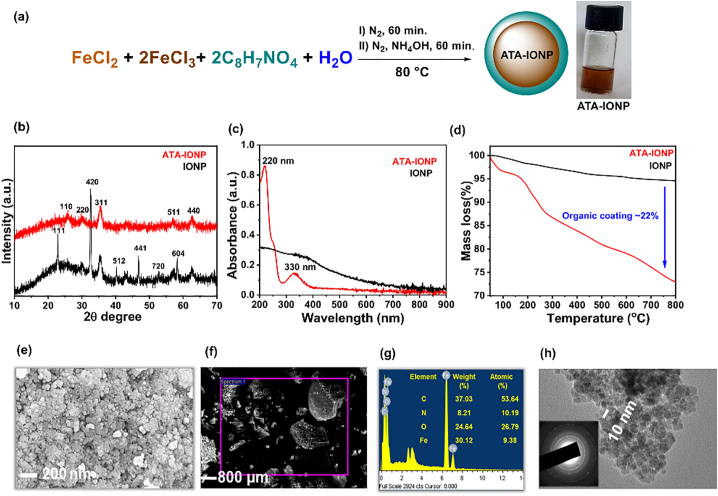
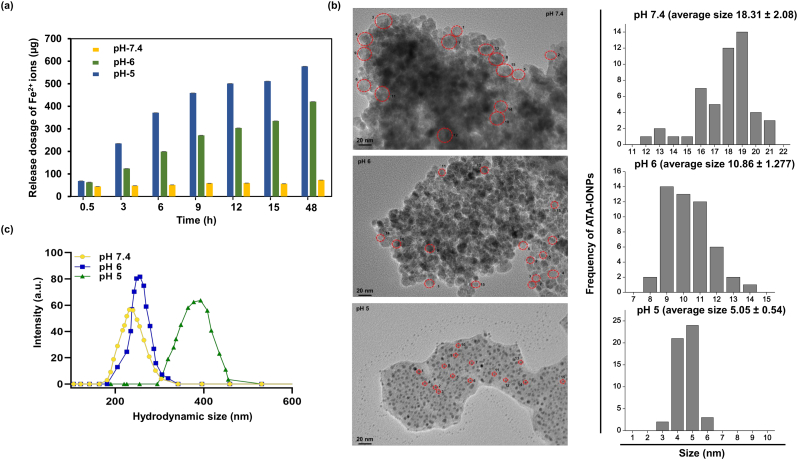
Artesunate the most potent antimalarial is widely used for the treatment of multidrug-resistant malaria. The antimalarial cytotoxicity of artesunate has been mainly attributed to its selective, irreversible and iron- radical-mediated damage of parasite biomolecules. In the present research, iron oxide nanoparticle fortified artesunate was tested in P. falciparum and in an experimental malaria mouse model for enhancement in the selectivity and toxicity of artesunate towards parasite. Artesunate was fortified with nontoxic biocompatible surface modified iron oxide nanoparticle which is specially designed and synthesized for the sustained pH-dependent release of Fe within the parasitic food vacuole for enhanced ROS spurt.
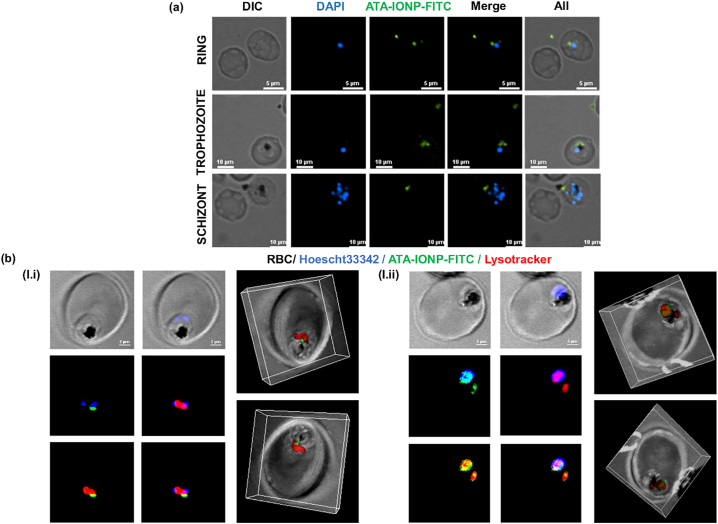
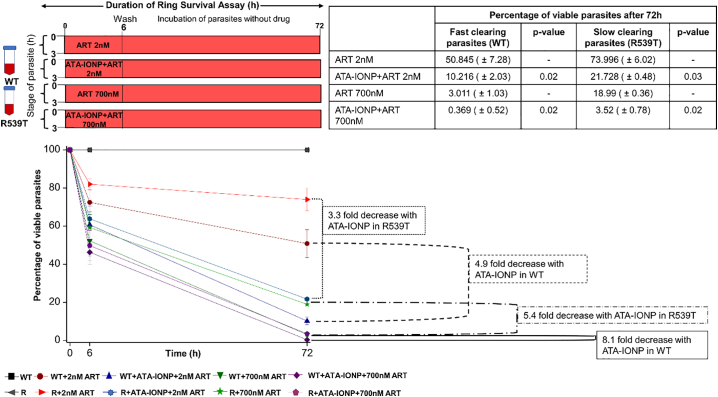
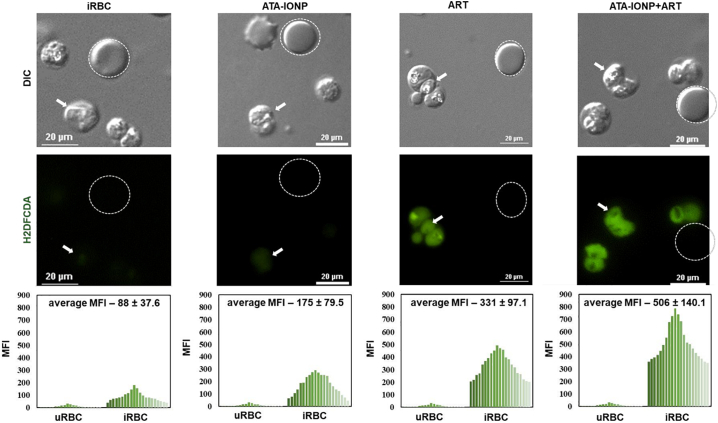
Antimalarial efficacy of Iron oxide nanoparticle fortified artesunate was evaluated in wild type and artemisinin-resistant Plasmodium falciparum (R539T) grown in O + ve human blood and in Plasmodium berghei ANKA infected swiss albino mice. Internalization of nanoparticles, the pH-dependent release of Fe, production of reactive oxygen species and parasite biomolecule damage by iron oxide nanoparticle fortified artesunate was studied using various biochemical, biophysical, ultra-structural and fluorescence microscopy. For determining the efficacy of ATA-IONP+ART on resistant parasite ring survival assay was performed.
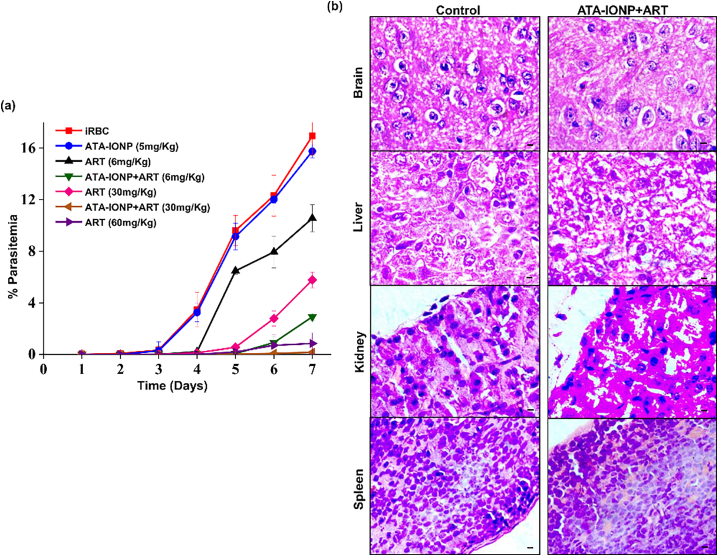
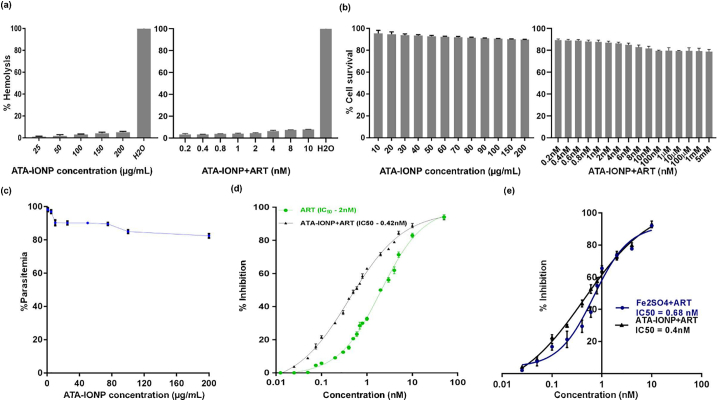
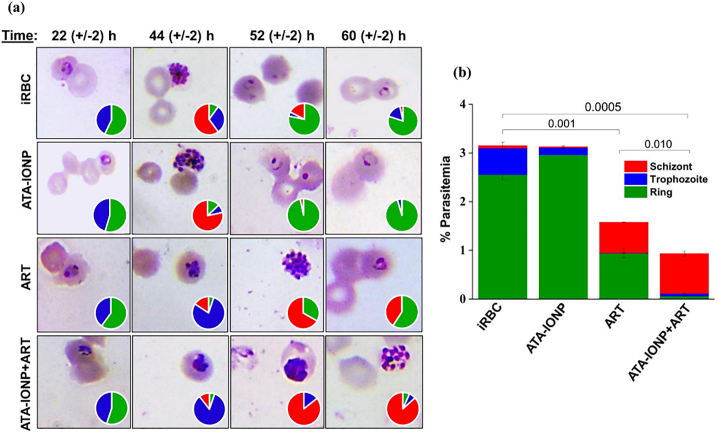
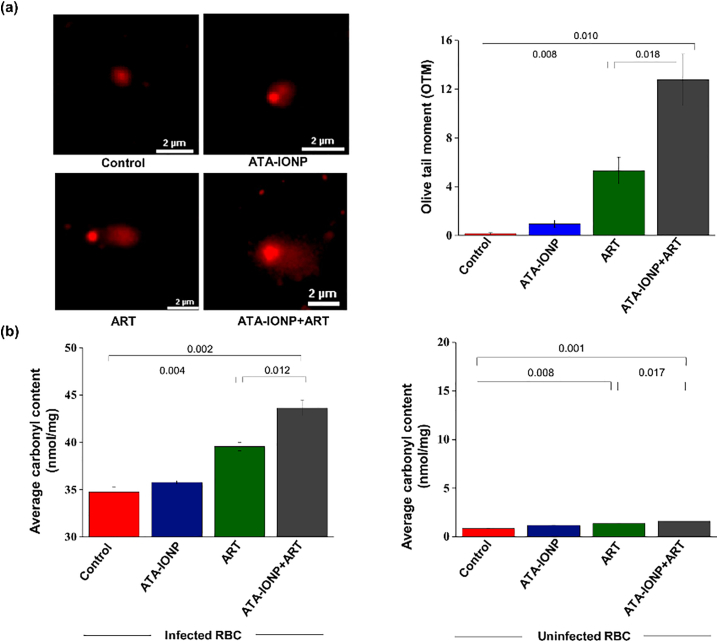
The nanoparticle fortified artesunate was highly efficient in the 1/8th concentration of artesunate IC and led to retarded growth of P. falciparum with significant damage to macromolecules mediated via enhanced ROS production. Similarly, preclinical In vivo studies also signified a radical reduction in parasitemia with ~8-10-fold reduced dosage of artesunate when fortified with iron oxide nanoparticles. Importantly, the ATA-IONP combination was efficacious against artemisinin-resistant parasites.
Surface coated iron-oxide nanoparticle fortified artesunate can be developed into a potent therapeutic agent towards multidrug-resistant and artemisinin-resistant malaria in humans. FUND: This study is supported by the Centre for Study of Complex Malaria in India funded by the National Institute of Health, USA.
青蒿琥酯是最有效的抗疟药物,被广泛用于治疗耐多药疟疾。青蒿琥酯的抗疟细胞毒性主要归因于其对寄生虫生物分子的选择性、不可逆和铁自由基介导的损伤。在本研究中,我们测试了氧化铁纳米颗粒强化青蒿琥酯在恶性疟原虫中的作用,并在实验性疟疾小鼠模型中测试了其对寄生虫青蒿琥酯选择性和毒性的增强作用。青蒿琥酯与无毒的生物相容性表面修饰的氧化铁纳米颗粒混合,该纳米颗粒是专门设计和合成的,用于在寄生虫食物泡中持续 pH 依赖性释放铁,以增强 ROS 迸发。
在 O+ve 人血中生长的野生型和青蒿琥酯耐药恶性疟原虫(R539T)以及感染伯氏疟原虫 ANKA 的瑞士白化病小鼠中评估了氧化铁纳米颗粒强化青蒿琥酯的抗疟疗效。使用各种生化、生物物理、超结构和荧光显微镜研究了纳米颗粒的内化、Fe 的 pH 依赖性释放、氧化铁纳米颗粒强化青蒿琥酯产生的活性氧和寄生虫生物分子损伤。为了确定 ATA-IONP+ART 对耐药寄生虫环存活率的影响,进行了环生存试验。
纳米颗粒强化青蒿琥酯在 1/8 浓度的青蒿琥酯 IC 下非常有效,导致恶性疟原虫生长迟缓,并通过增强 ROS 产生导致大分子物质严重损伤。同样,临床前体内研究也表明,用氧化铁纳米颗粒强化后,青蒿琥酯的剂量减少了 8-10 倍,寄生虫血症也显著减少。重要的是,ATA-IONP 联合治疗对青蒿素耐药寄生虫有效。
表面涂层的氧化铁纳米颗粒强化青蒿琥酯可以开发成为一种针对人类多药耐药和青蒿素耐药疟疾的有效治疗药物。
本研究得到美国国立卫生研究院资助的印度复杂疟疾研究中心的支持。