Blood-Brain Barrier Laboratory, Dept. of Immunology, UConn Health, 263 Farmington Ave, Farmington, CT, 06030, USA.
Perelman School of Medicine at University of Pennsylvania, Philadelphia, PA, 19104, USA.
Fluids Barriers CNS. 2019 Jul 1;16(1):18. doi: 10.1186/s12987-019-0138-5.
Immune cell trafficking into the CNS is considered to contribute to pathogenesis in MS and its animal model, EAE. Disruption of the blood-brain barrier (BBB) is a hallmark of these pathologies and a potential target of therapeutics. Human embryonic stem cell-derived mesenchymal stem/stromal cells (hES-MSCs) have shown superior therapeutic efficacy, compared to bone marrow-derived MSCs, in reducing clinical symptoms and neuropathology of EAE. However, it has not yet been reported whether hES-MSCs inhibit and/or repair the BBB damage associated with neuroinflammation that accompanies EAE.
BMECs were cultured on Transwell inserts as a BBB model for all the experiments. Disruption of BBB models was induced by TNF-α, a pro-inflammatory cytokine that is a hallmark of acute and chronic neuroinflammation.
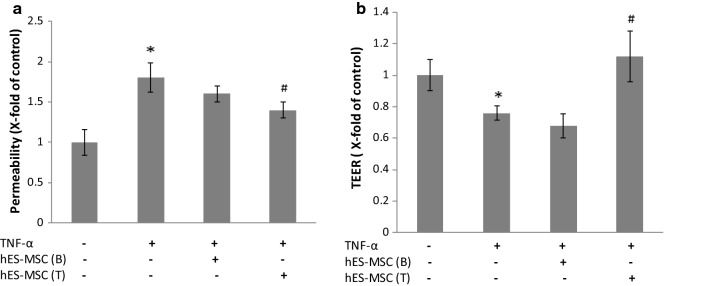
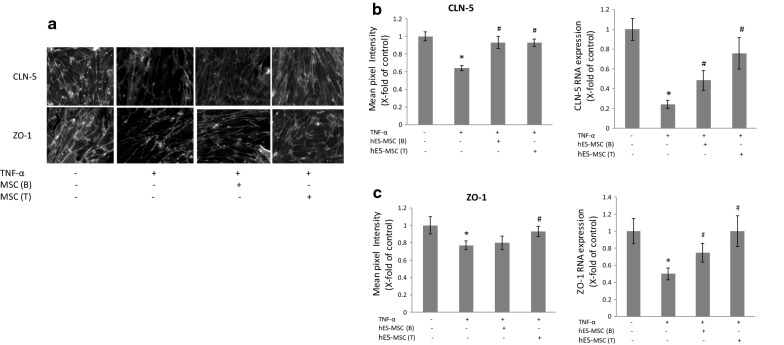
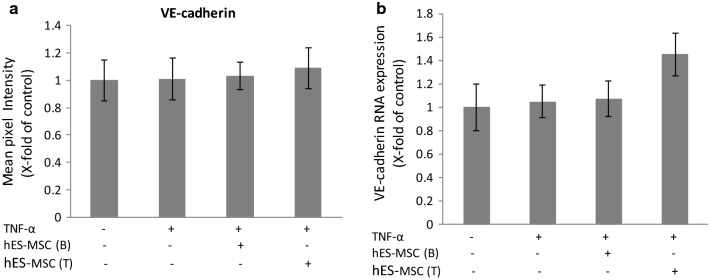
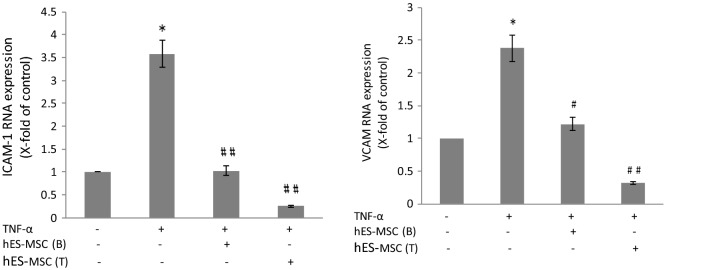
Results indicated that hES-MSCs reversed the TNF-α-induced changes in tight junction proteins, permeability, transendothelial electrical resistance, and expression of adhesion molecules, especially when these cells were placed in direct contact with BMEC.
hES-MSCs and/or products derived from them could potentially serve as novel therapeutics to repair BBB disturbances in MS.
免疫细胞向中枢神经系统的迁移被认为有助于 MS 及其动物模型 EAE 的发病机制。血脑屏障 (BBB) 的破坏是这些病理的标志,也是治疗的潜在靶点。与骨髓来源的 MSC 相比,人胚胎干细胞衍生的间充质干细胞 (hES-MSC) 在减轻 EAE 的临床症状和神经病理学方面显示出更好的治疗效果。然而,尚未有报道表明 hES-MSC 抑制和/或修复与伴随 EAE 的神经炎症相关的 BBB 损伤。
将 BMEC 培养在 Transwell 插入物上,作为 BBB 模型进行所有实验。使用 TNF-α(一种促炎细胞因子,是急性和慢性神经炎症的标志)诱导 BBB 模型的破坏。
结果表明,hES-MSC 逆转了 TNF-α诱导的紧密连接蛋白、通透性、跨内皮电阻和粘附分子表达的变化,尤其是当这些细胞与 BMEC 直接接触时。
hES-MSC 和/或其衍生的产物可能作为修复 MS 中 BBB 紊乱的新型治疗方法。