ICF, Atlanta, Georgia, USA.
ICF, Rockville, Maryland, USA.
J Glob Health. 2019 Jun;9(1):010811. doi: 10.7189/jogh.09.010811.
The use of mobile health (mHealth) technology to improve quality of care (QoC) has increased over the last decade; limited evidence exists to espouse mHealth as a decision support tool, especially at the community level. This study presents evaluation findings of using a mobile application for integrated community case management (iCCM) by Malawi's health surveillance assistants (HSAs) in four pilot districts to deliver lifesaving services for children.
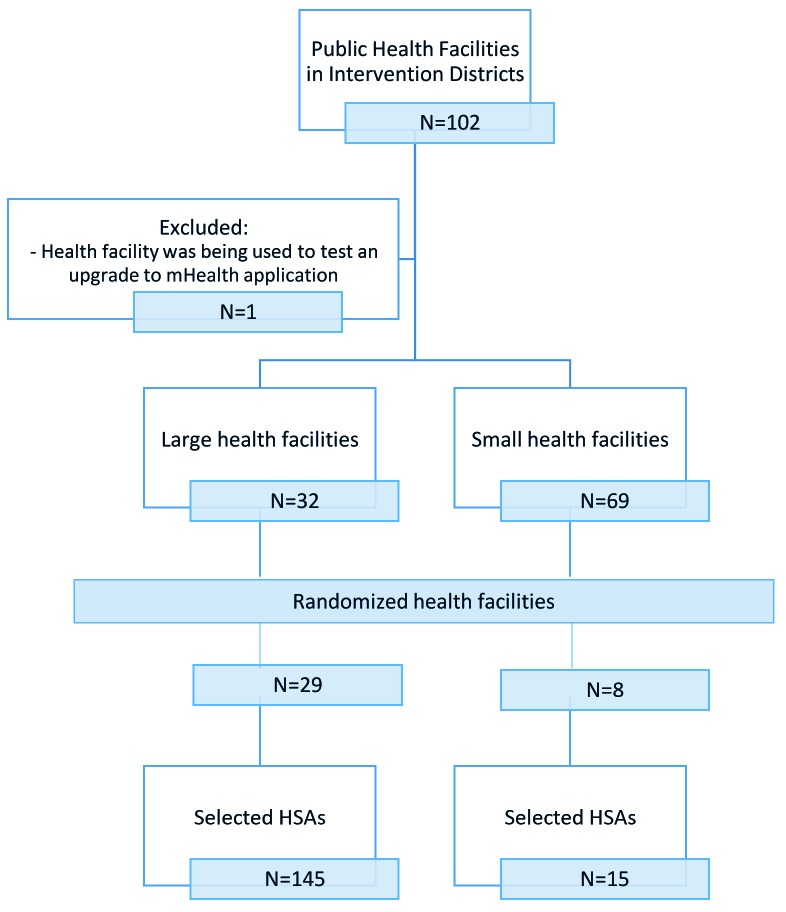
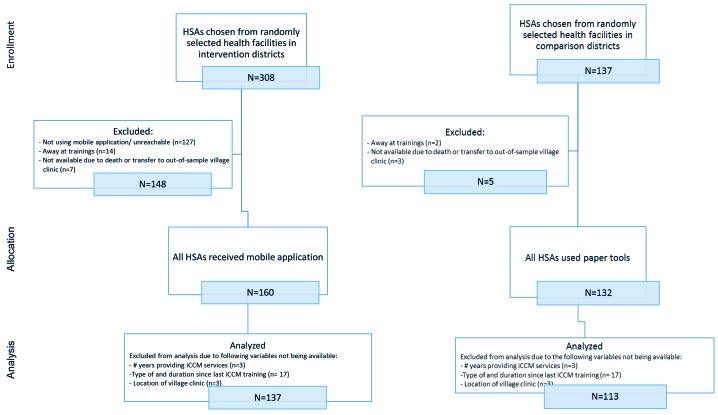
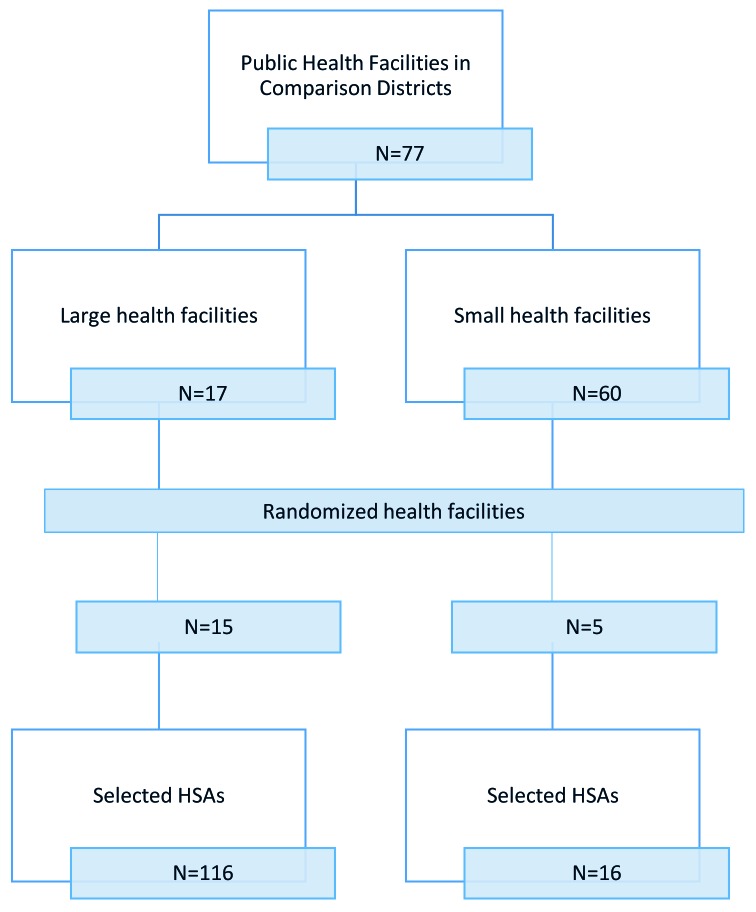
A quasi-experimental study design compared adherence to iCCM guidelines between HSAs using mobile application (n = 137) and paper-based tools (n = 113), supplemented with 47 key informant interviews on perceptions about QoC and sustainability of iCCM mobile application. The first four sick children presenting to each HSA for an initial consultation of an illness episode were observed by a Ministry of Health iCCM trainer for assessment, classification, and treatment. Results were compared using logistic regression, controlling for child-, HSA-, and district-level characteristics, with Holm-Bonferroni-adjusted significance levels for multiple comparison.
HSAs using the application tended to assess sick children according to iCCM guidelines more often than HSAs using paper-based tools for cough (adjusted proportion, 98% vs 91%; < 0.01) and five physical danger signs - chest in-drawing; alertness; palmar pallor; malnourishment; oedema (80% vs 62%; < 0.01), but not for fever (97% vs 93%; = 0.06), diarrhoea (94% vs 87%; = 0.03), and three danger signs - not able to eat or drink; vomits everything; has convulsions (88% vs 79%; = 0.01). Across illnesses and danger signs, 81% of HSAs using the application correctly classified sick children, compared to 58% of HSAs using paper-based tools ( < 0.01). No differences existed for their treatment ( = 0.27). Interview respondents corroborated these findings that using iCCM mobile application ensures protocol adherence. Respondents noted barriers to its consistent and wide use including hardware problems and limited resources.
Generally, the mobile application is a promising tool for improving adherence to the iCCM protocol for assessing sick children and classifying illness by HSAs. Limited effects on treatments and inconsistent use suggest the need for more studies on mHealth to improve QoC at community level.
在过去十年中,移动医疗(mHealth)技术的使用已大大提高了医疗质量(QoC);有限的证据表明,mHealth 是一种决策支持工具,尤其是在社区层面。本研究介绍了马拉维卫生监测助理(HSA)在四个试点地区使用移动应用程序进行综合社区病例管理(iCCM)的评估结果,以向儿童提供救生服务。
一项准实验研究设计比较了使用移动应用程序(n=137)和基于纸张的工具(n=113)的 HSA 对 iCCM 指南的遵守情况,并辅以 47 次关键知情人访谈,以了解对 QoC 和 iCCM 移动应用程序可持续性的看法。每位 HSA 为首次就诊的前四个生病儿童进行初始就诊时,由卫生部 iCCM 培训师对其进行评估,分类和治疗。使用逻辑回归进行结果比较,控制了儿童,HSA 和地区特征,并用 Holm-Bonferroni 调整后的多重比较显著性水平进行比较。
使用应用程序的 HSA 比使用基于纸张的工具的 HSA 更倾向于根据 iCCM 指南评估生病的儿童,对于咳嗽(调整后的比例,98%对 91%;<0.01)和五个身体危险迹象-胸部凹陷;警觉;手掌苍白;营养不良;水肿(80%对 62%;<0.01),但对于发烧(97%对 93%;=0.06),腹泻(94%对 87%;=0.03)和三个危险迹象-无法进食或饮水;呕吐一切;有抽搐(88%对 79%;=0.01)则并非如此。在所有疾病和危险迹象中,使用应用程序的 HSA 中有 81%正确地对生病的儿童进行了分类,而使用基于纸张的工具的 HSA 中有 58%(<0.01)。他们的治疗没有差异(=0.27)。接受采访的受访者证实了这一发现,即使用 iCCM 移动应用程序可确保遵守协议。受访者指出,其持续和广泛使用的障碍包括硬件问题和资源有限。
总体而言,移动应用程序是一种有前途的工具,可提高 HSA 评估生病儿童和分类疾病的 iCCM 协议的遵守率。治疗效果有限且使用不一致表明,需要更多关于 mHealth 的研究来改善社区一级的 QoC。