Lima Renata, Del Fiol Fernando Sá, Balcão Victor M
LABiToN-Laboratory of Bioactivity Assessment and Toxicology of Nanomaterials, University of Sorocaba, Sorocaba, Brazil.
CRIA-Antibiotic Reference and Information Center, University of Sorocaba, Sorocaba, Brazil.
Front Pharmacol. 2019 Jun 21;10:692. doi: 10.3389/fphar.2019.00692. eCollection 2019.
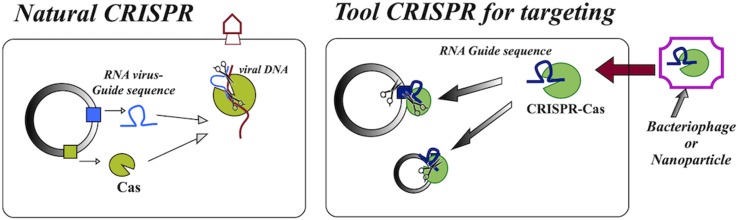
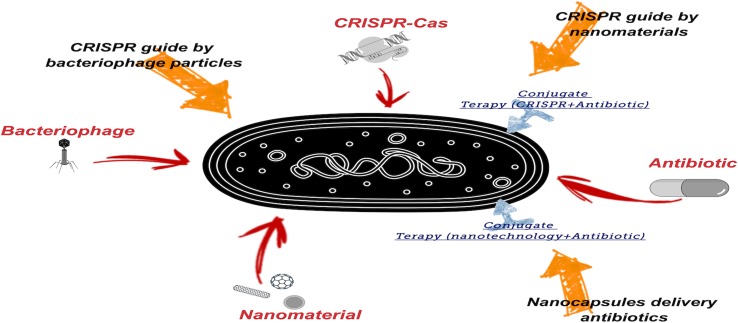
The increasing use of antibiotics is being driven by factors such as the aging of the population, increased occurrence of infections, and greater prevalence of chronic diseases that require antimicrobial treatment. The excessive and unnecessary use of antibiotics in humans has led to the emergence of bacteria resistant to the antibiotics currently available, as well as to the selective development of other microorganisms, hence contributing to the widespread dissemination of resistance genes at the environmental level. Due to this, attempts are being made to develop new techniques to combat resistant bacteria, among them the use of strictly lytic bacteriophage particles, CRISPR-Cas, and nanotechnology. The use of these technologies, alone or in combination, is promising for solving a problem that humanity faces today and that could lead to human extinction: the domination of pathogenic bacteria resistant to artificial drugs. This prospective paper discusses the potential of bacteriophage particles, CRISPR-Cas, and nanotechnology for use in combating human (bacterial) infections.
抗生素使用的增加受到多种因素驱动,如人口老龄化、感染发生率上升以及需要抗菌治疗的慢性病患病率增加。人类过度且不必要地使用抗生素已导致对现有抗生素产生耐药性的细菌出现,以及其他微生物的选择性发展,从而促使耐药基因在环境层面广泛传播。因此,人们正在尝试开发新技术来对抗耐药细菌,其中包括使用严格的裂解性噬菌体颗粒、CRISPR-Cas和纳米技术。单独或联合使用这些技术有望解决人类当今面临的一个可能导致人类灭绝的问题:对人工药物耐药的致病细菌的主导。这篇前瞻性论文讨论了噬菌体颗粒、CRISPR-Cas和纳米技术在对抗人类(细菌)感染方面的潜力。