Venkatesh S, Srinivas Teerthanath, Hariprasad S
Department of Oral and Maxillofacial Surgery, A.B. Shetty Memorial Institute of Dental Sciences, Nitte University, Mangalore, Karnataka, India.
Department of Pathology, K S Hegde Medical Academy, Nitte University, Mangalore, Karnataka, India.
Ann Maxillofac Surg. 2019 Jan-Jun;9(1):103-109. doi: 10.4103/ams.ams_179_18.
Parotid gland tumors account for 80% of all salivary gland neoplasms. Most parotid masses are operated on before obtaining the final histological diagnosis, which complicates the management of the facial nerve damage during parotid surgery.
The aim of this study is to analyze the age- and gender-wise incidence of parotid gland tumors, the incidence of various types of tumors, to assess their clinical modes of presentation, the efficacy of treatment, and to evaluate the complications ensuing therein, because of intervention.
The present study was conducted in the Department of Oral and Maxillofacial Surgery, A. B. Shetty Memorial Institute of Dental Sciences and Justice K. S. Hegde Charitable Hospital, Nitte University, Mangalore.
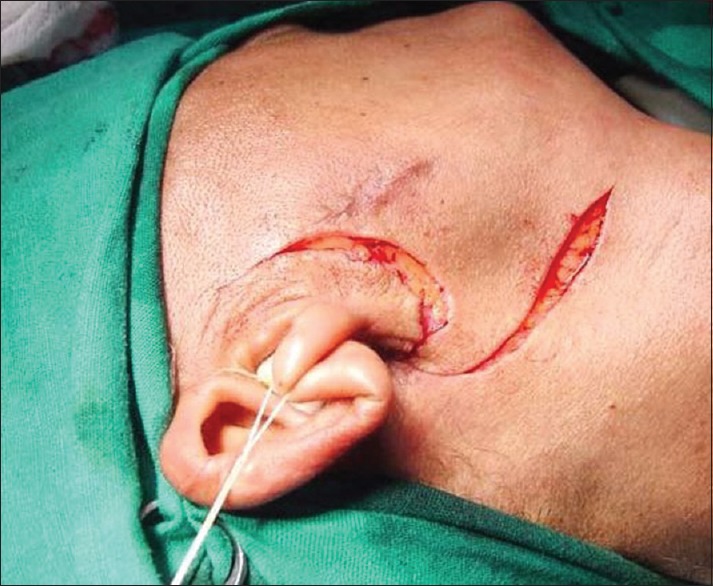
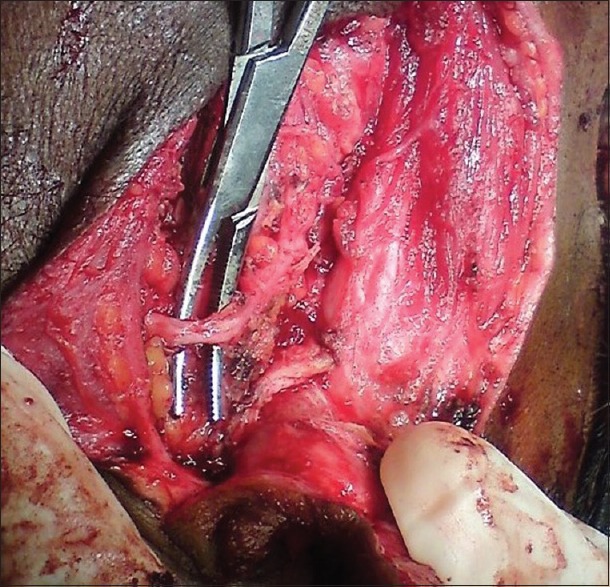
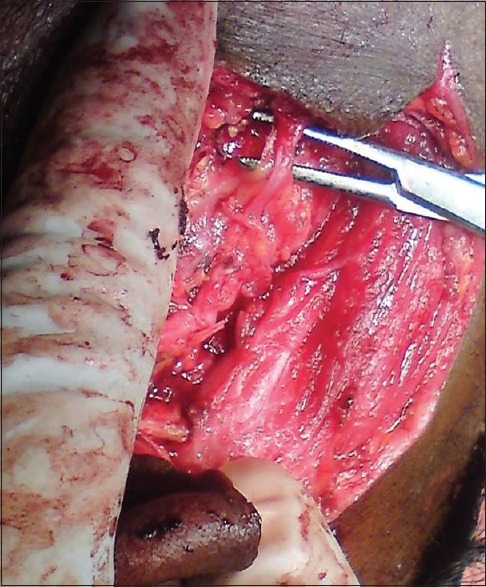
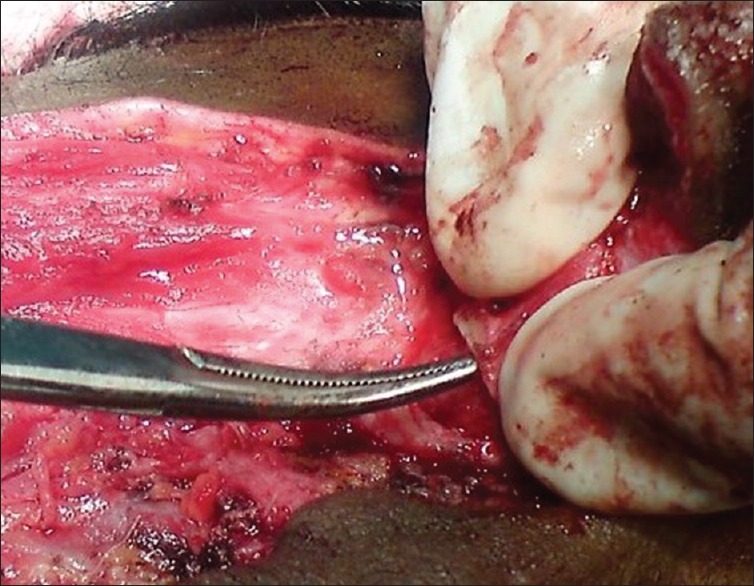
A clinicopathological study of parotid gland tumors was undertaken in a tertiary care hospital. Patients with parotid swelling were clinically evaluated, followed by fine-needle aspiration cytology (FNAC). Surgery was planned and performed based on the tumor location and FNAC report. Patients were followed up for postoperative complications.
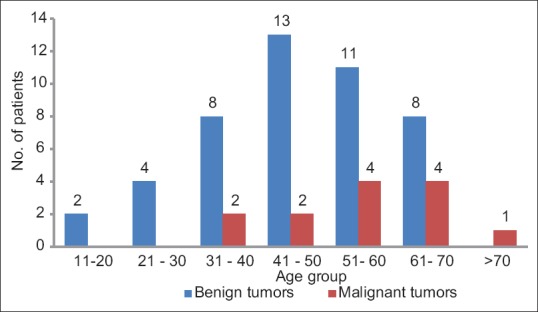
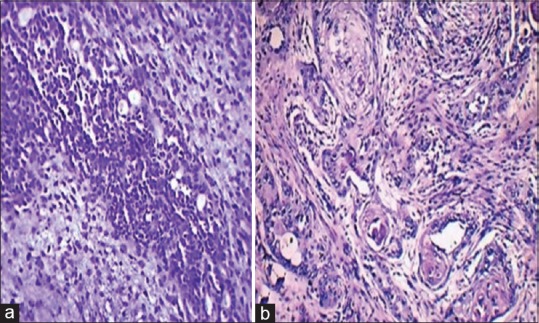
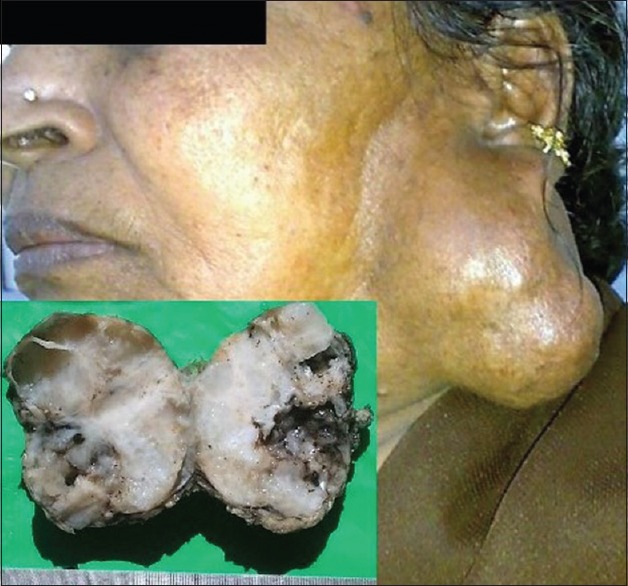
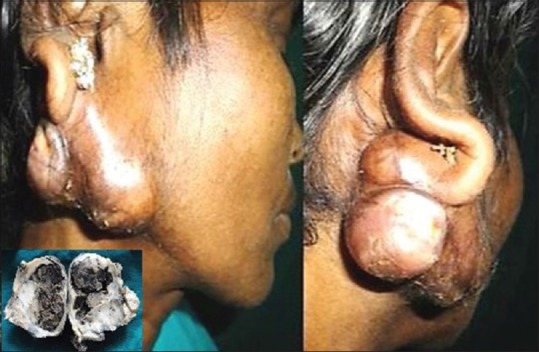
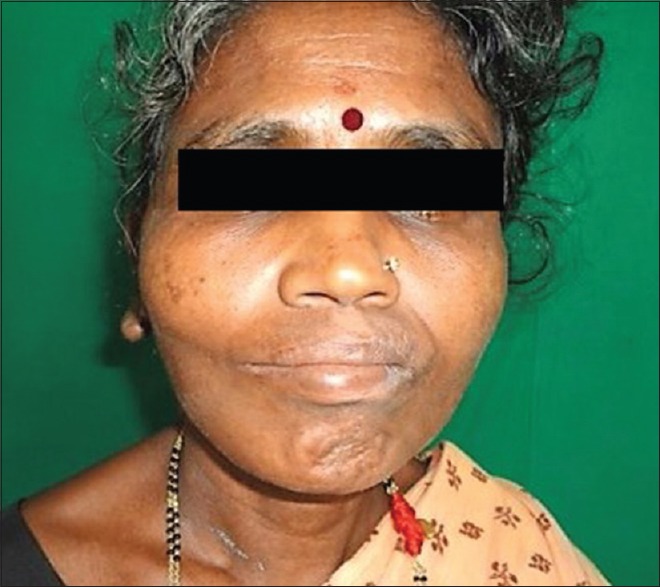
The study comprised 59 patients with parotid gland tumors. The age range of the patient affected was between 18 and 75 years. Benign tumors are more common than malignant tumor in the ratio of 3.5:1. Slow progressively parotid swelling was the common presenting complaint. Superficial parotidectomy was the most common surgery (69.49%) performed. The most common postoperative complication encountered was transient facial palsy (22.03%). Benign tumors were more common (77.97%). The most common benign tumor was pleomorphic adenoma, and malignant tumor was mucoepidermoid carcinoma.
The incidence of parotid salivary gland tumors is increasing in recent years. Parotidectomy is safe procedure for treating parotid tumors. Transient facial palsy is the most common postoperative complication, which is reduced in superficial parotidectomy.
腮腺肿瘤占所有涎腺肿瘤的80%。大多数腮腺肿物在获得最终组织学诊断之前就进行了手术,这使得腮腺手术中面神经损伤的处理变得复杂。
本研究的目的是分析腮腺肿瘤的年龄和性别发病率、各种类型肿瘤的发病率,评估其临床呈现方式、治疗效果,并评估因干预而随之发生的并发症。
本研究在芒格洛尔尼特大学A.B.谢蒂纪念牙科学院和K.S.赫德格法官慈善医院的口腔颌面外科进行。
在一家三级护理医院对腮腺肿瘤进行了临床病理研究。对腮腺肿大的患者进行临床评估,随后进行细针穿刺细胞学检查(FNAC)。根据肿瘤位置和FNAC报告计划并实施手术。对患者进行术后并发症随访。
该研究包括59例腮腺肿瘤患者。受影响患者的年龄范围在18至75岁之间。良性肿瘤比恶性肿瘤更常见,比例为3.5:1。腮腺缓慢进行性肿大是常见的主诉。浅叶腮腺切除术是最常见的手术方式(69.49%)。最常见的术后并发症是短暂性面瘫(22.03%)。良性肿瘤更为常见(77.97%)。最常见的良性肿瘤是多形性腺瘤,恶性肿瘤是黏液表皮样癌。
近年来腮腺涎腺肿瘤的发病率在增加。腮腺切除术是治疗腮腺肿瘤的安全手术。短暂性面瘫是最常见的术后并发症,在浅叶腮腺切除术中发生率降低。