Ikono Radyum, Li Ni, Pratama Nanda Hendra, Vibriani Agnia, Yuniarni Diah Retno, Luthfansyah Muhammad, Bachtiar Boy Muchlis, Bachtiar Endang Winiati, Mulia Kamarza, Nasikin Mohammad, Kagami Hideaki, Li Xianqi, Mardliyati Etik, Rochman Nurul Taufiqu, Nagamura-Inoue Tokiko, Tojo Arinobu
Division of Bionanotechnology, Nano Center Indonesia, Jl. Raya Serpong, 15310, Tangerang Selatan, Indonesia.
Department of Metallurgical Engineering, Sumbawa University of Technology, Jl. Raya Olat Maras, 84371, Nusa Tenggara Barat, Indonesia.
Biotechnol Rep (Amst). 2019 Jun 5;24:e00350. doi: 10.1016/j.btre.2019.e00350. eCollection 2019 Dec.
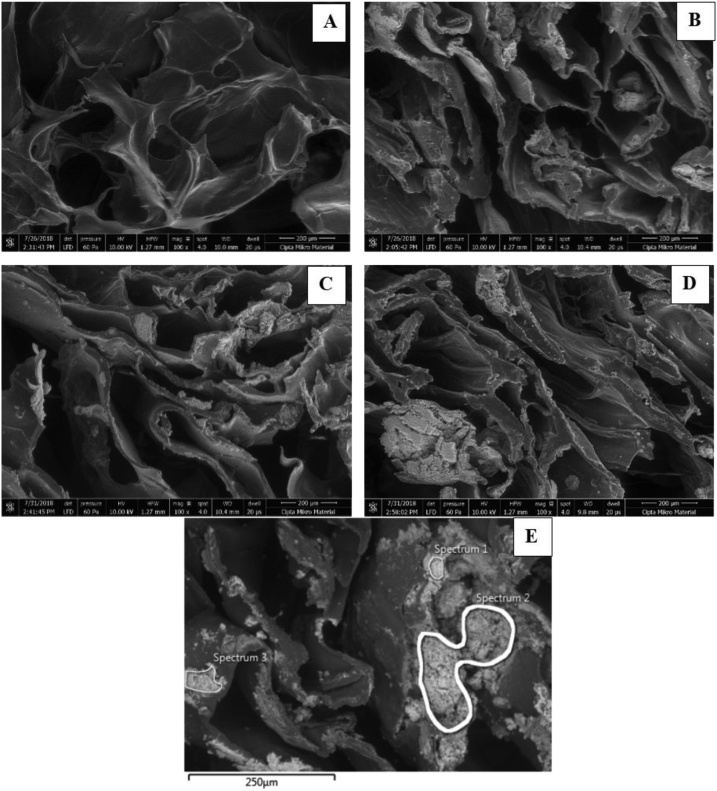
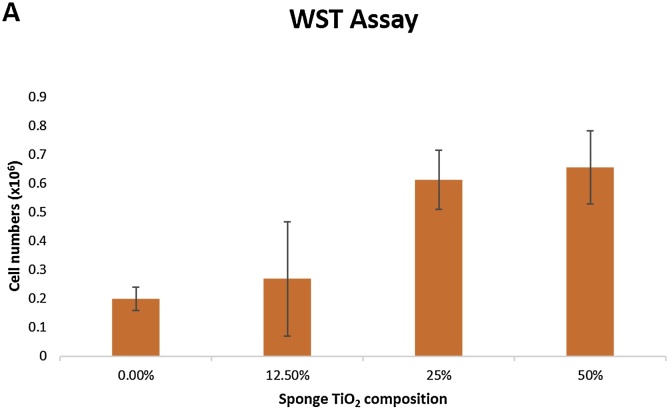
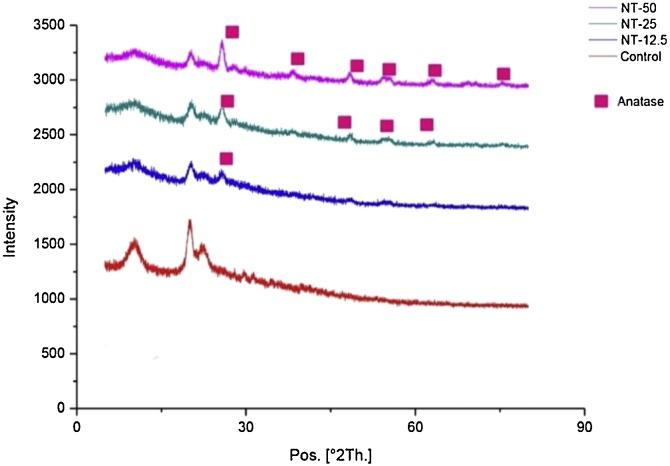
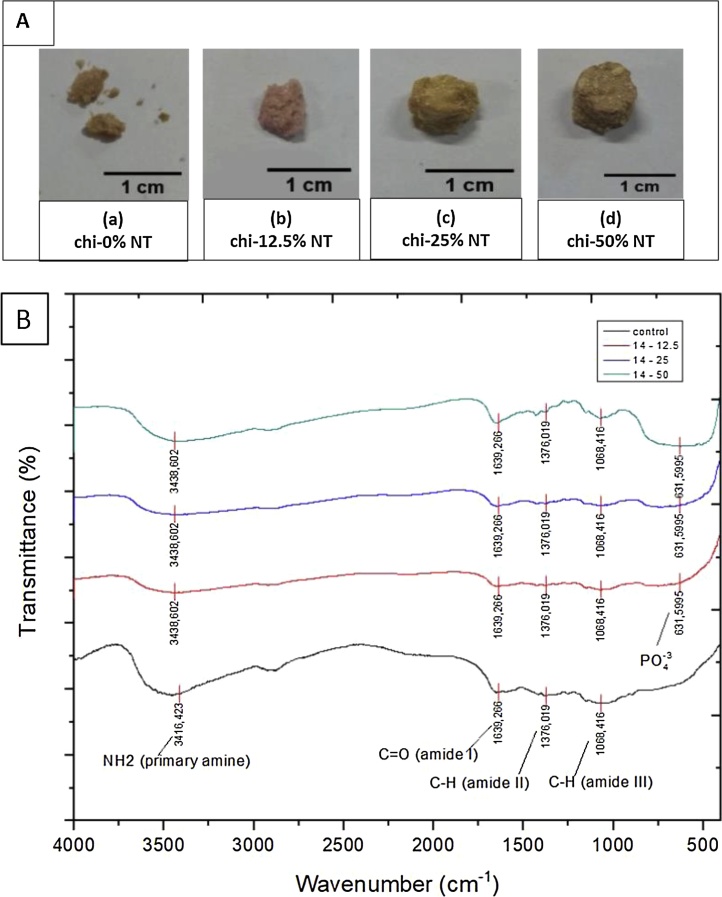
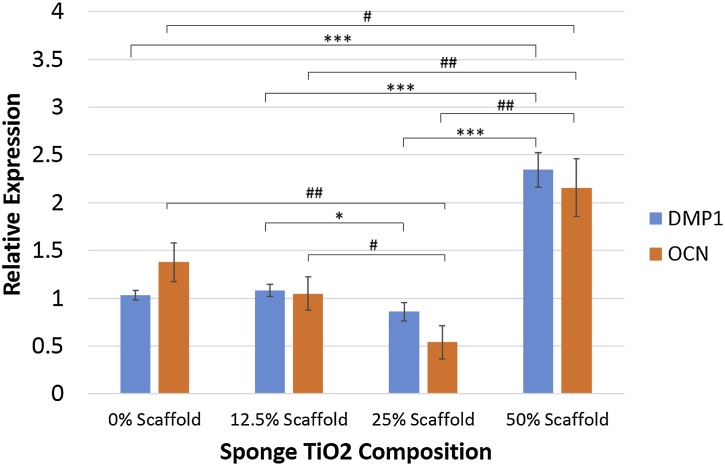
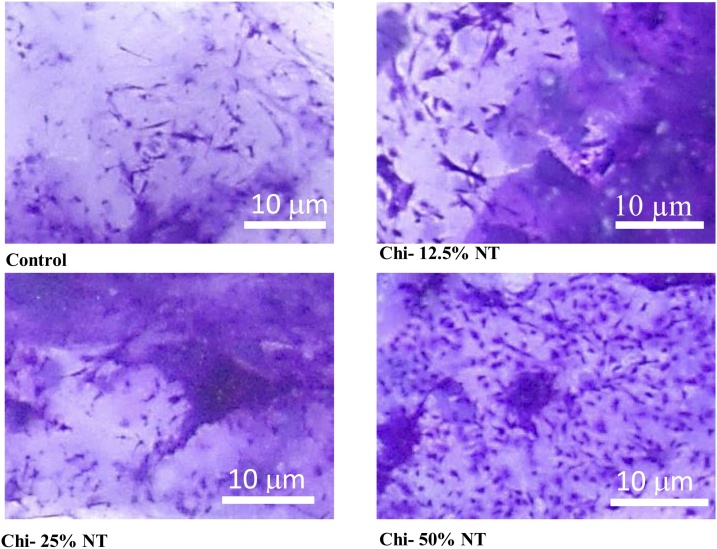
Chitosan has been a popular option for tissue engineering, however exhibits limited function for bone regeneration due to its low mechanical robustness and non-osteogenic inductivity. Here we hybridized chitosan with TiO nanoparticles to improve its bone regeneration capability. Morphology and crystallographic analysis showed that TiO nanoparticles in anatase-type were distributed evenly on the surface of the chitosan sponges. Degradation test showed a significant effect of TiO nanoparticles addition in retaining its integrity. Biomineralization assay using simulated body fluid showed apatite formation in sponges surface as denoted by PO band observed in FTIR results. qPCR analysis supported chitosan - TiO sponges in bone regeneration capability as indicated by DMP1 and OCN gene upregulation in TiO treated group. Finally, cytotoxicity analysis supported the fact that TiO nanoparticles added sponges were proved to be biocompatible. Results suggest that chitosan-50% TiO nanoparticles sponges could be a potential novel scaffold for bone tissue engineering.
壳聚糖一直是组织工程领域的热门选择,然而,由于其机械强度低和无成骨诱导性,在骨再生方面功能有限。在此,我们将壳聚糖与二氧化钛纳米颗粒杂交,以提高其骨再生能力。形态学和晶体学分析表明,锐钛矿型二氧化钛纳米颗粒均匀分布在壳聚糖海绵表面。降解试验表明,添加二氧化钛纳米颗粒对保持其完整性有显著效果。使用模拟体液的生物矿化分析表明,傅里叶变换红外光谱结果中观察到的PO带表明海绵表面形成了磷灰石。定量聚合酶链反应分析支持壳聚糖 - 二氧化钛海绵具有骨再生能力,这在二氧化钛处理组中DMP1和OCN基因上调中得到体现。最后,细胞毒性分析证实了添加二氧化钛纳米颗粒的海绵具有生物相容性这一事实。结果表明,壳聚糖 - 50%二氧化钛纳米颗粒海绵可能是骨组织工程的一种潜在新型支架。