School of Health Sciences, University of Surrey, Guildford, UK.
School of Health Sciences, University of Surrey, Guildford, UK
BMJ Qual Saf. 2020 Mar;29(3):198-208. doi: 10.1136/bmjqs-2019-009485. Epub 2019 Jul 20.
Most cancers are diagnosed following contact with primary care. Patients diagnosed with cancer often see their doctor multiple times with potentially relevant symptoms before being referred to see a specialist, suggesting missed opportunities during doctor-patient conversations.
To understand doctor-patient communication around the significance of persistent or new presenting problems and its potential impact on timely cancer diagnosis.
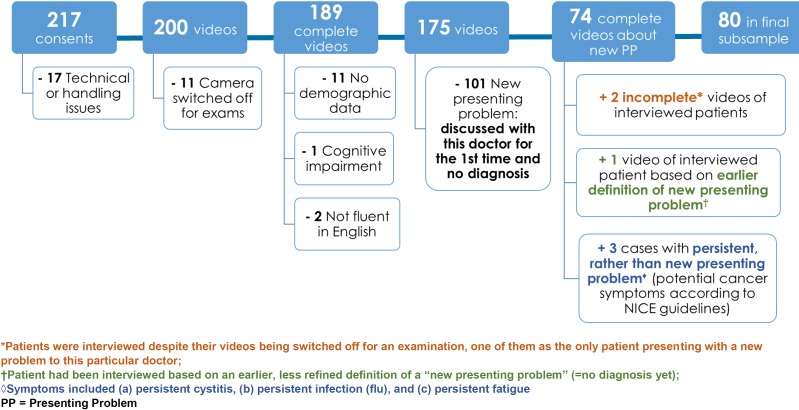
Qualitative thematic analysis based on video recordings of doctor-patient consultations in primary care and follow-up interviews with patients and doctors. 80 video observations, 20 patient interviews and 7 doctor interviews across 7 general practices in England.
We found that timeliness of diagnosis may be adversely affected if doctors and patients do not come to an agreement about the presenting problem's significance. 'Disagreements' may involve misaligned cognitive factors such as differences in medical knowledge between doctor and patient or misaligned emotional factors such as patients' unexpressed fear of diagnostic procedures. Interviews suggested that conversations where the difference in views is either not recognised or stays unresolved may lead to unhelpful patient behaviour after the consultation (eg, non-attendance at specialist appointments), creating potential for diagnostic delay and patient harm.
Our findings highlight how doctor-patient consultations can impact timely diagnosis when patients present with persistent or new problems. Misalignments were common and could go unnoticed, leaving gaps for potential to cause patient harm. These findings have implications for timely diagnosis of cancer and other serious disease because they highlight the complexity and fluidity of the consultation and the subsequent impact on the diagnostic process.
大多数癌症是在接触初级保健后诊断出来的。癌症患者在被转诊给专家之前,通常会因潜在相关症状多次就诊,这表明在医患对话中存在错失的机会。
了解医患双方在持续性或新发出现问题的重要性方面的沟通情况,及其对癌症及时诊断的潜在影响。
基于初级保健中医生-患者咨询的视频记录和对患者和医生的后续访谈进行的定性主题分析。在英格兰的 7 家全科诊所中,共进行了 80 次视频观察、20 次患者访谈和 7 次医生访谈。
我们发现,如果医生和患者对出现问题的重要性没有达成一致意见,那么诊断的及时性可能会受到不利影响。“分歧”可能涉及认知因素的不一致,如医生和患者之间医学知识的差异,或情感因素的不一致,如患者对诊断程序的未表达恐惧。访谈表明,当意见分歧要么未被识别,要么未得到解决时,可能会导致患者在咨询后采取无益的行为(例如,不参加专科预约),从而存在诊断延误和患者伤害的潜在风险。
我们的研究结果强调了当患者出现持续性或新发问题时,医患咨询如何影响及时诊断。意见分歧很常见,可能会被忽视,从而留下潜在的患者伤害的空间。这些发现对癌症和其他严重疾病的及时诊断具有重要意义,因为它们突出了咨询的复杂性和动态性,以及对诊断过程的后续影响。