Giessing Laura, Frenkel Marie Ottilie, Zinner Christoph, Rummel Jan, Nieuwenhuys Arne, Kasperk Christian, Brune Maik, Engel Florian Azad, Plessner Henning
Institute of Sports and Sports Sciences, Heidelberg University, Heidelberg, Germany.
Department of Sport, University of Applied Sciences for Police and Administration of Hesse, Wiesbaden, Germany.
Front Psychol. 2019 Jul 3;10:1523. doi: 10.3389/fpsyg.2019.01523. eCollection 2019.
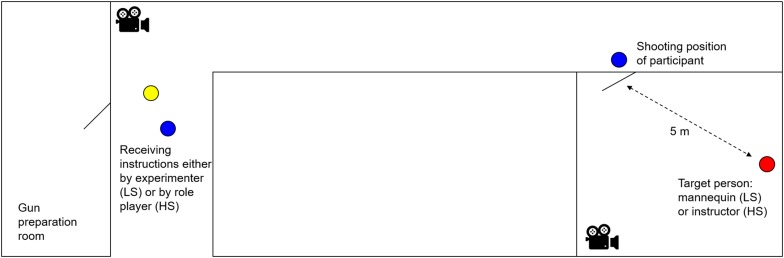
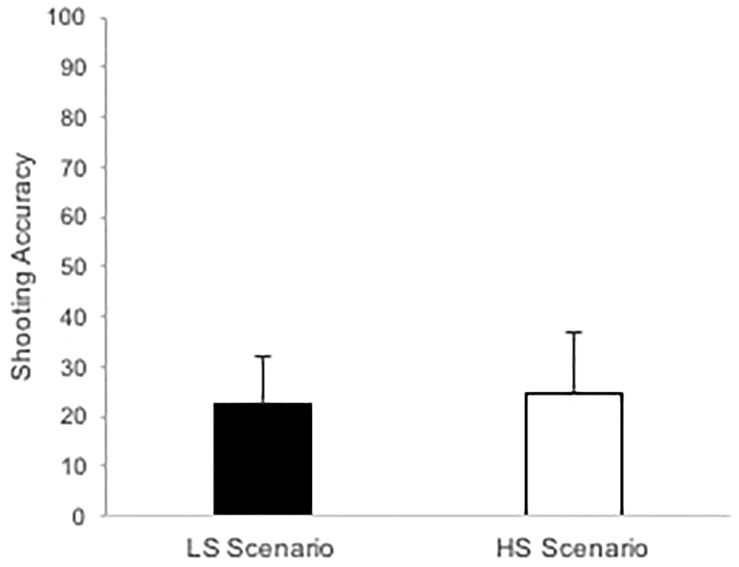
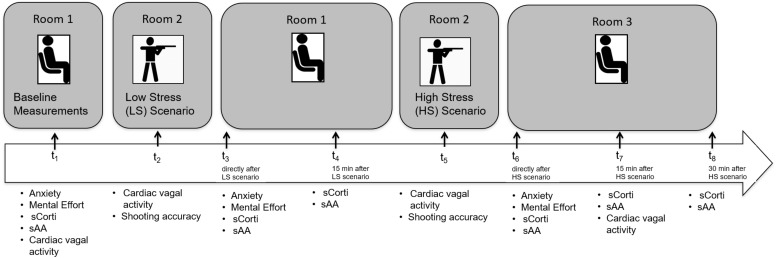
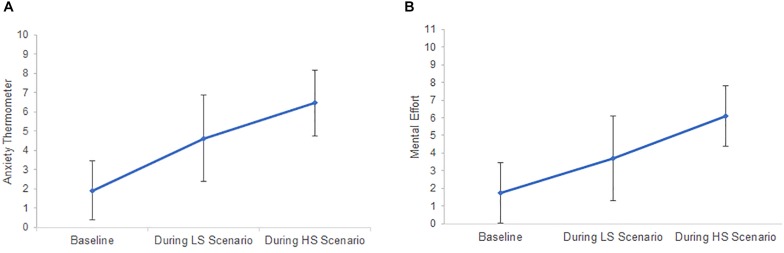
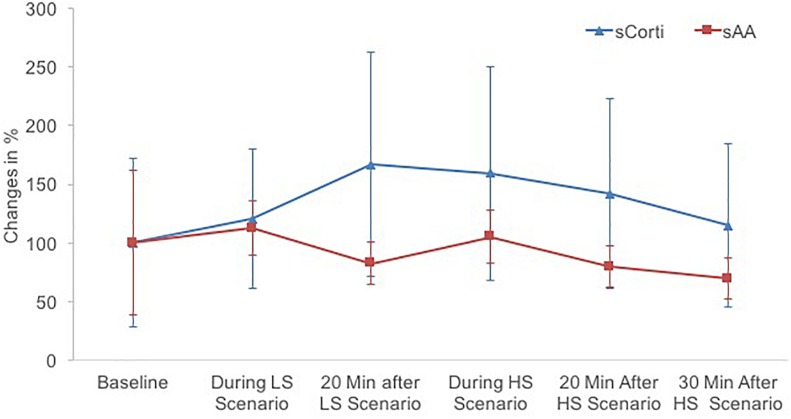
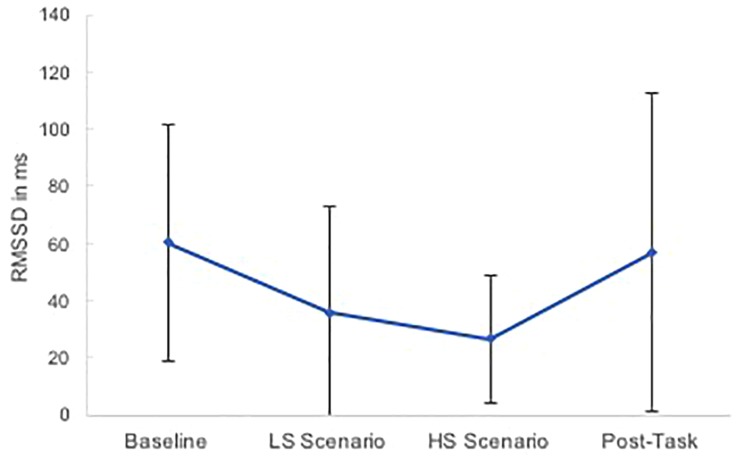
Police officers are often required to perform under high-stress circumstances, in which optimal task performance is crucial for their and the bystanders' physical integrity. However, stress responses, particularly anxiety and increased cortisol levels, shift attention from goal-directed to stimulus-driven control, leaving police officers with poor shooting performance under stress. Cardiac vagal activity and coping-related traits (i.e., self-control, sensation seeking) might help individuals to maintain performance under stress. So far, only few studies have integrated coping-related traits, psychophysiological stress markers and occupationally meaningful measures of behavior to investigate police officers' work performance under stress. Therefore, the present study investigated 19 police recruits ( = 22.84, = 3.30) undergoing a reality-based shooting scenario in two experimental conditions in a within-design: low stress (LS) against a non-threatening mannequin, and high stress (HS), involving physical threat by an opponent. Psychological (i.e., anxiety, mental effort) and physiological stress responses (i.e., salivary cortisol, alpha-amylase, cardiac vagal activity) as well as shooting accuracy were repeatedly assessed. It was hypothesized that under stress, police recruits would demonstrate elevated psychophysiological stress responses and impaired shooting performance. Elevated psychophysiological stress responses would negatively influence shooting performance, whereas self-control, sensation seeking and cardiac vagal activity would positively influence shooting performance. While recruits reported significantly higher anxiety and mental effort in the HS scenario, both scenarios elicited comparable physiological responses. Overall, shooting accuracy was low and did not significantly decrease in the HS scenario. Shooting performance was predicted by self-control in the LS scenario and by post-task cardiac vagal activity in the HS scenario. While increased anxiety hints at a successful stress manipulation, physiological responses suggest similar stress levels for both scenarios, diminishing potential behavioral differences between the scenarios. Performance efficiency decreased under stress, as indicated by increasing mental effort. Findings on self-control suggest that suppressing negative stress responses might lead to impaired goal-directed attention, resulting in performance decrements. For police research and training, high-realism scenarios afford an opportunity to investigate and experience psychophysiological stress responses.
警察经常需要在高压力环境下执行任务,在这种情况下,最佳的任务表现对于他们自己和旁观者的人身安全至关重要。然而,应激反应,特别是焦虑和皮质醇水平的升高,会将注意力从目标导向控制转移到刺激驱动控制,导致警察在压力下射击表现不佳。心脏迷走神经活动和与应对相关的特质(即自我控制、寻求刺激)可能有助于个体在压力下保持表现。到目前为止,只有少数研究将与应对相关的特质、心理生理应激指标和具有职业意义的行为指标结合起来,以调查警察在压力下的工作表现。因此,本研究调查了19名警察新兵(平均年龄=22.84岁,标准差=3.30岁),他们在一个内组设计的两种实验条件下经历了一个基于现实的射击场景:低压力(LS),对着一个无威胁的人体模型射击,以及高压力(HS),涉及对手的身体威胁。反复评估心理(即焦虑、心理努力)和生理应激反应(即唾液皮质醇、α-淀粉酶、心脏迷走神经活动)以及射击准确性。研究假设,在压力下,警察新兵会表现出心理生理应激反应升高和射击表现受损。心理生理应激反应升高会对射击表现产生负面影响,而自我控制、寻求刺激和心脏迷走神经活动会对射击表现产生正面影响。虽然新兵报告在HS场景中的焦虑和心理努力明显更高,但两种场景引发的生理反应相当。总体而言,射击准确性较低,且在HS场景中没有显著下降。在LS场景中,射击表现由自我控制预测,在HS场景中由任务后心脏迷走神经活动预测。虽然焦虑增加暗示了成功的压力操纵,但生理反应表明两种场景的压力水平相似,减少了场景之间潜在的行为差异。如心理努力增加所示,压力下的表现效率下降。关于自我控制的研究结果表明,抑制负面应激反应可能会导致目标导向注意力受损,从而导致表现下降。对于警察研究和培训来说,高度逼真的场景为调查和体验心理生理应激反应提供了一个机会。