Stokes-Parish Jessica, Duvivier Robbert, Jolly Brian
1School of Medicine & Public Health, University of Newcastle, Newcastle, NSW Australia.
2Department of Rural Health, University of Newcastle, Newcastle, NSW Australia.
Adv Simul (Lond). 2019 Jul 8;4:16. doi: 10.1186/s41077-019-0103-z. eCollection 2019.
Moulage is a technique in which special effects makeup is used to create wounds and other effects in simulation to add context and create realism in an otherwise fabricated environment. The degree to which moulage is used in the simulated environment is varied; that is, there is no guide for how authentic it is required to be. To objectively assess whether a higher level of authenticity in moulage influences engagement and better outcomes, a common model to assess authenticity is required. The aim of this study was to explore expert opinions on moulage in simulation and develop an instrument for the classification of moulage in simulation.
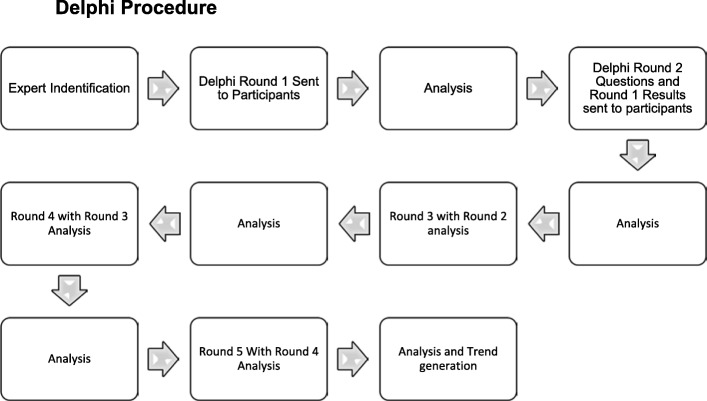
The instrument was developed in 3 phases: expert panellist recruitment, domain identification, and consensus rounds. A Delphi technique was used to explore themes of authenticity using Dieckmann's Theory of Realism as a frame of reference. An initial list of elements was raised by a panel of international experts. The experts participated in a further four rounds of questioning, identifying and then ranking and/or rating elements of authenticity in moulage. A priori consensus threshold was set at 80%.
In round 1, 18 of 31 invited panellists participated, and a total of 10 completed round 5 (attrition 44%). As a result of the Delphi, the Moulage Authenticity Rating Scale was developed. Under the three domains of realism, 60 elements were identified by experts. A total of 13 elements reached the consensus threshold, whilst tensions regarding the necessity for authentic moulage were identified throughout the rounds.
This study demonstrates the complexity of moulage in simulation, with particular challenges surrounding the experts' views on authenticity. A prototype instrument for measuring moulage authenticity is presented in the form of the Moulage Authenticity Rating Scale (MARS) to further aid progress in understanding the role of authentic moulage in simulation.
模拟化妆是一种使用特效化妆来制造伤口和其他效果的技术,用于在虚构环境中增添情境并营造真实感。模拟环境中模拟化妆的使用程度各不相同;也就是说,对于所需的逼真程度没有指导标准。为了客观评估模拟化妆更高水平的逼真度是否会影响参与度和带来更好的结果,需要一个评估逼真度的通用模型。本研究的目的是探讨专家对模拟化妆的看法,并开发一种用于模拟化妆分类的工具。
该工具分三个阶段开发:专家小组成员招募、领域识别和共识轮次。采用德尔菲技术,以迪克曼的现实主义理论为参照框架来探讨逼真度主题。国际专家小组提出了一份初始元素清单。专家们参与了另外四轮提问,识别然后对模拟化妆中逼真度的元素进行排名和/或评级。先验共识阈值设定为80%。
在第一轮中,31名受邀小组成员中有18人参与,共有10人完成了第五轮(损耗率44%)。经过德尔菲法,开发出了模拟化妆逼真度评定量表。在现实主义的三个领域下,专家们识别出了60个元素。共有13个元素达到了共识阈值,同时在各轮中都发现了关于逼真模拟化妆必要性的分歧。
本研究证明了模拟化妆在模拟中的复杂性,特别是围绕专家对逼真度看法的挑战。以模拟化妆逼真度评定量表(MARS)的形式呈现了一种测量模拟化妆逼真度的原型工具,以进一步帮助理解逼真模拟化妆在模拟中的作用。