Ambu Rita, Morabito Anna Eva
Department of Mechanical, Chemical and Materials Engineering, University of Cagliari, Via Marengo 2, 09123 Cagliari, Italy.
Department of Engineering for Innovation, University of Salento, Via per Monteroni, 73100 Lecce, Italy.
ScientificWorldJournal. 2019 Jun 27;2019:7060847. doi: 10.1155/2019/7060847. eCollection 2019.
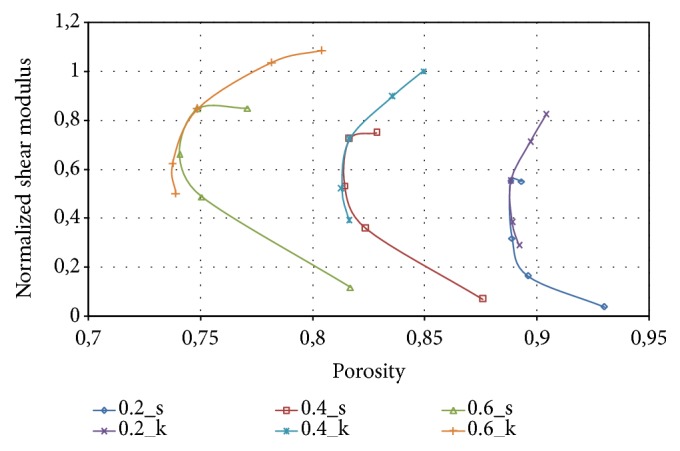
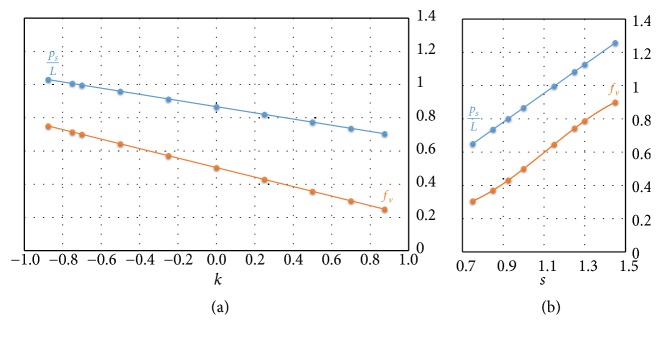
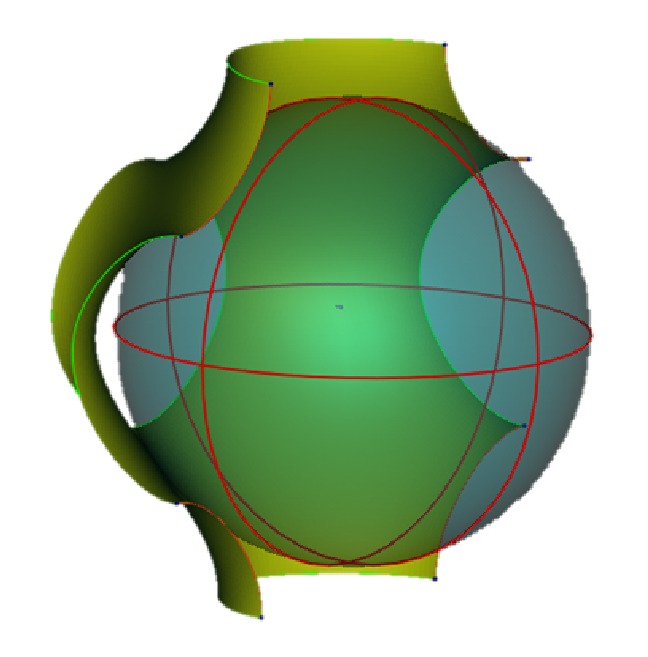
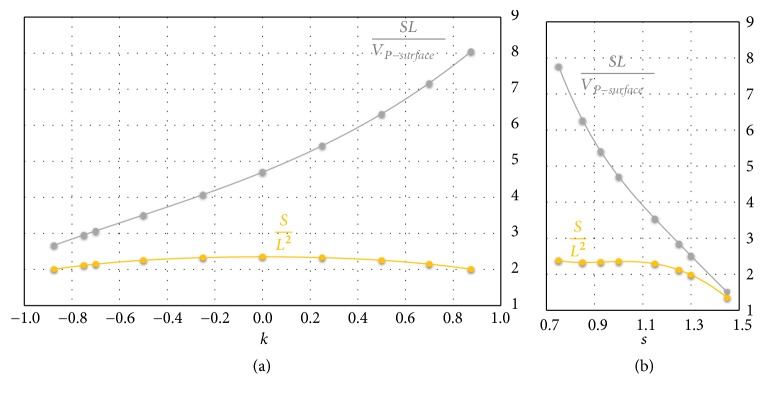
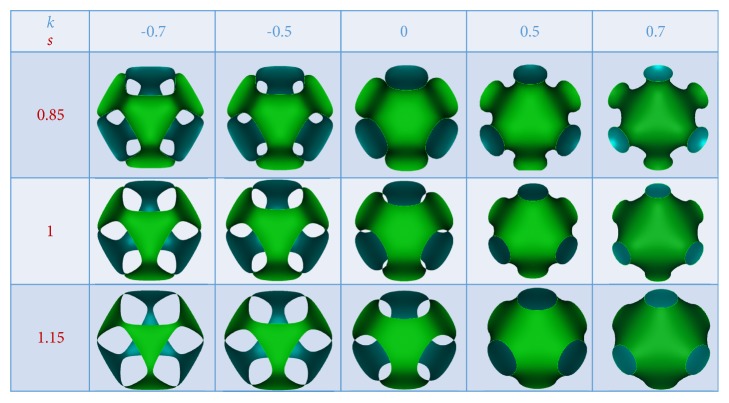
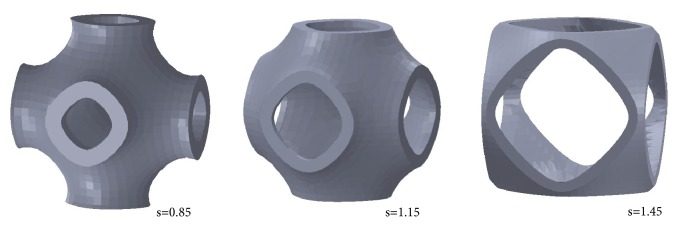
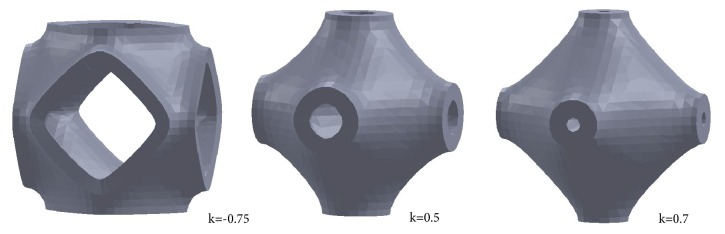
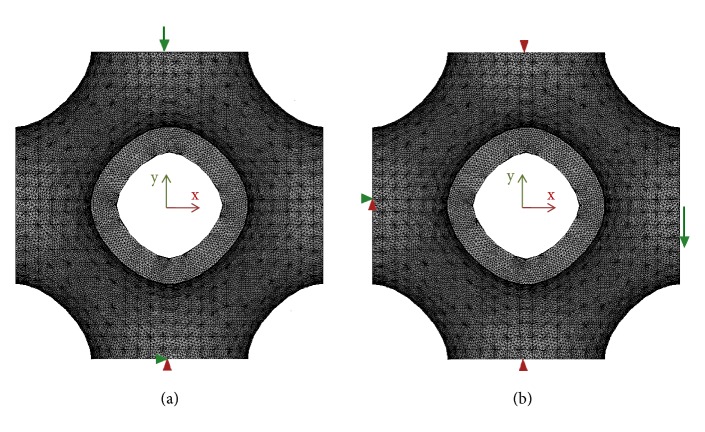
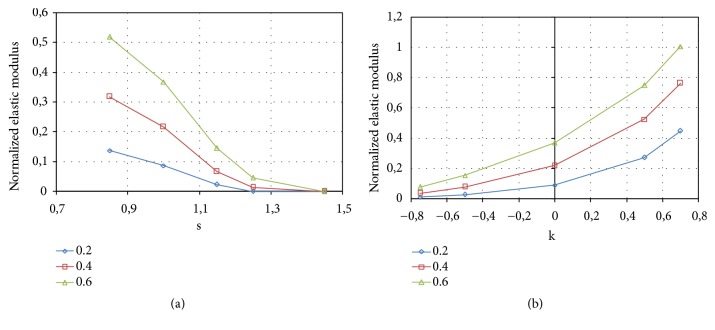
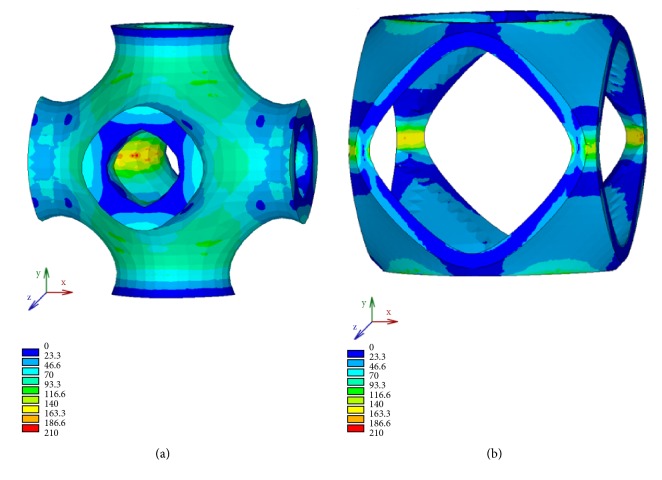
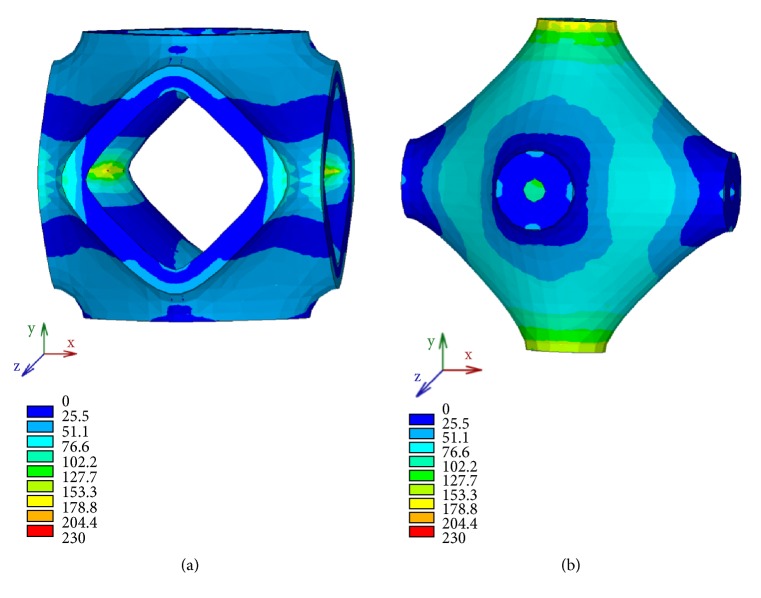
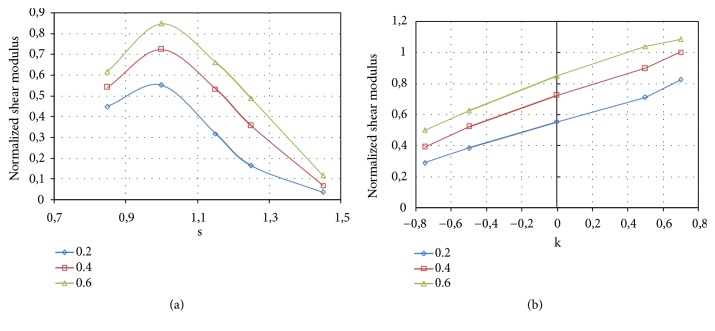
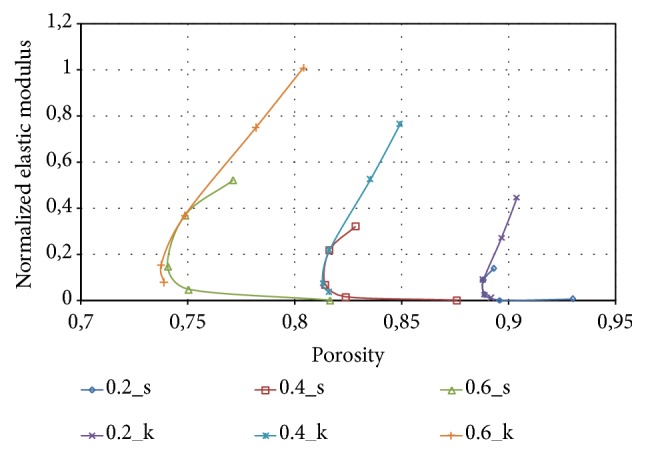
The design of bone scaffolds for tissue regeneration is a topic of great interest, which involves different issues related to geometry of architectures, mechanical behavior, and biological requirements, whose optimal combination determines the success of an implant. Additive manufacturing (AM) has widened the capability to produce structures with complex geometries, which should potentially satisfy the different requirements. These architectures can be obtained by means of refined methods and have to be assessed in terms of geometrical and mechanical properties. In this paper a triply periodic minimal surface (TPMS), the Schwarz's Primitive surface (P-surface), has been considered as scaffold unit cell and conveniently parameterized in order to investigate the effect of modulation of analytical parameters on the P-cell geometry and on its properties. Several are the cell properties, which can affect the scaffold performance. Due to the important biofunctional role that the surface curvature plays in mechanisms of cellular proliferation and differentiation, in this paper, in addition to properties considering the cell geometry in its whole (such as volume fraction or pore size), new properties were proposed. These properties involve, particularly, the evaluation of local geometrical-differential properties of the P-surface. The results of this P-cell comprehensive characterization are very useful for the design of customized bone scaffolds able to satisfy both biological and mechanical requirements. A numerical structural evaluation, by means of finite element method (FEM), was performed in order to assess the stiffness of solid P-cells as a function of the changes of the analytical parameters of outer surface and the thickness of cell. Finally, the relationship between stiffness and porosity has been analyzed, given the relevance that this property has for bone scaffolds design.
用于组织再生的骨支架设计是一个备受关注的课题,它涉及到与结构几何形状、力学行为和生物学要求相关的不同问题,这些因素的最佳组合决定了植入物的成功与否。增材制造(AM)拓宽了生产具有复杂几何形状结构的能力,这些结构有可能满足不同的要求。这些结构可以通过精细的方法获得,并且必须在几何和力学性能方面进行评估。在本文中,一种三重周期极小曲面(TPMS),即施瓦茨原始曲面(P曲面),被视为支架的单位晶胞,并进行了适当的参数化,以研究分析参数的调制对P晶胞几何形状及其性能的影响。有几个晶胞属性会影响支架性能。由于表面曲率在细胞增殖和分化机制中起着重要的生物功能作用,因此在本文中,除了考虑整个细胞几何形状的属性(如体积分数或孔径)外,还提出了新的属性。这些属性尤其涉及对P曲面局部几何微分属性的评估。这种P晶胞综合表征的结果对于设计能够同时满足生物学和力学要求的定制骨支架非常有用。通过有限元方法(FEM)进行了数值结构评估,以评估实心P晶胞的刚度随外表面分析参数和晶胞厚度变化的函数关系。最后,鉴于该属性对骨支架设计的相关性,分析了刚度与孔隙率之间的关系。