Lv Jia, Jin Wenxuan, Liu Wenhao, Qin Xiuyu, Feng Yi, Bai Junjun, Wu Zhuangzhuang, Li Jian
Department of Orthopedics, Second Hospital of Shanxi Medical University, Taiyuan, China.
Shanxi Key Laboratory of Bone and Soft Tissue Injury Repair, Department of Orthopedics, Second Hospital of Shanxi Medical University, Taiyuan, China.
Front Bioeng Biotechnol. 2022 May 26;10:899531. doi: 10.3389/fbioe.2022.899531. eCollection 2022.
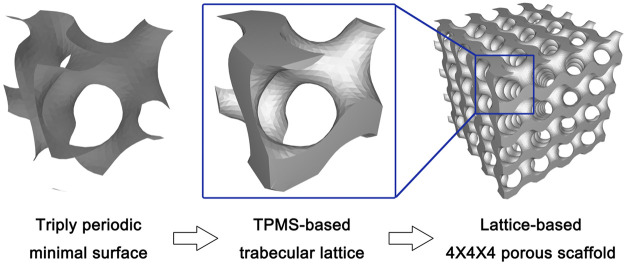
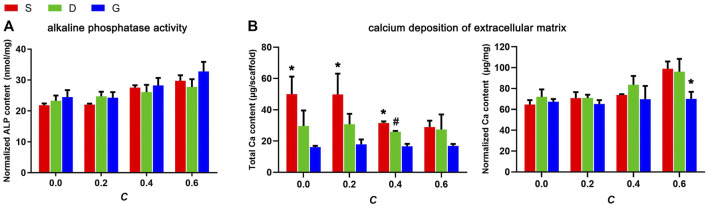
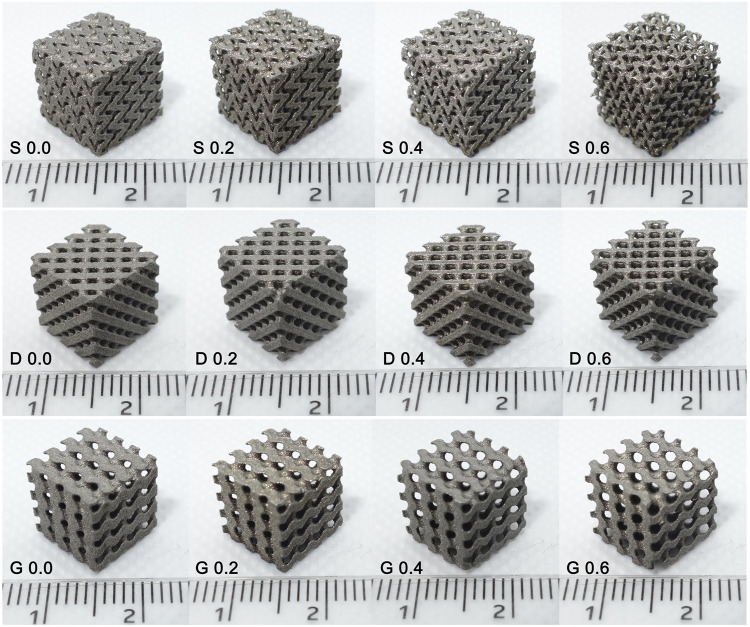
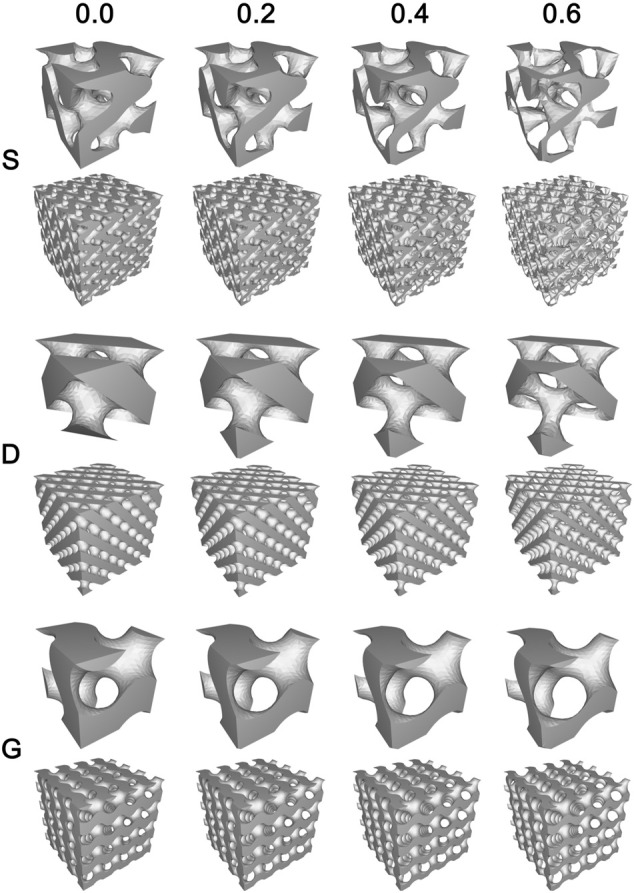
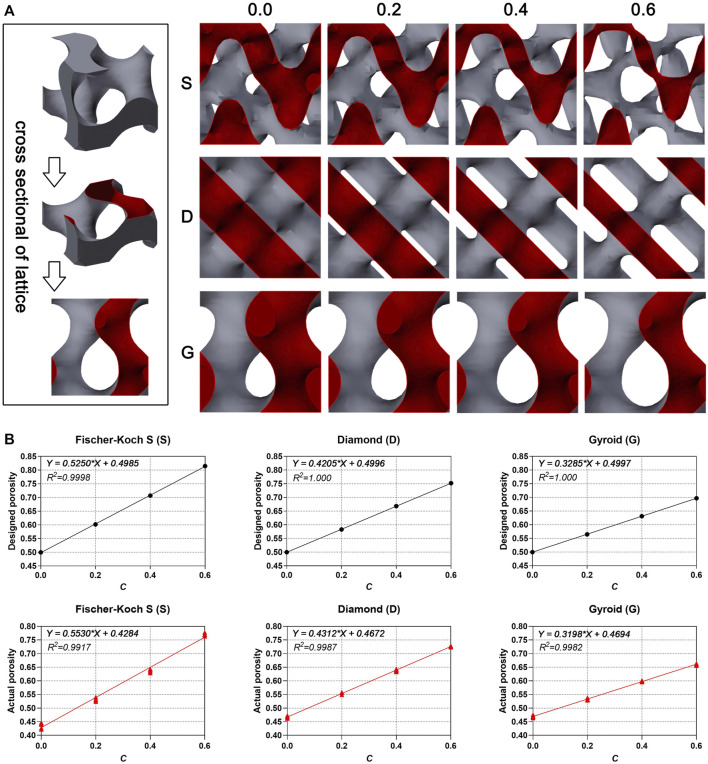
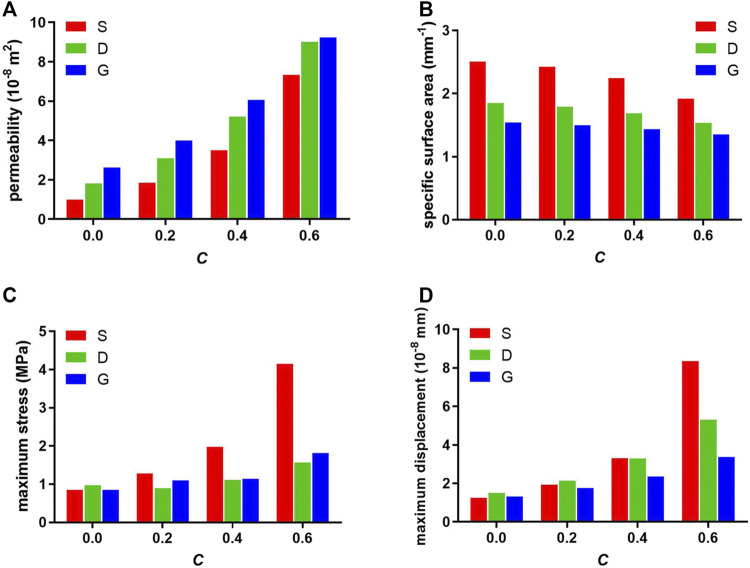
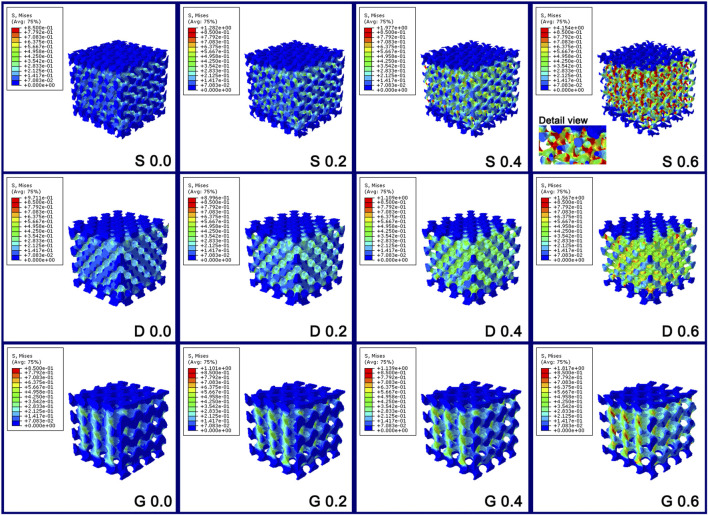
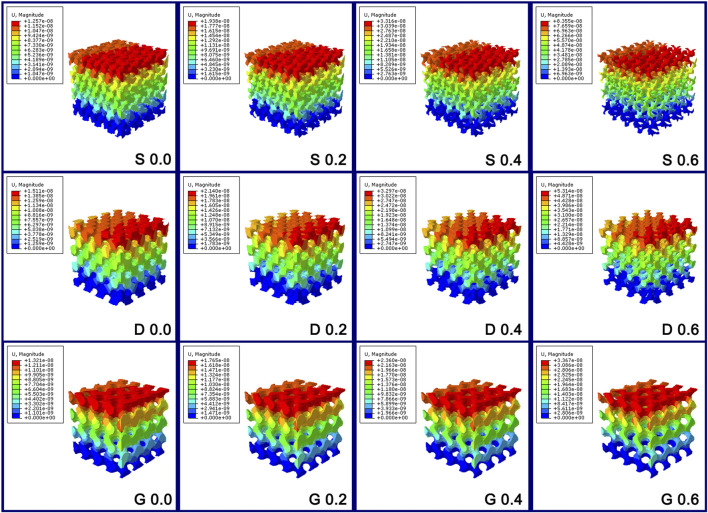
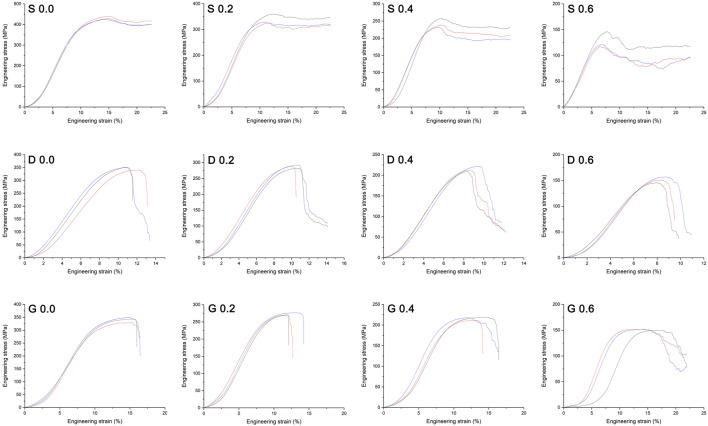
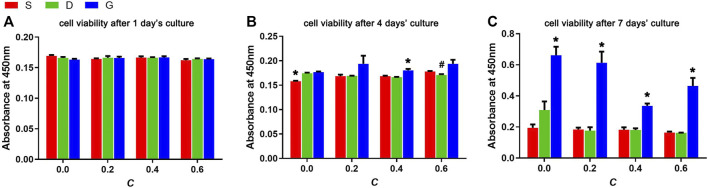
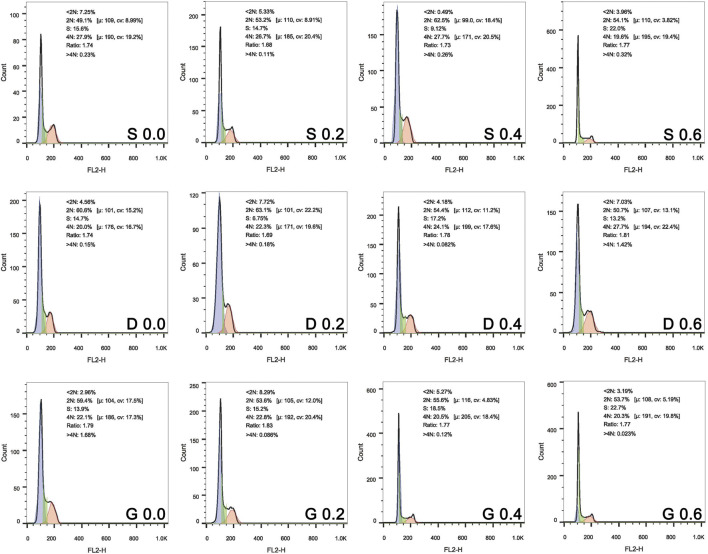
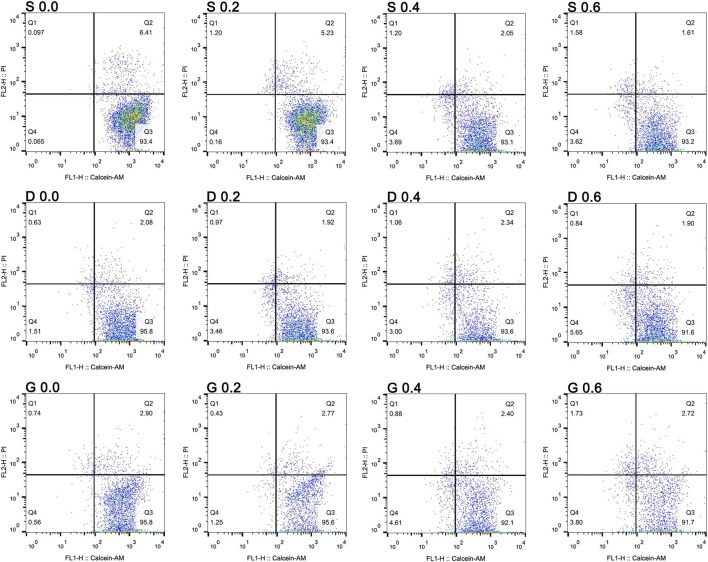
The relationship between pore architecture and structure performance needs to be explored, as well as confirm the optimized porous structure. Because of the linear correlation between constant C and pore architecture, triply periodic minimal surface (TPMS) based porous structures could be a controllable model for the investigation of the optimized porous structure. In the present work, three types of TPMS porous scaffolds (S, D and G) combined with four constants (0.0, 0.2, 0.4 and 0.6) were designed, and built successfully the selective laser melting (SLM) technology. The designed feature and mechanical property of porous scaffolds were investigated through mathematical method and compression test. And the manufactured samples were co-cultured with rMSCs for the compatibility study. The results indicated that the whole manufacturing procedure was good in controllability, repeatability, and accuracy. The linear correlation between the porosity of TPMS porous scaffolds and the constant C in equations was established. The different TPMS porous scaffolds possess the disparate feature in structure, mechanical property and cell compatibility. Comprehensive consideration of the structure features, mechanical property and biology performance, different TPMS structures should be applied in appropriate field. The results could guide the feasibility of apply the different TPMS architectures into the different part of orthopedic implants.
需要探究孔隙结构与结构性能之间的关系,并确定优化的多孔结构。由于常数C与孔隙结构之间存在线性相关性,基于三重周期极小曲面(TPMS)的多孔结构可能是研究优化多孔结构的可控模型。在本工作中,设计了三种类型的TPMS多孔支架(S、D和G)并结合四个常数(0.0、0.2、0.4和0.6),并通过选择性激光熔化(SLM)技术成功制造。通过数学方法和压缩试验研究了多孔支架的设计特征和力学性能。并将制造的样品与大鼠间充质干细胞(rMSCs)共培养以进行相容性研究。结果表明,整个制造过程在可控性、重复性和准确性方面良好。建立了TPMS多孔支架孔隙率与方程中常数C之间的线性相关性。不同的TPMS多孔支架在结构、力学性能和细胞相容性方面具有不同的特征。综合考虑结构特征、力学性能和生物学性能,不同的TPMS结构应应用于适当的领域。该结果可为将不同的TPMS结构应用于骨科植入物的不同部位的可行性提供指导。