Division of Liver Diseases, Icahn School of Medicine at Mount Sinai, New York, New York, United States of America.
Human Immune Monitoring Core, Icahn School of Medicine at Mount Sinai, New York, New York, United States of America.
PLoS Pathog. 2019 Jul 29;15(7):e1007935. doi: 10.1371/journal.ppat.1007935. eCollection 2019 Jul.
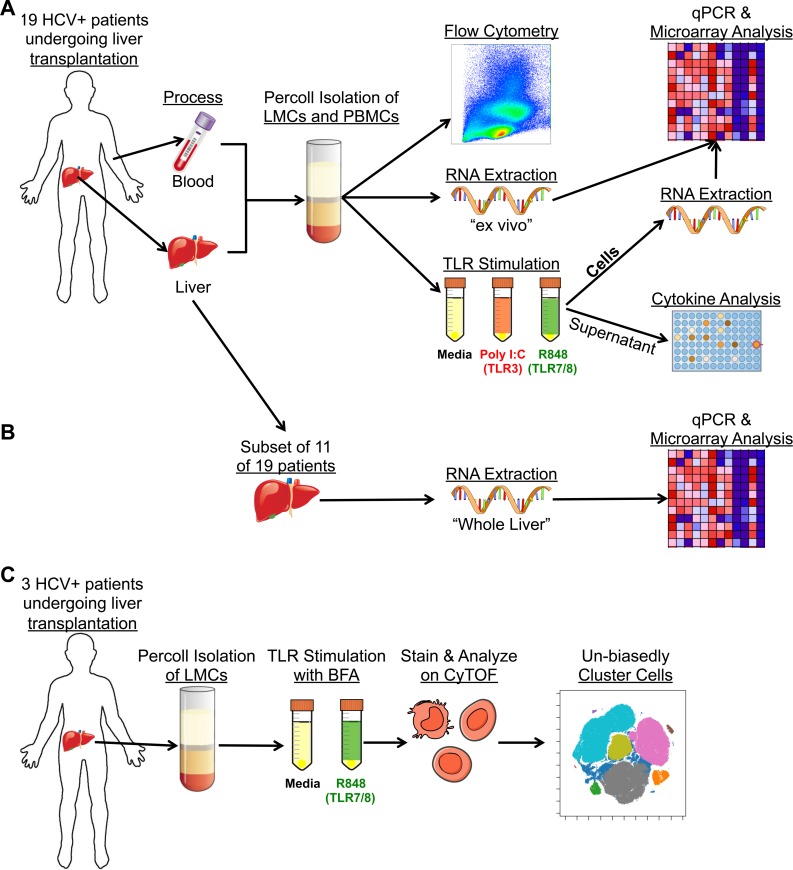
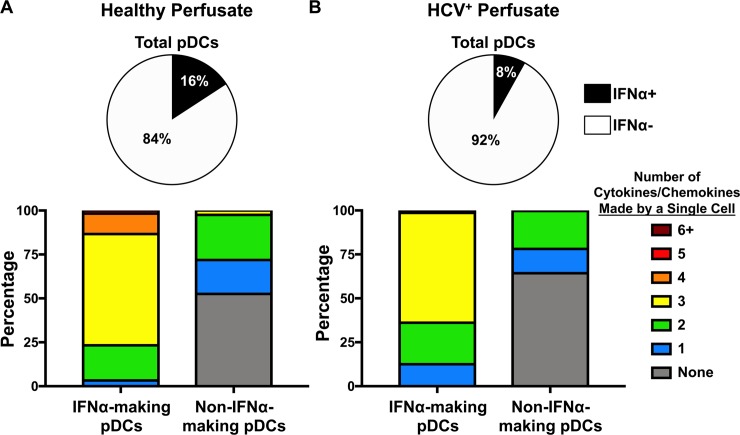
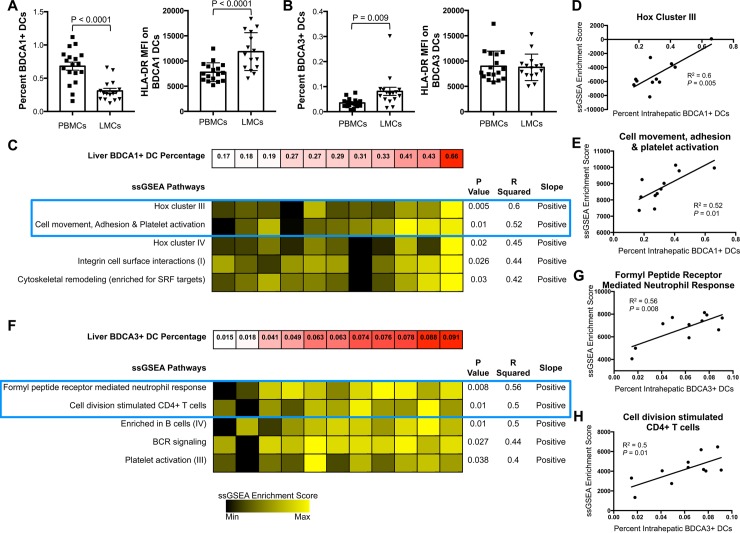
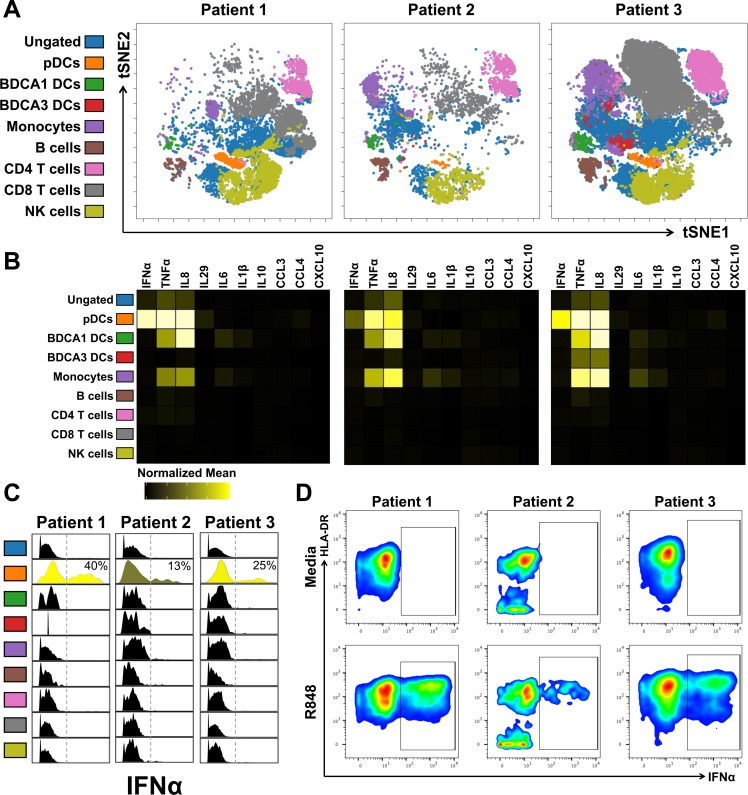
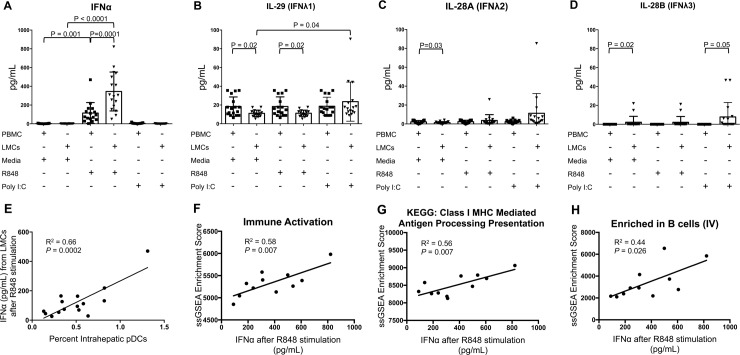
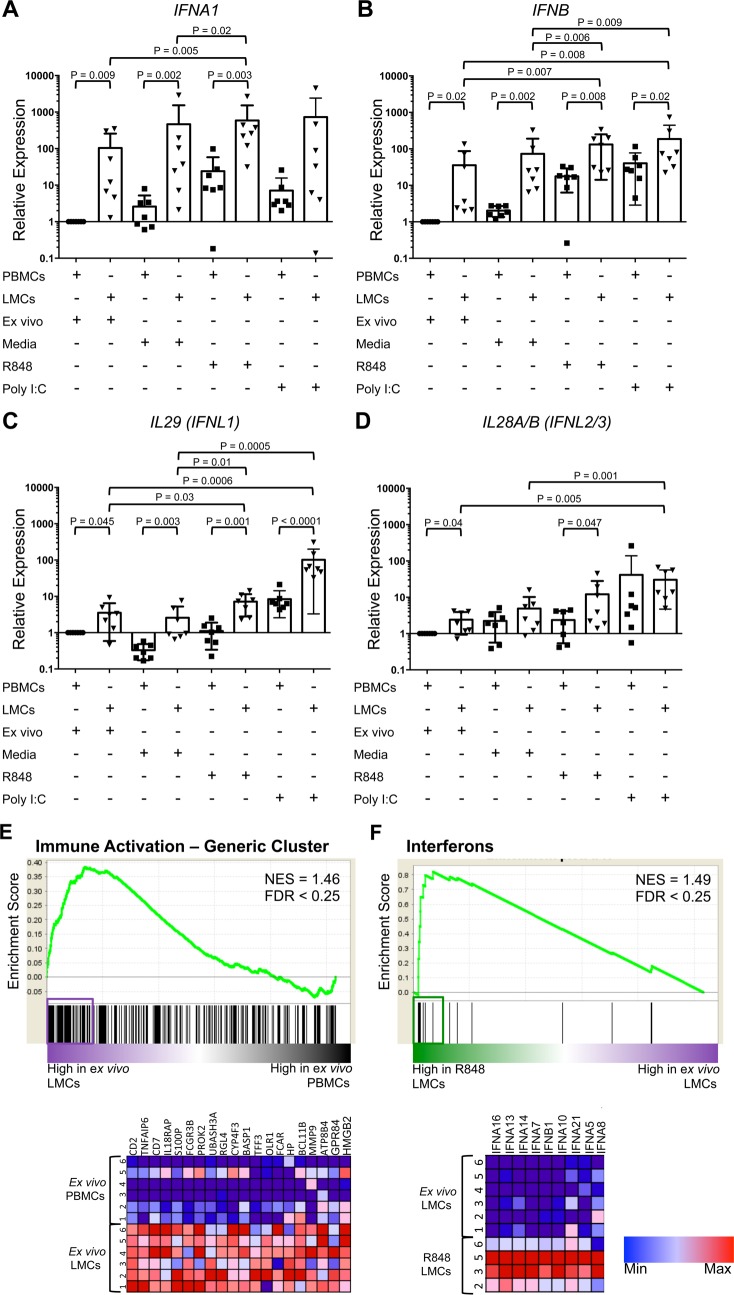
Plasmacytoid dendritic cells (pDCs) are "natural" interferon α (IFNα)-producing cells. Despite their importance to antiviral defense, autoimmunity, and ischemic liver graft injury, because DC subsets are rare and heterogeneous, basic questions about liver pDC function and capacity to make cytokines remain unanswered. Previous investigations failed to consistently detect IFNα mRNA in HCV-infected livers, suggesting that pDCs may be incapable of producing IFNα. We used a combination of molecular, biochemical, cytometric, and high-dimensional techniques to analyze DC frequencies/functions in liver and peripheral blood mononuclear cells (PBMCs) of hepatitis C virus (HCV)-infected patients, to examine correlations between DC function and gene expression of matched whole liver tissue and liver mononuclear cells (LMCs), and to determine if pDCs can produce multiple cytokines. T cells often produce multiple cytokines/chemokines but until recently technical limitations have precluded tests of polyfunctionality in individual pDCs. Mass cytometry (CyTOF) revealed that liver pDCs are the only LMC that produces detectable amounts of IFNα in response TLR-7/8 stimulation. Liver pDCs secreted large quantities of IFNα (~2 million molecules of IFNα/cell/hour) and produced more IFNα than PBMCs after stimulation, p = 0.0001. LMCs secreted >14-fold more IFNα than IFNλ in 4 hours. Liver pDC frequency positively correlated with whole liver expression of "IFNα-response" pathway (R2 = 0.58, p = 0.007) and "monocyte surface" signature (R2 = 0.54, p = 0.01). Mass cytometry revealed that IFNα-producing pDCs were highly polyfunctional; >90% also made 2-4 additional cytokines/chemokines of our test set of 10. Liver BDCA1 DCs, but not BDCA3 DCs, were similarly polyfunctional. pDCs from a healthy liver were also polyfunctional. Our data show that liver pDCs retain the ability to make abundant IFNα during chronic HCV infection and produce many other immune modulators. Polyfunctional liver pDCs are likely to be key drivers of inflammation and immune activation during chronic HCV infection.
浆细胞样树突状细胞 (pDCs) 是“天然”产生干扰素 α (IFNα) 的细胞。尽管它们对抗病毒防御、自身免疫和缺血性肝移植物损伤很重要,但由于 DC 亚群稀少且异质,关于肝 pDC 功能和产生细胞因子的能力的基本问题仍未得到解答。先前的研究未能在 HCV 感染的肝脏中一致检测到 IFNα mRNA,这表明 pDC 可能无法产生 IFNα。我们使用分子、生化、细胞计量和高维技术的组合来分析 HCV 感染患者肝脏和外周血单核细胞 (PBMC) 中的 DC 频率/功能,检查 DC 功能与匹配的整个肝脏组织和肝单核细胞 (LMC) 基因表达之间的相关性,并确定 pDC 是否能够产生多种细胞因子。T 细胞通常会产生多种细胞因子/趋化因子,但直到最近,技术限制一直阻碍了对单个 pDC 多功能性的测试。质谱流式细胞术 (CyTOF) 显示,肝 pDC 是唯一一种在 TLR-7/8 刺激下可产生可检测量 IFNα 的 LMC。肝 pDC 分泌大量 IFNα(~200 万分子 IFNα/细胞/小时),刺激后产生的 IFNα 多于 PBMC,p = 0.0001。LMC 在 4 小时内分泌的 IFNλ超过 IFNα 的 14 倍。肝 pDC 频率与整个肝脏“IFNα 反应”途径的表达呈正相关(R2 = 0.58,p = 0.007)和“单核细胞表面”特征(R2 = 0.54,p = 0.01)。质谱流式细胞术显示,产生 IFNα 的 pDC 具有高度的多功能性;我们测试的 10 种细胞因子/趋化因子中,超过 90%的细胞因子/趋化因子还产生了 2-4 种额外的细胞因子/趋化因子。BDCA1 DC,但不是 BDCA3 DC,也具有类似的多功能性。来自健康肝脏的 pDC 也是多功能的。我们的数据表明,在慢性 HCV 感染期间,肝 pDC 保留了产生大量 IFNα 的能力,并产生许多其他免疫调节剂。多功能肝 pDC 可能是慢性 HCV 感染期间炎症和免疫激活的关键驱动因素。