Center for Bioscience Research & Education, Utsunomiya University, 350 Mine Utsunomiya, Tochigi 321-8505, Japan.
Int J Mol Sci. 2019 Jul 26;20(15):3666. doi: 10.3390/ijms20153666.
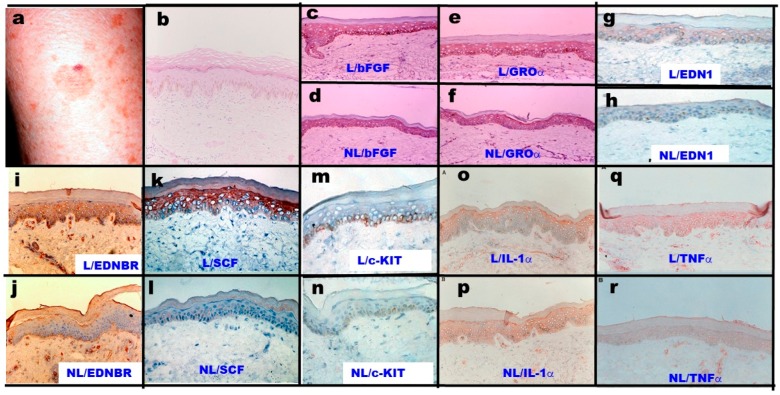
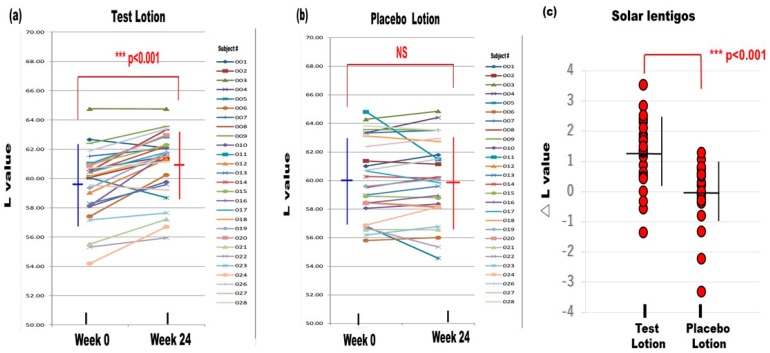
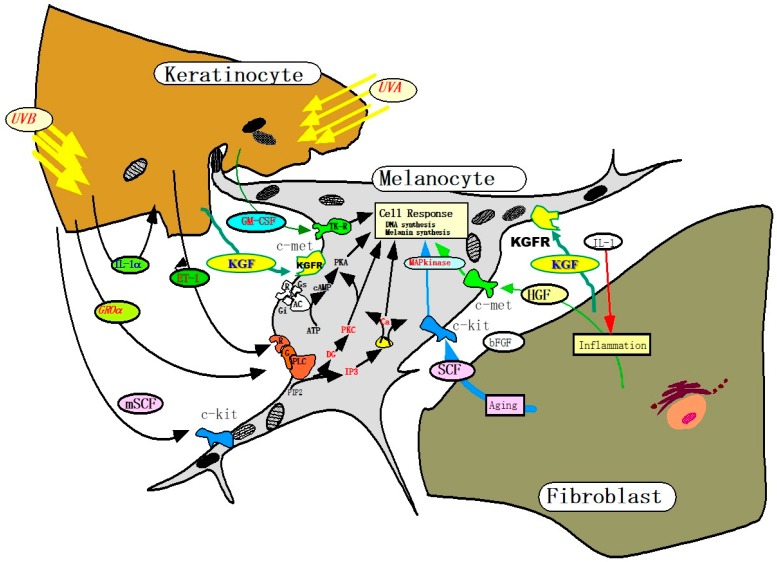
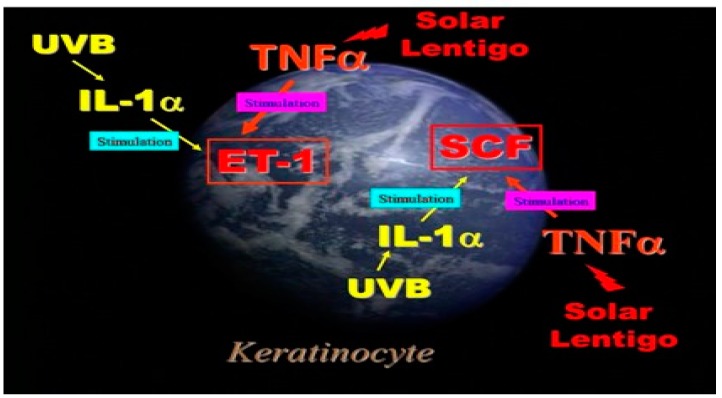
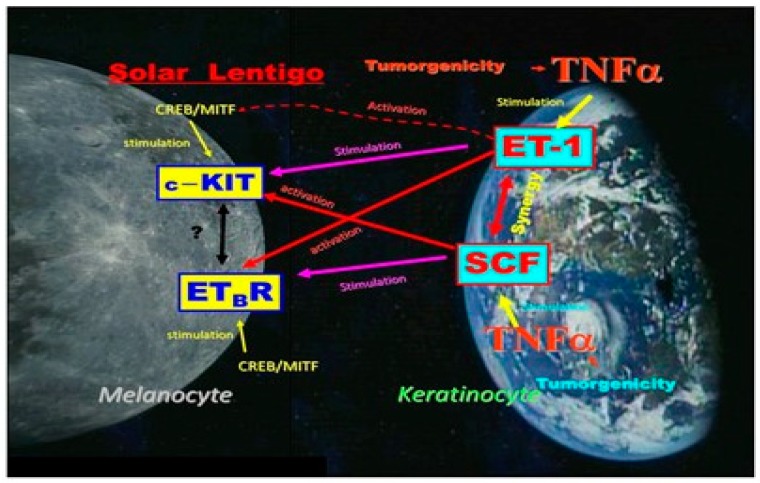
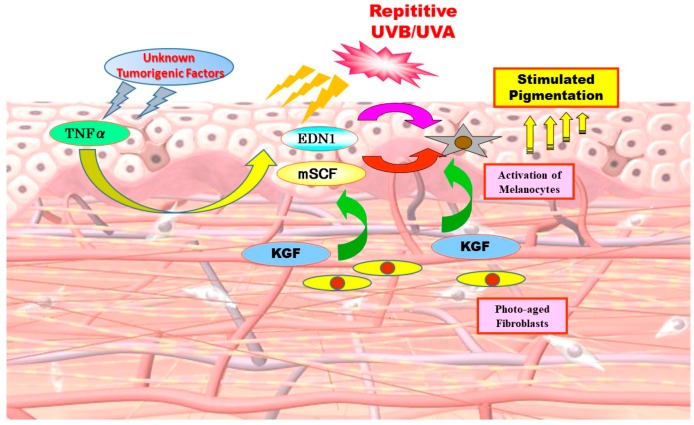
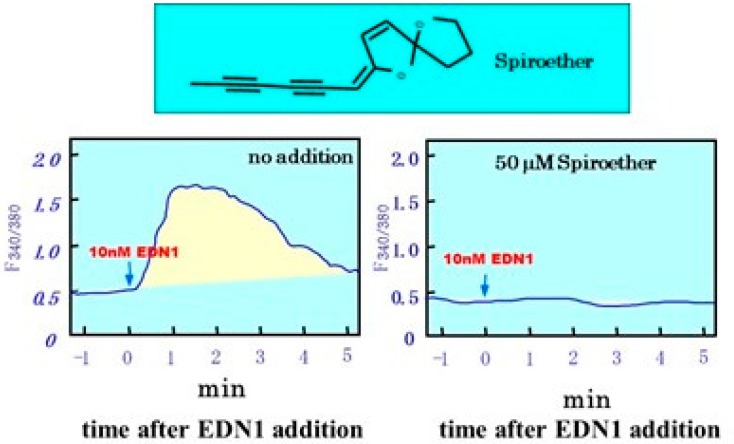
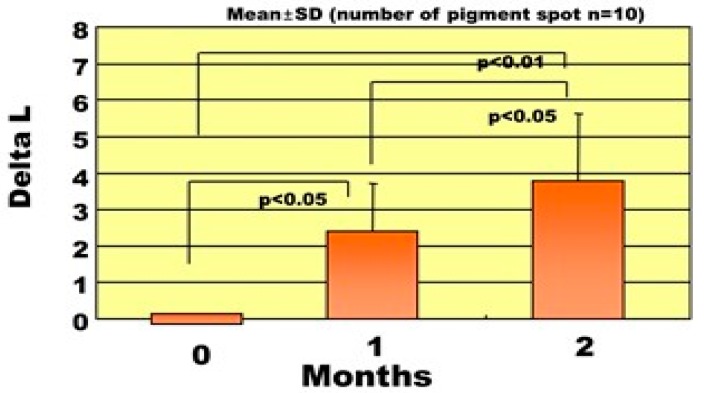
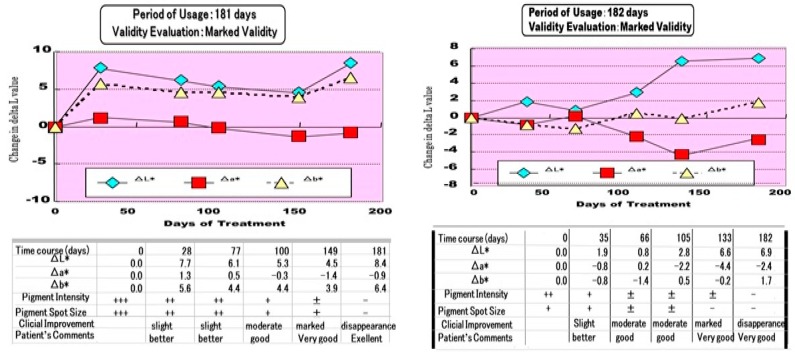
To characterize the pathobiology of solar lentigos (SLs), analyses by semiquantitative RT-PCR, Western blotting, and immunohistochemistry revealed the upregulated expression of endothelin (EDN)-1/endothelin B receptors (EDNBRs), stem cell factor (SCF)/c-KIT, and tumor necrosis factor (TNF)α in the lesional epidermis, which contrasted with the downregulated expression of interleukin (IL) 1α. These findings strongly support the hypothesis that previous repeated UVB exposure triggers keratinocytes to continuously produce TNFα. TNFα then stimulates the secretion of EDNs and the production of SCF in an autocrine fashion, leading to the continuous melanogenic activation of neighboring melanocytes, which causes SLs. A clinical study of 36 patients with SLs for six months treated with an extract with a potent ability to abrogate the EDN1-induced increase in DNA synthesis and melanization of human melanocytes in culture revealed a significant improvement in pigment scores and color differences expressed as L values. Another clinical study using a tyrosinase inhibitor L-ascorbate-2-phosphate 3 Na (ASP) demonstrated that L values of test lotion (6% APS)-treated skin significantly increased in SLs and in non-lesional skin with a significantly higher ΔL value in SLs when compared with non-lesional skin. The sum of these findings strongly suggests that combined topical treatment with EDN signaling blockers and tyrosinase inhibitors is a desirable therapeutic choice for SLs.
为了阐明日光性黑子(SLs)的病理生物学特性,通过半定量 RT-PCR、Western blot 和免疫组织化学分析,我们发现病变表皮中内皮素(EDN)-1/内皮素 B 受体(EDNBRs)、干细胞因子(SCF)/c-KIT 和肿瘤坏死因子(TNF)α的表达上调,而白细胞介素(IL)1α的表达下调。这些发现强烈支持了这样一种假说,即先前的反复 UVB 暴露会导致角质形成细胞持续产生 TNFα。然后,TNFα以自分泌的方式刺激 EDNs 的分泌和 SCF 的产生,导致相邻黑素细胞持续的黑素生成激活,从而导致 SLs 的形成。对 36 例 SLs 患者进行为期六个月的治疗,外用一种具有强大能力的提取物,该提取物能阻断 EDN1 诱导的人黑素细胞 DNA 合成和黑素化增加的临床研究表明,色素评分和以 L 值表示的颜色差异有显著改善。另一项使用酪氨酸酶抑制剂 L-抗坏血酸-2-磷酸 3 Na(ASP)的临床研究表明,与非病变皮肤相比,试验乳液(6%ASP)治疗的皮肤的 L 值在 SLs 和非病变皮肤中显著增加,而 SLs 的ΔL 值明显更高。这些发现综合表明,EDN 信号通路阻滞剂和酪氨酸酶抑制剂的联合局部治疗是治疗 SLs 的理想选择。