Zhang Yi, Deng Yingnan, Wang Congshan, Li Lidan, Xu Lida, Yu Yingjie, Su Xin
College of Life Science and Technology , Beijing University of Chemical Technology , Beijing 100029 , China . Email:
Department of Biomedical Engineering , Tufts University , Medford , MA 02155 , USA . Email:
Chem Sci. 2019 May 6;10(23):5959-5966. doi: 10.1039/c9sc01912j. eCollection 2019 Jun 21.
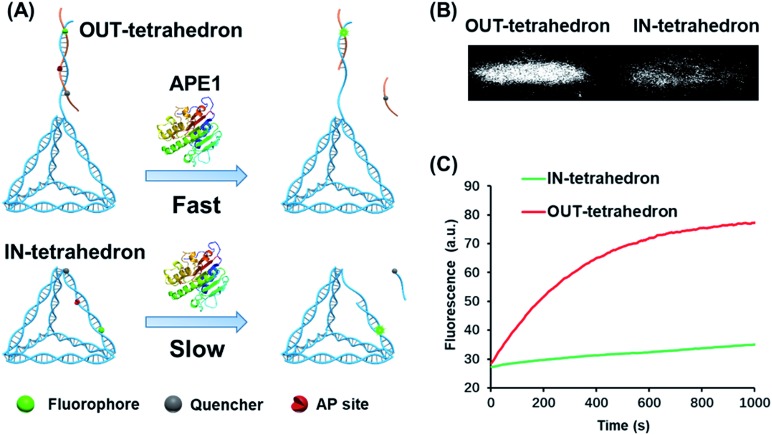
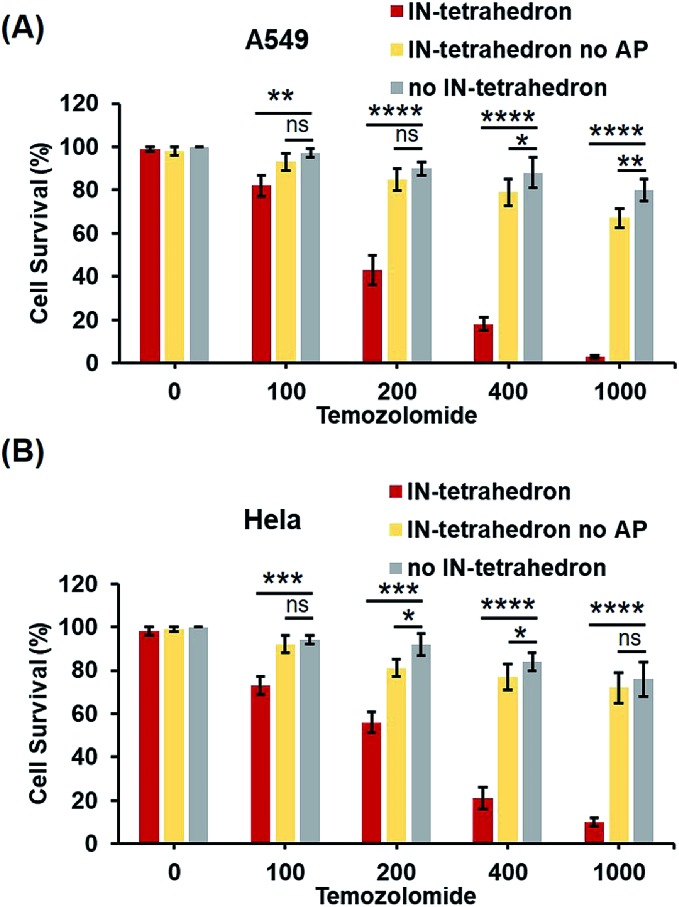
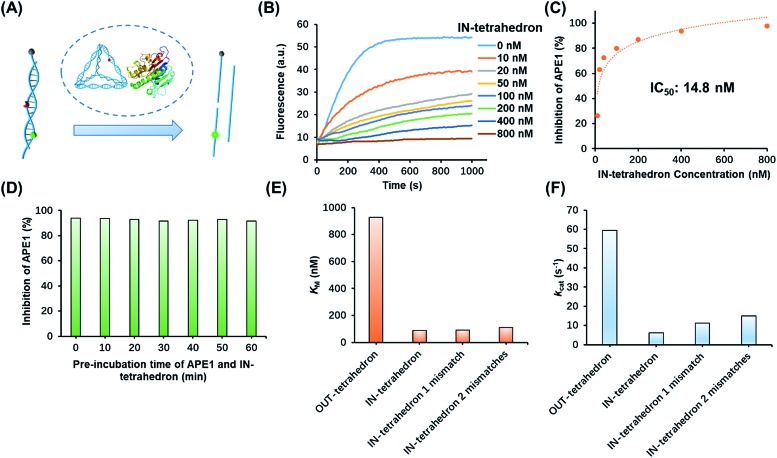
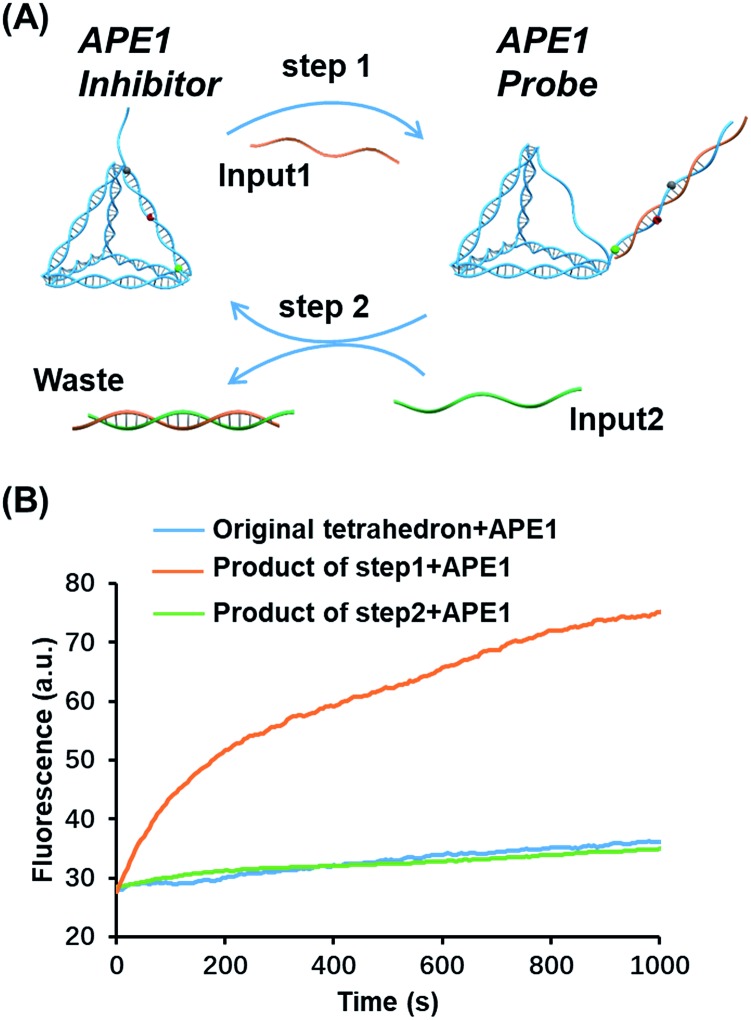
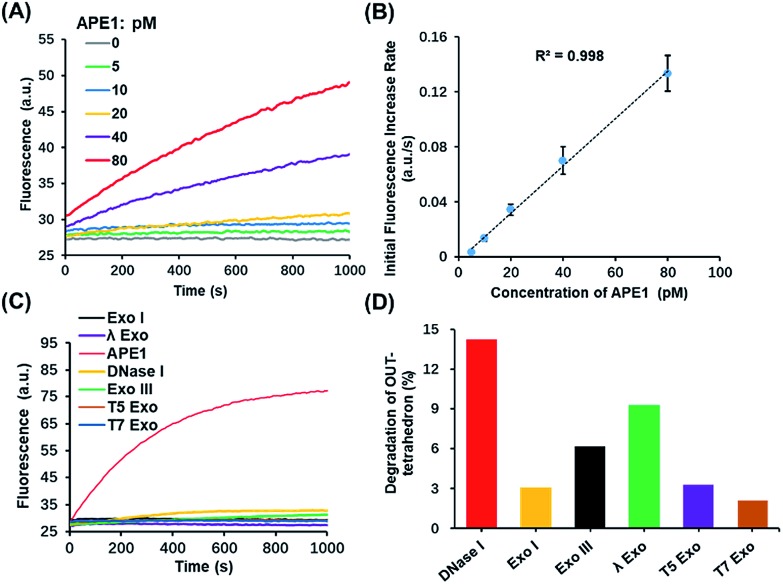
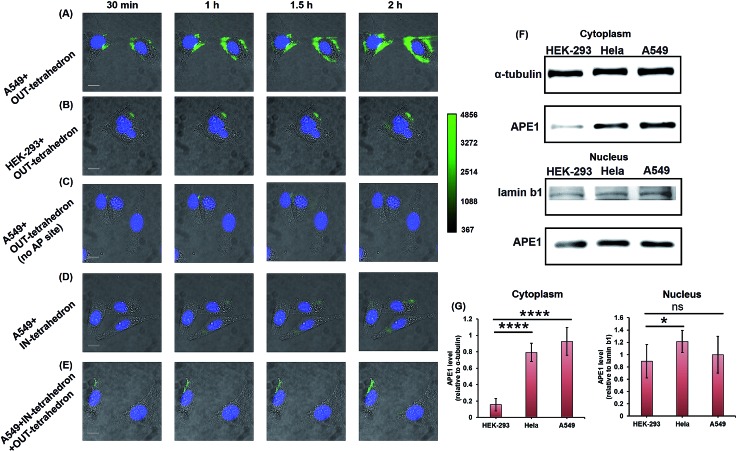
Given the essential role of apurinic/apyrimidinic endonuclease (APE1) in gene repair and cancer progression, we report a novel approach for probing and regulating cellular APE1 activity by using DNA tetrahedrons. The tetrahedron with an AP site-containing antenna exhibits high sensitivity and specificity to APE1. It is suitable for APE1 detection (detection limit 5 pM) and cellular fluorescence imaging without any auxiliary transfection reagents, which discriminates the APE1 expression level of cancer cells and normal cells. In contrast, the tetrahedron with an AP site on its scaffold exhibits high binding affinity to APE1 but limits enzymatic catalysis making this nanostructure an APE1 inhibitor with an IC of 14.8 nM. It suppresses the APE1 activity in living cells and sensitizes cancer cells to anticancer drugs. We also demonstrate that the APE1 probe and inhibitor can be switched allosterically stand displacement, which holds potential for reversible inhibition of APE1. Our approach provides a new way for fabricating enzyme probes and regulators and new insights into enzyme-substrate interactions, and it can be expanded to regulate other nucleic acid related enzymes.
鉴于脱嘌呤/脱嘧啶内切核酸酶(APE1)在基因修复和癌症进展中的重要作用,我们报道了一种通过使用DNA四面体来探测和调节细胞APE1活性的新方法。带有含AP位点天线的四面体对APE1表现出高灵敏度和特异性。它适用于APE1检测(检测限为5 pM)和细胞荧光成像,无需任何辅助转染试剂,可区分癌细胞和正常细胞的APE1表达水平。相比之下,在其支架上带有AP位点的四面体对APE1表现出高结合亲和力,但限制酶催化作用,使这种纳米结构成为一种IC为14.8 nM的APE1抑制剂。它抑制活细胞中的APE1活性,并使癌细胞对抗癌药物敏感。我们还证明,APE1探针和抑制剂可以通过链置换进行变构切换,这为APE1的可逆抑制具有潜力。我们的方法为制造酶探针和调节剂提供了一种新途径,并为酶 - 底物相互作用提供了新见解,并且可以扩展到调节其他核酸相关酶。