Laboratório de Enterovírus, Instituto Oswaldo Cruz, Fundação Oswaldo Cruz, Rio de Janeiro 21040900, Brazil.
Departamento de Neurologia, Faculdade de Medicina, Hospital Universitário Antônio Pedro, Universidade Federal Fluminense, Rio de Janeiro 24033900, Brazil.
Viruses. 2019 Jul 29;11(8):690. doi: 10.3390/v11080690.
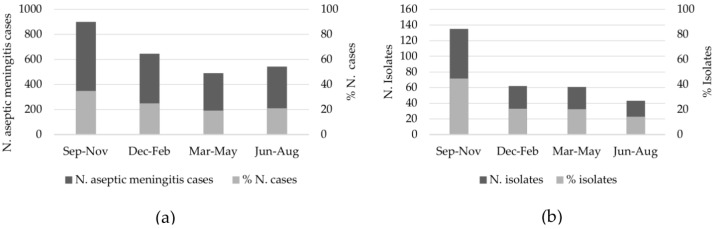
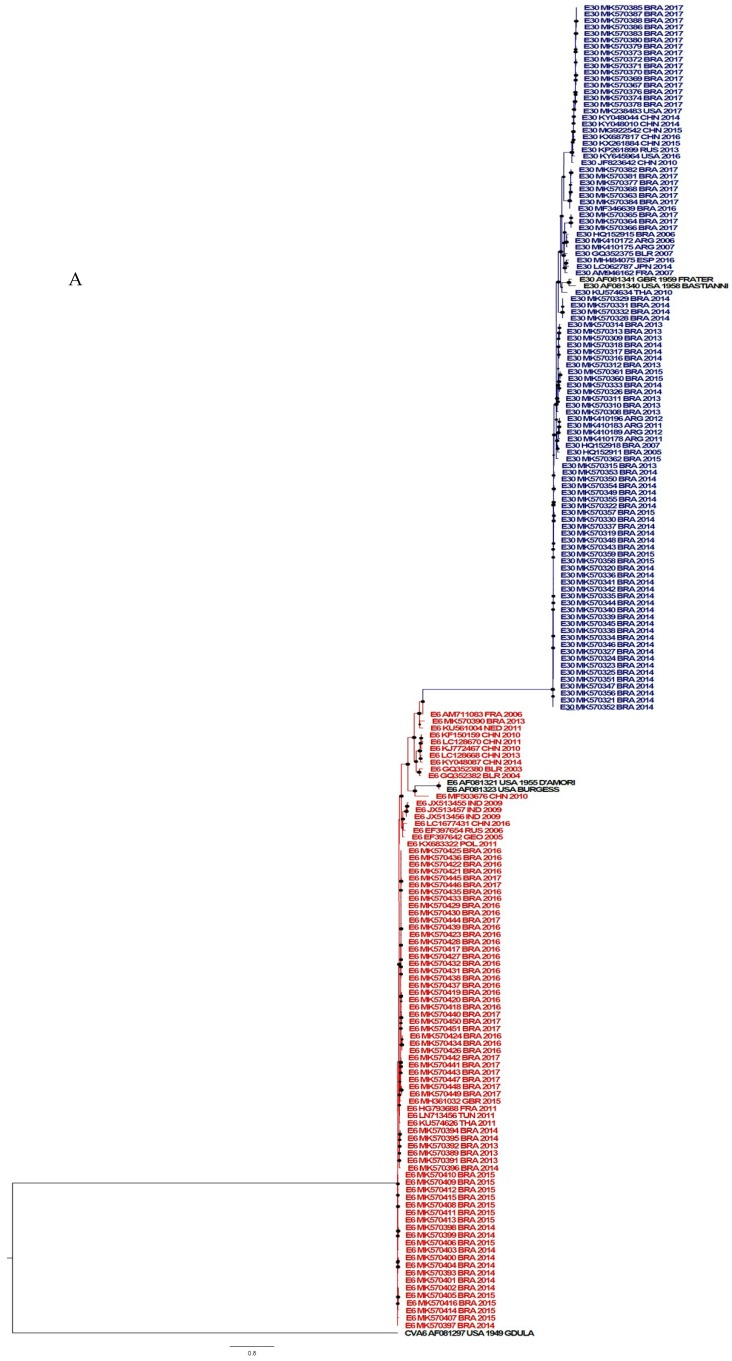
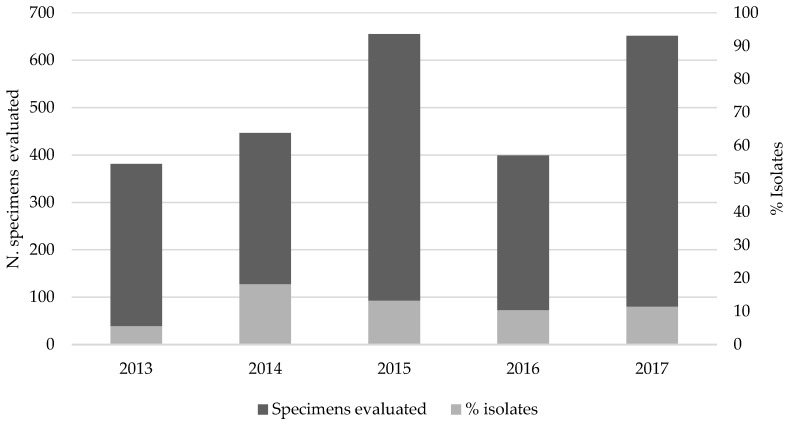
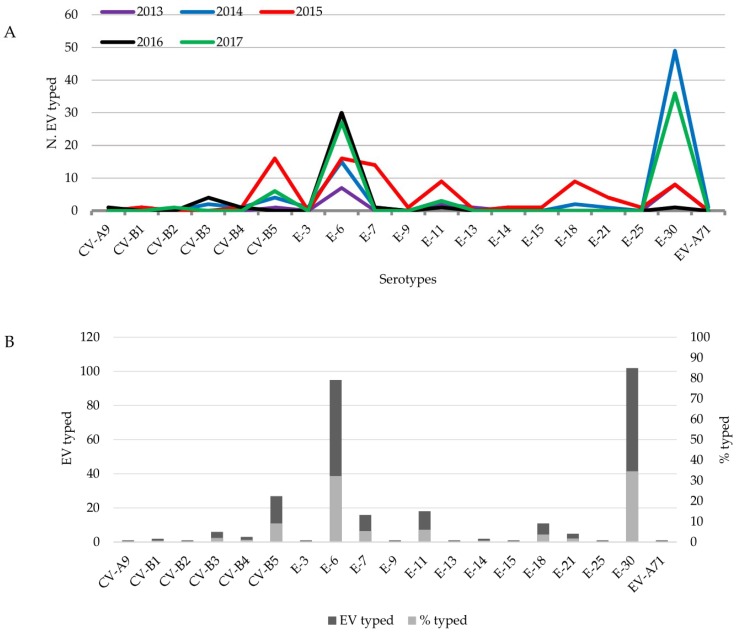
Aseptic meningitis is a common viral infection associated with human enteroviruses. The aim of the present study was to identify and characterize the enteroviruses associated with outbreaks and sporadic cases of aseptic meningitis that occurred in different regions of Brazil between 2013 and 2017. Cerebrospinal fluids obtained from patients admitted to public health facilities were analyzed. A total of 303 patients were positive for Human Enteroviruses (EV) by cell culture isolation with a median isolation rate throughout the year of 12%. We were able to identify enterovirus serotypes in 295 clinical specimens. Nineteen different serotypes were identified; the large majority corresponded to HEV-B species. Echovirus 30 (E-30) and Echovirus 6 (E-6) were the most prevalent genotypes (66.8%). Sequence analysis suggested that circulating E-30 was closely related to E-30 from other American countries; while E-6 was derived from Europe. Most of the patients consisted of children ≤ 15 years old. The temporal distribution of all aseptic meningitis and EV-positive cases showed an obvious seasonal pattern during autumn. Our results have provided valuable information about the enteroviral etiology of the aseptic meningitis cases in Brazil pointing to the importance of enterovirus surveillance in neurological diseases.
无菌性脑膜炎是一种常见的病毒感染,与人类肠道病毒有关。本研究的目的是鉴定和描述 2013 年至 2017 年期间巴西不同地区发生的暴发和散发性无菌性脑膜炎与肠道病毒有关。对来自公立医疗机构住院患者的脑脊液进行了分析。通过细胞培养分离,共有 303 例患者对人肠道病毒(EV)呈阳性,全年的中位分离率为 12%。我们能够在 295 份临床标本中鉴定出肠道病毒血清型。共鉴定出 19 种不同的血清型,其中绝大多数属于 HEV-B 种。柯萨奇病毒 30 型(E-30)和柯萨奇病毒 6 型(E-6)是最常见的基因型(66.8%)。序列分析表明,循环的 E-30 与来自其他美洲国家的 E-30 密切相关;而 E-6 则来自欧洲。大多数患者为≤15 岁的儿童。所有无菌性脑膜炎和 EV 阳性病例的时间分布显示出秋季明显的季节性模式。我们的研究结果提供了有关巴西无菌性脑膜炎病例肠道病毒病因的有价值信息,表明肠道病毒监测在神经疾病中的重要性。