Su Yingchao, Yang Hongtao, Gao Julia, Qin Yi-Xian, Zheng Yufeng, Zhu Donghui
Department of Biomedical Engineering University of North Texas TX 76207 USA.
Department of Materials Science and Engineering Peking University Beijing 100871 China.
Adv Sci (Weinh). 2019 May 17;6(14):1900112. doi: 10.1002/advs.201900112. eCollection 2019 Jul 17.
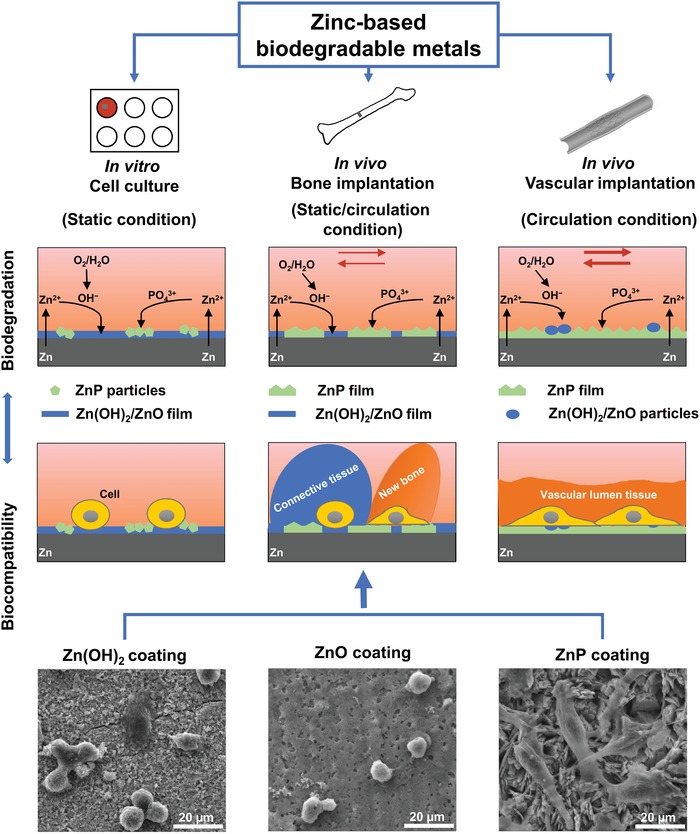
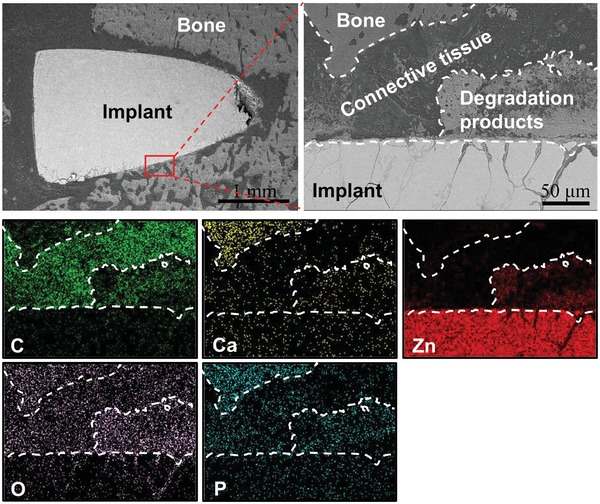
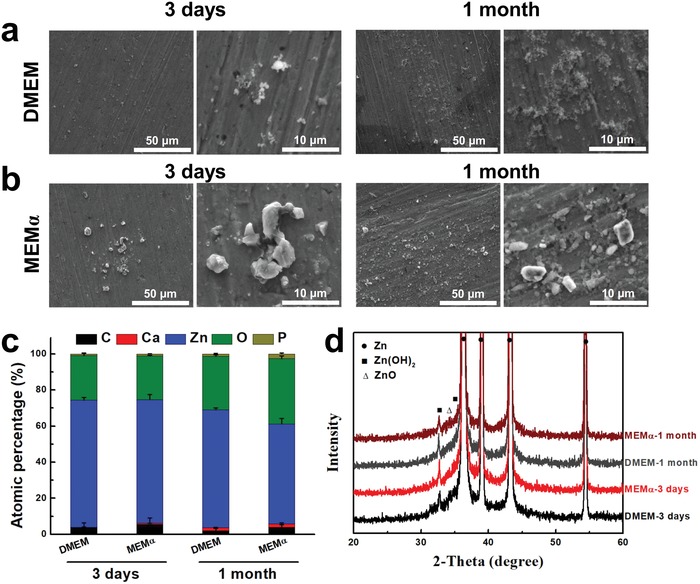
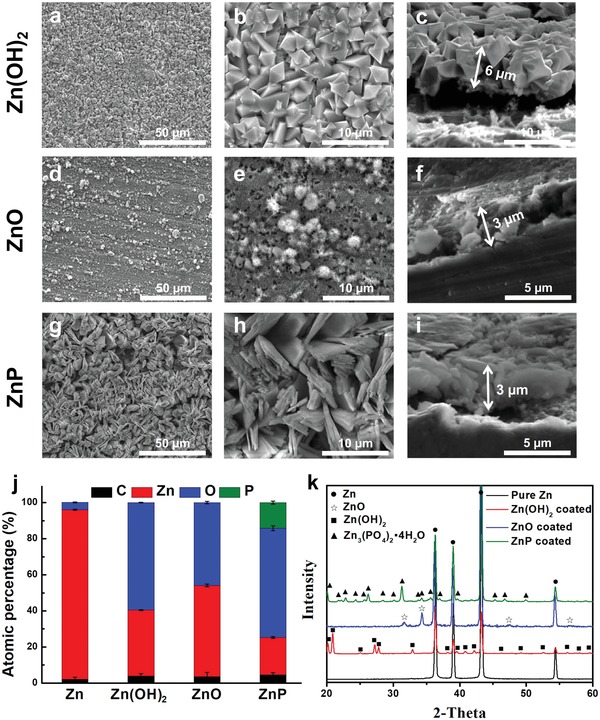
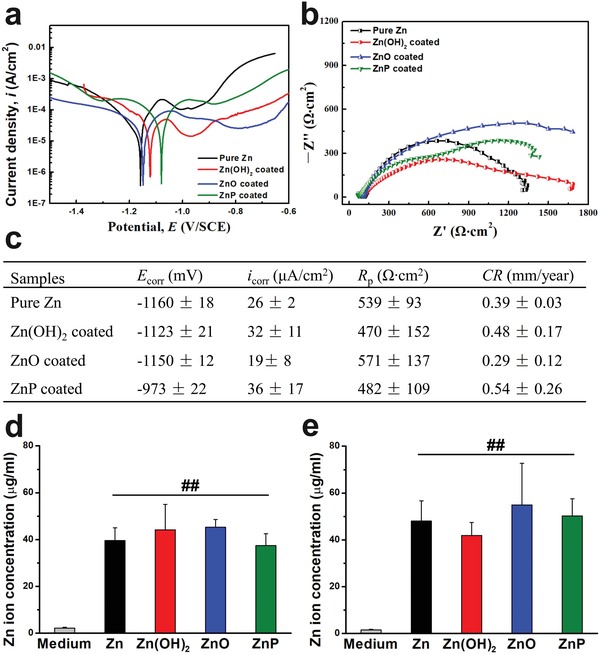
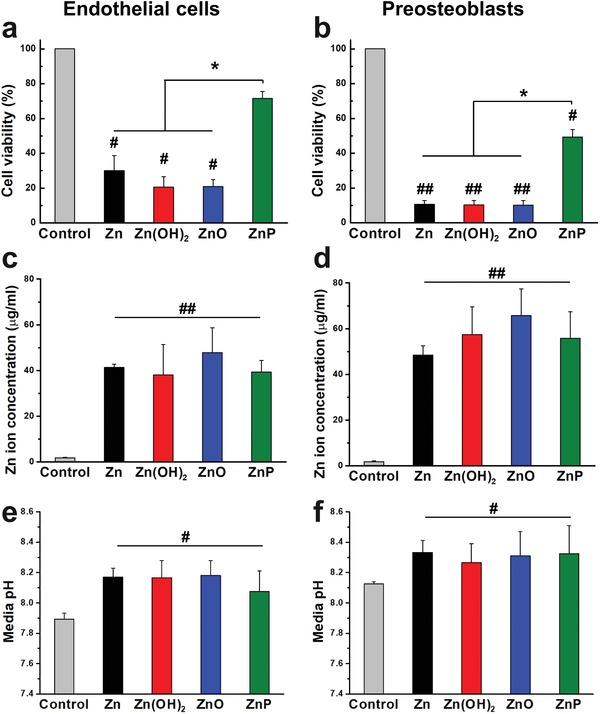
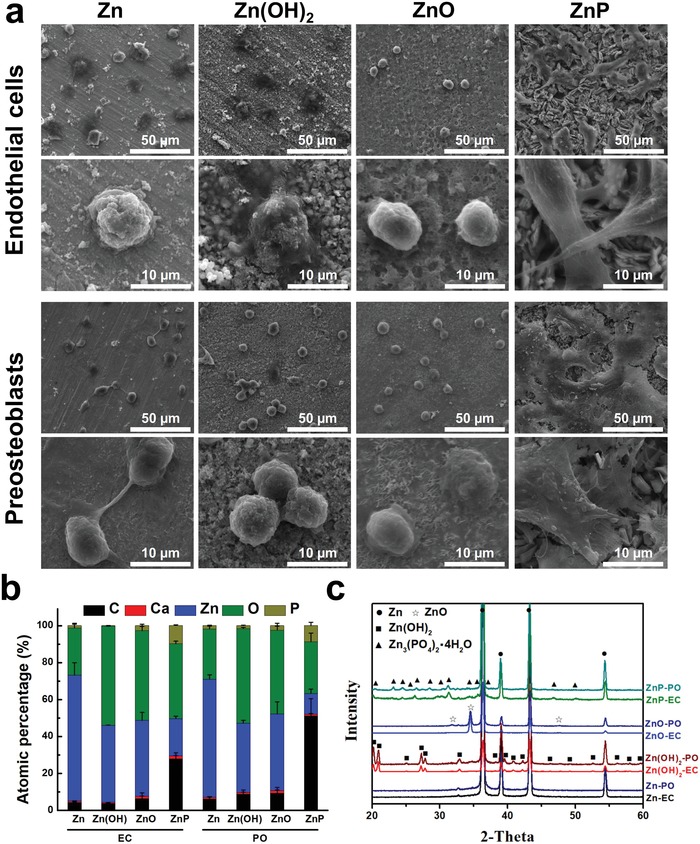
Recently emerged metallic zinc (Zn) is a new generation of promising candidates for bioresorbable medical implants thanks to its essential physiological relevance, mechanical strength, and more matched degradation pace to that of tissue healing. Zn-based metals exhibit excellent biocompatibility in various animal models. However, direct culture of cells on Zn metals yields surprisingly low viability, indicating high cytotoxicity of Zn. This contradicting phenomenon should result from the different degradation mechanisms between in vitro and in vivo. To solve this puzzle, the roles of all major players, i.e., zinc phosphate (ZnP), zinc oxide (ZnO), zinc hydroxide (Zn(OH)), pH, and Zn, which are involved in the degradation process are examined. Data shows that ZnP, not ZnO or Zn(OH), significantly enhances its biocompatibility. The mild pH change during degradation also has no significant impact on cell viability. Collectively, ZnP appears to be the key to controlling the biocompatibility of Zn implants and could be applied as a novel surface coating to improve biocompatibility of different implants.
最近出现的金属锌(Zn)由于其重要的生理相关性、机械强度以及与组织愈合更匹配的降解速度,成为新一代有前景的生物可吸收医疗植入物候选材料。锌基金属在各种动物模型中表现出优异的生物相容性。然而,在锌金属上直接培养细胞的存活率出奇地低,这表明锌具有高细胞毒性。这种矛盾的现象应该是由体外和体内不同的降解机制导致的。为了解决这个难题,研究了参与降解过程的所有主要因素,即磷酸锌(ZnP)、氧化锌(ZnO)、氢氧化锌(Zn(OH))、pH值和锌的作用。数据表明,显著提高其生物相容性的是ZnP,而不是ZnO或Zn(OH)。降解过程中温和的pH值变化对细胞活力也没有显著影响。总体而言,ZnP似乎是控制锌植入物生物相容性的关键,可以作为一种新型表面涂层来提高不同植入物的生物相容性。