Wang Congrong, Zhang Yinan, Li Fengwen, Wei Yuehua
Shanghai East Hospital, Tongji University School of Medicine, Department of Endocrinology and Metabolic Disease, Translational Medical Center for Stem Cell Therapy, Shanghai, China.
Shanghai Jiao Tong University Affiliated Sixth People's Hospital, The Metabolic Diseases Biobank, Center for Translational Medicine, Shanghai Key Laboratory of Diabetes, Shanghai, China.
Aging (Albany NY). 2019 Aug 12;11(15):5726-5743. doi: 10.18632/aging.102155.
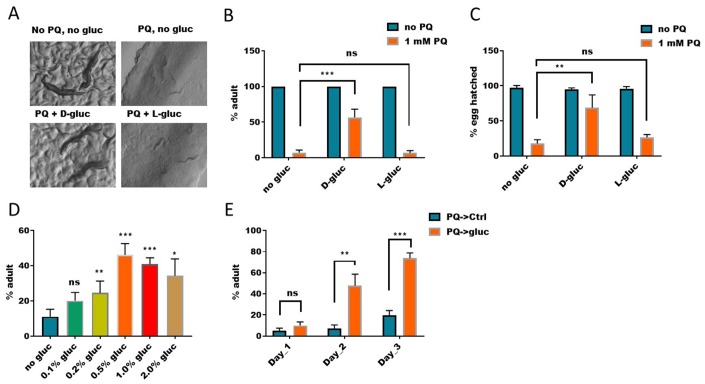
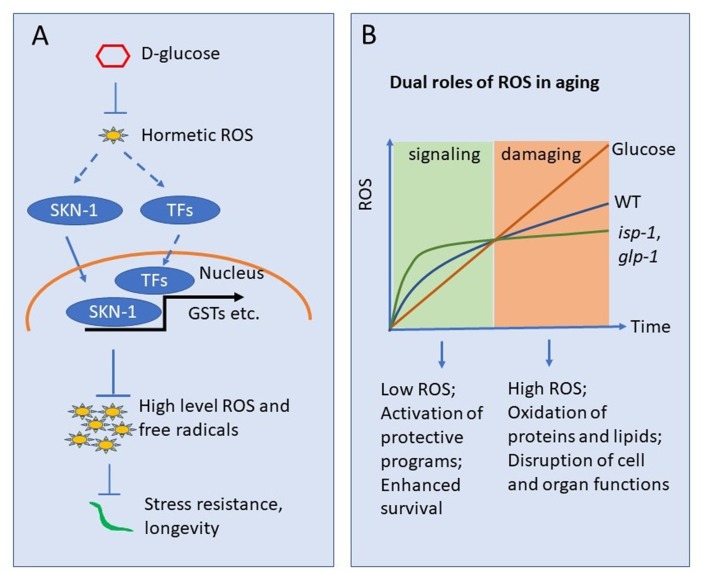
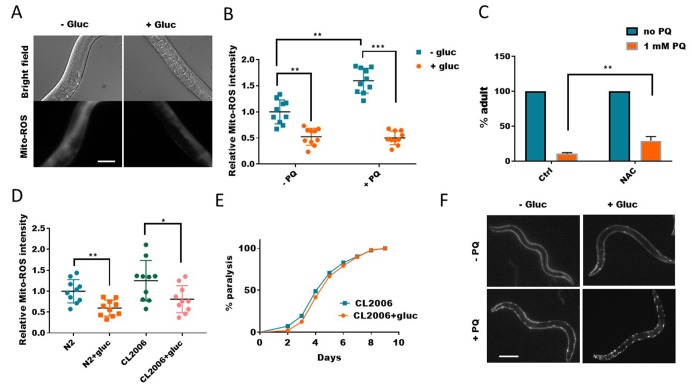
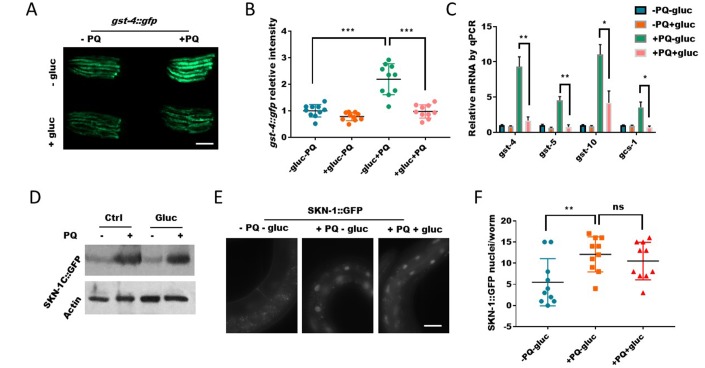
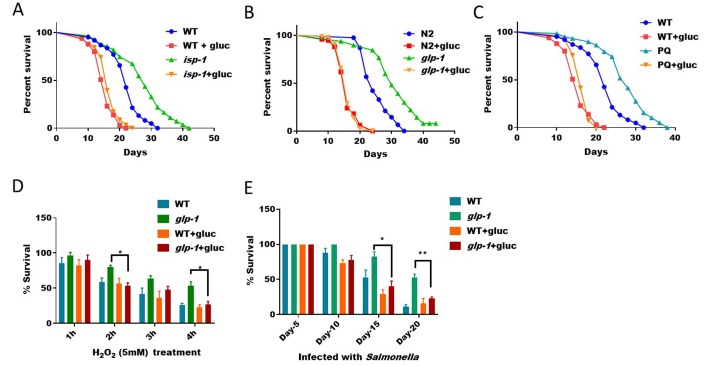
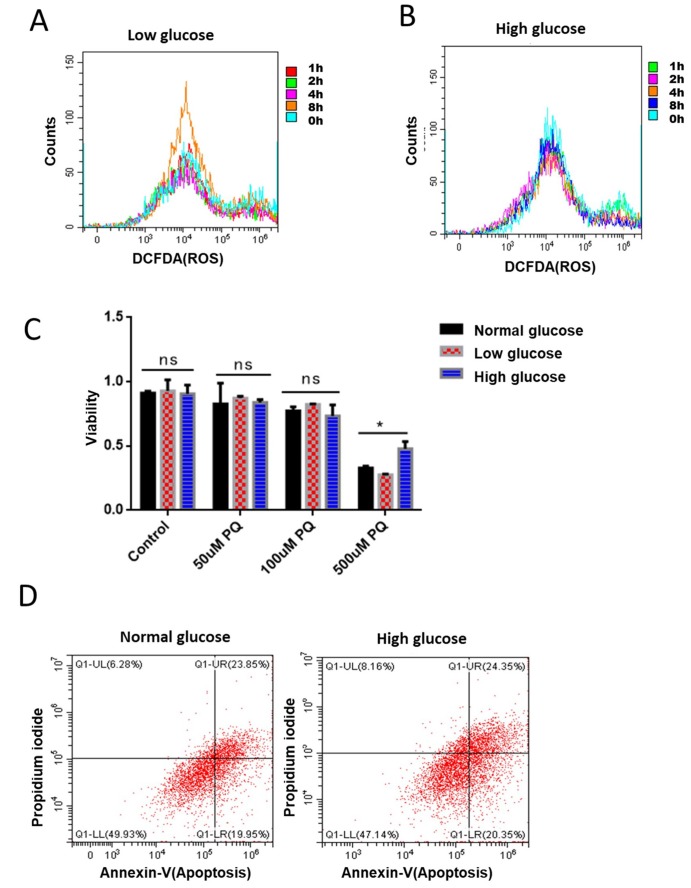
Carbohydrate overconsumption increases blood glucose levels, which contributes to the development of various diseases including obesity and diabetes. It is generally believed that high glucose metabolism increases cellular reactive oxygen species (ROS) levels, damages insulin-secreting cells and leads to age-associated diabetic phenotypes. Here we find that in contrast, high glucose suppresses ROS production induced by paraquat in both mammalian cells and the round worm . The role of glucose in suppressing ROS is further supported by glucose's ability to alleviate paraquat's toxicity on development Consistently, we find that the ROS-regulated transcription factor SKN-1 is inactivated by glucose. As a result, the ROS/SKN-1-dependent lifespan extension observed in paraquat-treated animals, mitochondrial respiration mutant and germline-less mutant are all suppressed by glucose. Our study reveals an unprecedented interaction of glucose with ROS, which could have significant impact on our current understanding of glucose- and ROS-related diseases.
碳水化合物摄入过量会升高血糖水平,这会促使包括肥胖症和糖尿病在内的各种疾病的发展。人们普遍认为,高糖代谢会增加细胞内活性氧(ROS)水平,损害胰岛素分泌细胞,并导致与年龄相关的糖尿病表型。然而,我们在此发现,在哺乳动物细胞和蛔虫中,高糖反而会抑制百草枯诱导的ROS产生。葡萄糖缓解百草枯对发育毒性的能力进一步支持了其在抑制ROS方面的作用。同样,我们发现ROS调节转录因子SKN-1会被葡萄糖失活。因此,在百草枯处理的动物、线粒体呼吸突变体和无生殖系突变体中观察到的ROS/SKN-1依赖性寿命延长均被葡萄糖抑制。我们的研究揭示了葡萄糖与ROS之间前所未有的相互作用,这可能会对我们目前对与葡萄糖和ROS相关疾病的理解产生重大影响。